<p><!-- BEGIN THEIA POST SLIDER --></p>
<p> <br />
</p>
<div>
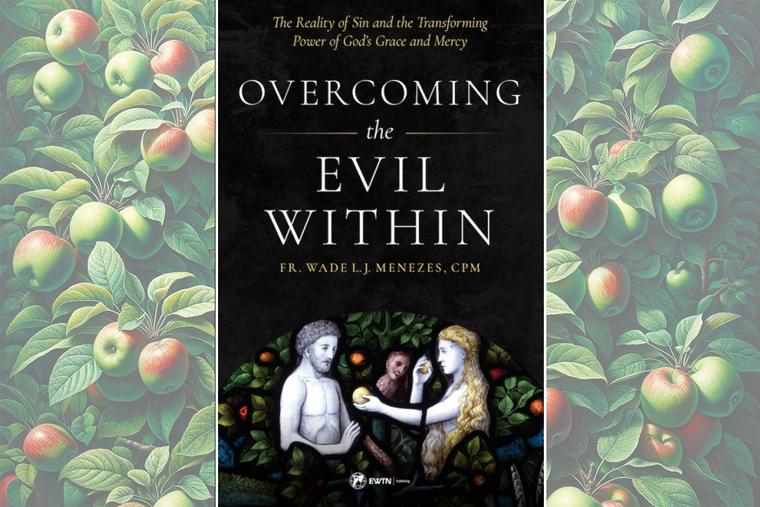
<p><i>This essay was adapted from Father Wade Menezes’ book</i> <a href="https://www.ewtnreligiouscatalogue.com/overcoming-the-evil-within/p/BKEPUB81111">Overcoming the Evil Within: The Reality of Sin and the Transforming Power of God’s Grace and Mercy</a>.</p>
<p>In the Catechism of the Catholic Church, the Sacrament of Confession is given several other important names that convey its very nature and the benefits received by the person who avails himself of this sacrament. In CCC 1423-1424, Confession is beautifully and rightly referred to as the Sacrament of Conversion, the Sacrament of Penance, the Sacrament of Forgiveness and the Sacrament of Reconciliation.</p>
<p>These five titles should tell us something about the magnificent “scope” of this sacrament and its aid to the human soul, human life and the <i>spiritual life</i>. In this regard, it’s worth remembering, too, that the Sacrament of Confession is one of only two sacraments that can be received both repeatedly <i>and</i> frequently (the Sacrament of the Eucharist being the other). Why is this? Because these two sacraments sustain us in our daily journey through life — regardless of one’s vocation and state in life.</p>
<p>Whether one is single, married, widowed, or a consecrated bishop, priest, deacon, or consecrated religious man or woman, Confession greatly aids us in our journey to our ultimate end: Heaven, the Beatific Vision, Eternal Beatitude. But how does Confession do this? Well, I can think of nine ways. I cull these “Nine Benefits of Confession” from the teaching of Pope Pius XII.</p>
<p>In his landmark encyclical <i>Mystici Corporis Christi</i> on the Catholic Church as the Mystical Body of Christ (promulgated universally in the midst of World War II in 1943), Pope Pius XII defends the practice of frequent confession — even if one has only venial sins to confess. He says that through the regular reception of the Sacrament of Confession, “genuine self-knowledge is increased, Christian humility grows, bad habits are corrected, spiritual neglect and tepidity are resisted, the conscience is purified, the will strengthened, a salutary self-control is attained, and grace is increased in virtue of the Sacrament itself.” (<i>Mystici Corporis Christi</i>, 88).</p>
<p>So, whether it be just venial sins that are confessed, or mortal sins, or a combination of both, these are the nine chief benefits of this particular sacrament. Let’s look at each of these benefits and explain them further:</p>
<p><b>1. Self-knowledge is increased.</b><i><b> </b></i>Many saints make it clear in their writing and teaching that self-knowledge is needed to grow in holiness. This means knowing and admitting your virtues so you can advance them in your life, and knowing and admitting your vices so you can uproot them out of your life.</p>
<p><b>2. Christian humility grows.</b><i><b> </b></i>Jesuit Father<i><b> </b></i>John Hardon writes in his <i>Modern Catholic Dictionary</i> that humility is the “moral virtue that keeps a person from reaching beyond himself. It is the virtue that restrains the unruly desire for personal greatness and leads people to an orderly love of themselves based on a true appreciation of their position with respect to God and their neighbors.” Not only does the practice of frequent Confession help us to grow in the important virtue of humility, but the very act of making a good examination of conscience (required before even stepping into the confessional) is humbling — and it helps us to grow in self-knowledge.</p>
<p><b>3. Bad habits are corrected.</b> Little by little, through frequent Confession and honesty with one’s confessor, who will offer advice accordingly, bad habits can be overcome. Frequent, worthy reception of the Sacrament of Confession means frequent graces received from that sacrament for those bad habits.</p>
<p><b>4. Spiritual neglect is resisted.</b> Let’s say you are struggling to establish the practice of praying the daily Rosary or a daily Chaplet of Divine Mercy, or even just making a Morning Offering upon rising each day. Your failures to practice these devotions would be examples of “spiritual neglects” that cause your spiritual life to suffer. Regular Confession can help you “get back on track,” especially if your confessor assigns them to you as a penance and so you begin to carry them out more faithfully on your own.</p>
<p><b>5. Spiritual tepidity is resisted.</b> Let’s say you do, indeed, carry out such spiritual practices — but only <i>infrequently</i>. In other words, you carry them out in a tepid or lukewarm manner. The graces from frequent Confession can help ignite a renewed spiritual fervor that will help make your daily spiritual life grow stronger and more committed every day.</p>
<p><b>6. Conscience is purified.</b> Confession of one’s sins brings with it a purification and, importantly, peace of conscience. This is tied to the healing aspect of Confession. Indeed, Confession is one of two “healing” sacraments, along with the Sacrament of the Anointing of the Sick. Both of these sacraments aid the body-soul reality of the human person.</p>
<p><b>7. The will is strengthened.</b> Whereas our intellect is what helps us “to know,” our will is what helps us “to choose” (based on properly ordered love as opposed to choosing something based on disordered love). Through the practice of frequent Confession, our wills become strengthened to help us more frequently choose good over evil, virtue over vice, and the beneficial over the malicious.</p>
<p><b>8. A salutary self-control is achieved.</b> Only you can control you. Frequent Confession makes us simply want to “do better” in all aspects of daily living. It’s the grace of the sacrament that propels us to control our lives better by practicing an ordinate love toward persons, places and things and not an inordinate, or disordered, love toward them.</p>
<p><b>9. Grace is increased in virtue of the sacrament itself.</b> Every sacrament, when it is received worthily, increases sanctifying grace in the soul. For Eucharist and Confession — again, the only two sacraments that can be received both repeatedly and frequently — this is especially true. In fact, the Sacrament of Confession can even help to perfect the grace of our Baptism. This is because Baptism, while wiping away the Original Sin we inherit from our first parents, also wipes away any personal sin (also called “actual sin”) we might have (i.e., any venial or mortal sin). Confession helps rid us of personal sin committed <i>after</i> Baptism. Illustrating these truths, Pope St. Paul VI (echoing Pope Pius XII), stressed the “great value” of “frequent and reverent recourse to this Sacrament [of Confession] even when only venial sins are in question.” When he promulgated the new rite of the Sacrament of Penance following the Second Vatican Council, he stated that this practice “is a constant effort to bring to perfection the grace of our Baptism.” (Dec. 2, 1973).</p>
<p><b>We should add, though, that going to Confession too frequently</b> out of scrupulosity is not helpful to the penitent, nor is it the intention of the sacrament. Scrupulosity may be defined as seeing sin where there is no sin at all but rather, say, a simple fault; or, seeing mortal sin when, in reality, it is a venial sin. Indeed, scruples can stunt one’s growth in the spiritual life. Don’t be your own savior — let Jesus Christ be your Savior.</p>
<p>So there you have it: “Nine Chief Benefits of Confession.” Know them, love them, defend them and share them. While Catholics may stay away from the Sacrament of Confession for a variety of reasons and others may partake of the sacrament more regularly and frequently, many people in these categories probably don’t know or realize its wonderful, specific benefits; they would be good to be reminded. This topic could serve as a wonderful point of evangelization for the Sacrament of Confession to help revive its regular reception — say, once a month — in a broken and wounded world.</p>
</p></div>
<p><br />
<br /><a href="https://www.ncregister.com/blog/nine-chief-benefits-of-confession">Source link </a></p>
<p><!-- END THEIA POST SLIDER --></p>

9 Chief Benefits of Confession| National Catholic Register