<p><!-- BEGIN THEIA POST SLIDER --></p>
<p> <br />
</p>
<div>
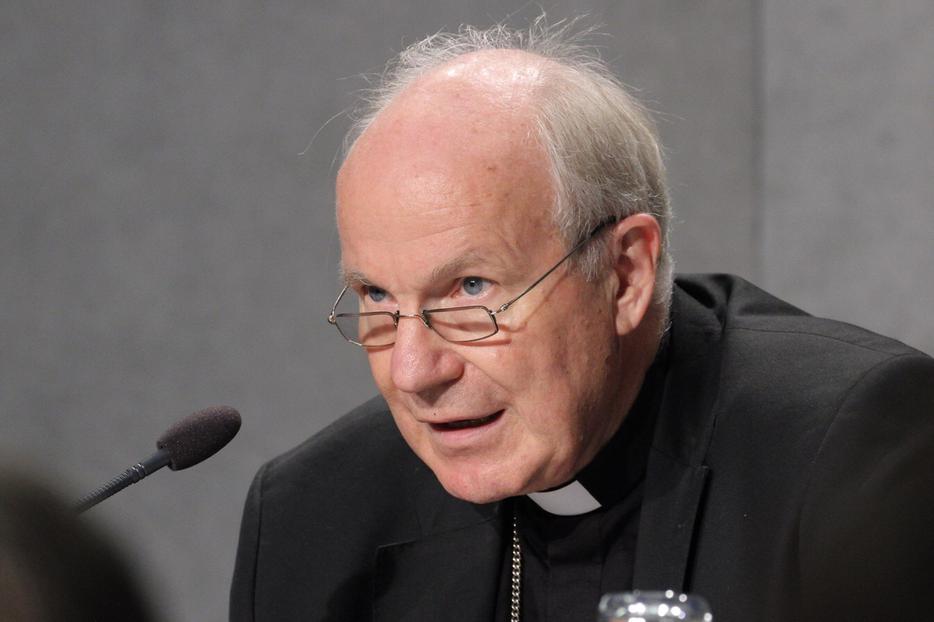
<p>For more than 30 years, Cardinal Christoph Schönborn of Vienna has been at the center of the Church’s life — far beyond the confines of Austria. His retirement this week at age 80 marks the end of a long ecclesial service closely associated with Joseph Ratzinger/Benedict XVI.</p>
<p>During the pontificate of Pope Francis, Cardinal Schönborn argued for reading Francis in continuity with Benedict. His arguments did not persuade those who saw a rupture and earned Cardinal Schönborn critics among his former admirers.</p>
<h3>General Editor of the Catechism</h3>
<p>Cardinal Schönborn is the rare churchman whose name will certainly be remembered decades hence due to his work as the principal drafter/editor of the Catechism of the Catholic Church, the greatest fruit of the long collaboration between Pope St. John Paul II and Cardinal Ratzinger. The former put the latter in charge of stewarding the project, and Ratzinger chose his former student, a Dominican priest and theologian, to do the day-to-day work over six years of consultation, drafting and editing the Catechism, the most important post-conciliar Roman initiative. Cardinal Schönborn’s work had a massive impact on how the Catholic faith is presented, from elementary school to academic theology. </p>
<p>He had largely completed that work by age 46, when he was appointed auxiliary bishop of Vienna, former capital of the Habsburg empire and a bridge in Europe between West and East.</p>
<h3>Following a Predator</h3>
<p>Cardinal Schönborn was among the first archbishops confronted with the horror of sexual abuse.</p>
<p>In early 1995, media reports detailed accusations of sexual misconduct against the then-archbishop of Vienna, Cardinal Hans Hermann Groër, made by a former seminarian. In those pre-Boston days, the response of both the Vatican and the Austrian bishops was tight-lipped and skeptical of accusations. </p>
<p>Other accusers though came forth, and in April 1995 Bishop Schönborn was appointed coadjutor archbishop to the 75-year-old Cardinal Groër. By September, Groër was out and 50-year-old Schönborn was the new archbishop. </p>
<p>While a soft landing was engineered for Cardinal Groër in 1995, subsequent years would reveal a staggering and stomach-churning record of predatory abuse of seminarians and young monks over decades. In 1998, Cardinal Schönborn and the Austrian bishops pleaded with Rome to “remove the burden” of the retired Groër from their local Churches. The Vatican removed him from all his positions and he lived out his last years in seclusion.</p>
<p>Cardinal Schönborn experienced earlier than most bishops the wound of sexual abuse in his own city and country. Cardinal Groër was the most prolific bishop-abuser ever exposed, even by the less transparent standards of the 1990s. Christoph Schönborn became archbishop in that context, and the recovery from it would mark the rest of his life. On the local level, that recovery would be his most important work.</p>
<p>Given the close relationship between Cardinals Schönborn and Ratzinger, it is likely that the Groër experience shaped the decisions taken by Cardinal Ratzinger in the late 1990s to address more forthrightly the scourge of sexual abuse — against those in Rome who took a different view. </p>
<p>For both John Paul and Ratzinger, Vienna was a capital of the first importance in Catholic history and European culture; a scandal of that magnitude there surely led to their decisions to strengthen the Church’s prosecution of sexual abuse.</p>
<h3>The Scholar Archbishop on Evolution</h3>
<p>Cardinal Schönborn shared Cardinal Ratzinger’s gift for making scholarship accessible to ordinary audiences. He would develop the YouCat youth catechism for young audiences and he carried out an extensive program of lectures around the world. </p>
<p>When Benedict XVI was elected in April 2005, he included in his inaugural homily the observation that “only when we meet the living God in Christ do we know what life is. We are not some casual and meaningless product of evolution. Each of us is the result of a thought of God. Each of us is willed, each of us is loved, each of us is necessary.”</p>
<p>A few months later Cardinal Schönborn took to the pages of <i>The</i> <i>New York Times</i> — in a manner that only a few cardinals would have the credibility to do — to argue against “neo-Darwinian dogma.” </p>
<p>“We believe that God created the world according to his wisdom. It is not the product of any necessity whatever, nor of blind fate or chance,” he wrote, quoting the Catechism<i> </i>(295).</p>
<p>“The Catholic Church, while leaving to science many details about the history of life on earth, proclaims that by the light of reason the human intellect can readily and clearly discern purpose and design in the natural world, including the world of living things,” Cardinal Schönborn argued. </p>
<p>“Evolution in the sense of common ancestry might be true, but evolution in the neo-Darwinian sense — an unguided, unplanned process of random variation and natural selection — is not. Any system of thought that denies or seeks to explain away the overwhelming evidence for design in biology is ideology, not science.”</p>
<p>Cardinal Schönborn set off a global firestorm, accused falsely by many of rejecting science altogether, or even causing Catholic scientists to abandon their faith to preserve professional competence. The <i>New York Times</i> covered the subsequent controversy on its front page. A year later, Benedict himself would gather his former students, including Cardinal Schönborn, to discuss the topic at his annual summer seminar.</p>
<p>Cardinal Schönborn’s own credibility, and his proximity to Benedict, permitted him to advance a global discussion on the role of Providence in natural history. No one else could have done that.</p>
<h3>Arguing for <i>Amoris Laetitia</i></h3>
<p>That credibility was called upon by Benedict’s successor in 2016 when, with the publication of <a href="https://www.vatican.va/content/dam/francesco/pdf/apost_exhortations/documents/papa-francesco_esortazione-ap_20160319_amoris-laetitia_en.pdf"><i>Amoris Laetitia</i></a>, Pope Francis faced criticism that he had contradicted previous Church teaching on Holy Communion for the civilly divorced and remarried. </p>
<p>Cardinal Schönborn presented the argument that the Holy Father had developed, or extended, but not contradicted, previous teaching. Pope Francis called Cardinal Schönborn the “authoritative interpreter” of the document, and <a href="https://www.catholicculture.org/commentary/did-pope-himself-wonder-whether-amoris-laetitia-was-orthodox/">apparently even asked him</a>, after publication, if it was in fact orthodox.</p>
<p>Many of Cardinal Schönborn’s longtime admirers accused him of changing his views with the changes in papacies. Others agreed that he had done so, but <a href="https://angelusnews.com/voices/cardinal-schonborn/">welcomed his support</a> of a novel position. </p>
<p>The more charitable interpretation is that Cardinal Schönborn thought that it was his role as a leading theologian in the College of Cardinals to show how Pope Francis could be read in harmony with Benedict and John Paul. That a cardinal would want to present such an argument is a thoroughly Catholic disposition even if, in this case, it was a difficult case to make.</p>
<p>Cardinal Schönborn would, in due course, criticize the Synodal Way of the Church in Germany as risking both heterodoxy and schism. His positions were not radical, but measured. Nevertheless, he retires with less esteem in some of the circles that previously heaped laudations upon him. </p>
<p>Cardinal Schönborn no longer holds the archbishopric in Vienna, nor can he vote in a papal conclave. Yet he is still active, chairing the Council of Cardinals and holding responsibilities at the Vatican bank.</p>
<p>At the end of this long service, he returned to a <a href="https://www.catholicnewsagency.com/news/259183/cardinal-schonborn-we-must-accept-the-decline-of-europe">Ratzingerian theme</a>, namely that of the decline of Christian Europe, and the threat that poses to European identity itself. At <a href="https://www.catholicnewsagency.com/news/261703/pope-francis-accepts-cardinal-schonborns-retirement-as-vienna-archbishop-names-interim-leader">the recent events</a> marking the end of his time as archbishop, the voice of Benedict seemed to speak from the grave.</p>
<p>He confessed to feeling conflicted “between the joyful festival of thanksgiving that we are celebrating and the great farewell that so many people in our country are making, mostly in silence, from the Church.”</p>
<p>“Will the Europe of cathedrals become a large open-air museum for tourists from all over the world?” he added.</p>
<p>If that is the case, and the renewal of faith follows in an expected way at an unknown time, the work of Cardinal Christoph Schönborn will have planted some seeds that will bear fruit then — the work of theology in service of the faith.</p>
</p></div>
<p><br />
<br /><a href="https://www.ncregister.com/commentaries/desouza-cardinal-schoenborn-theologian-at-service-of-faith">Source link </a></p>
<p><!-- END THEIA POST SLIDER --></p>

A Theologian at the Service of the Catholic Faith| National Catholic Register