<p><!-- BEGIN THEIA POST SLIDER --></p>
<p> <br />
</p>
<div>
<p>A group of Catholic moral theologians and ethicists on Friday filed an amicus curiae (“friend of the court”) brief in federal court in support of <a href="https://www.anthropic.com/">Anthropic</a>, an American artificial intelligence (AI) company that is suing the Department of Defense over the Pentagon’s insistence that it should be free to use Anthropic’s AI products without restriction, including for mass surveillance and autonomous weaponry.</p>
<p>Anthropic, creator of the widely adopted AI assistant <a href="https://claude.ai/login">Claude</a>, ran afoul of the Pentagon’s leadership late last month when its CEO, Dario Amodei, told Defense Secretary Pete Hegseth that the company <a href="https://www.anthropic.com/news/statement-department-of-war">refused</a> “in good conscience” to allow Claude to be used specifically for those purposes.</p>
<p>In addition to Anthropic subsequently losing a $200 million contract with the Defense Department, Hegseth announced Anthropic would be designated a “supply chain risk” — a first for an American company. President Donald Trump has directed all government agencies to halt the use of Anthropic’s products within six months. Fearing financial annihilation, Anthropic on March 9 <a href="https://www.nytimes.com/2026/03/09/technology/anthropic-defense-artificial-intelligence-lawsuit.html">filed two lawsuits</a> against the Department of Defense, challenging the “supply chain risk” designation as an inappropriate retaliation.</p>
<p>The falling out between Anthropic and the Pentagon <a href="https://www.ncregister.com/news/anthropic-pentagon-ai-ethics">sparked a major debate on the ethics and morality of AI,</a> with many commentators expressing appreciation for Anthropic’s decision to make a principled stand against the government’s demands.</p>
<p>In the <a href="https://www.courtlistener.com/docket/72379655/71/anthropic-pbc-v-us-department-of-war/">brief</a> filed March 13 in the U.S. District Court for the Northern District of California, San Francisco Division, the group of 14 Catholic scholars — including professors, authors and at least one priest, Legionary Father Michael Baggot — said that the teaching of the Catholic Church supports Anthropic’s decision to reject the Pentagon’s demands on its technology related to mass surveillance and autonomous weapons.</p>
<p>“Anthropic, in the red lines it has drawn for the use of its products on domestic mass surveillance and autonomous weapons systems, sought to uphold minimal standards of ethical conduct for technical progress. In doing so, Anthropic was acting as a responsible and moral corporate citizen, not as a threat to the safety of the American supply chain,” the authors of the brief wrote.</p>
<p>The substance of the brief was written by four scholars: Charles Camosy, an associate professor of moral theology at The Catholic University of America in Washington, D.C.; Joseph Vukov, an associate professor of philosophy and the associate director of the Hank Center for the Catholic Intellectual Heritage at Loyola University Chicago; Brian J.A. Boyd, a moral theologian; and Brian Patrick Green, a lecturer in ethics at the Graduate School of Engineering at Santa Clara University, a Catholic institution in California.</p>
<h3>‘A Threat for Man and for the World’</h3>
<p>In the brief, the scholars note that Anthropic <a href="https://www.anthropic.com/news/statement-department-of-war">has said</a> they are not categorically opposed to the idea of autonomous weaponry or mass surveillance; rather, the company believes its systems are not yet “sufficiently reliable, interpretable, or controllable to be entrusted with decisions that directly take a human life without human oversight, or to conduct population-scale surveillance.”</p>
<p>While the scholars indicated agreement with Anthropic on the criticisms of such systems’ reliability, they stressed that the Catholic tradition has “consistently emphasized that decisions affecting human life, freedom, and dignity must remain the responsibility of human actors, and that not every technically feasible or legally permissible use of a tool is therefore appropriate,” and that “when technology is capable of violating life, dignity, and freedom, it is reasonable to draw clear boundaries around its use.”</p>
<p>On the topic of mass surveillance, the scholars note that the Church’s teaching on the right to privacy is rooted in the dignity of every human person. A widespread surveillance regime by the military would undermine the dignity of those being surveilled, the scholars argued.</p>
<p>Such a centralized surveillance system would also tread on the Catholic idea of subsidiarity — the idea that decisions and oversight should be handled by the smallest, most local competent body — by undermining state and local governments, which are not only more likely to understand context better than a distant AI, but which must also live with the effects, the scholars continued.</p>
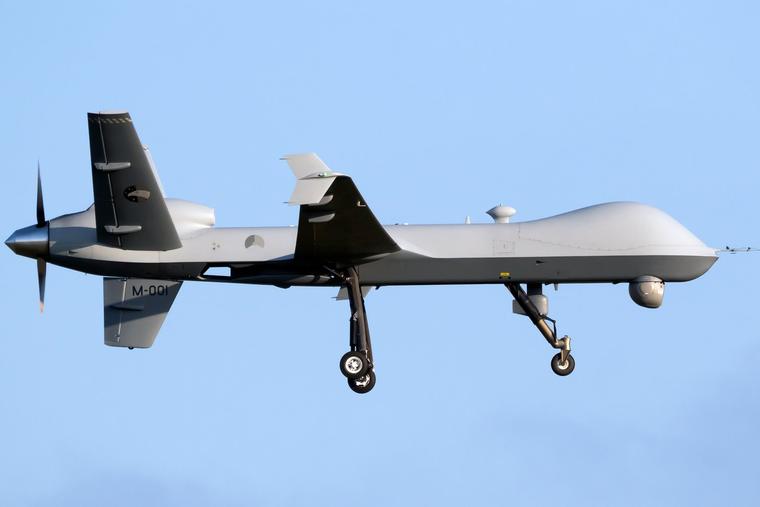
<p>On the topic of lethal autonomous weapons systems, or LAWS (sometimes called “killer robots”), the scholars firmly asserted that the use of weapons capable of making wartime decisions on their own violates the Catholic principle of “just war.” In a just war, human judgment must be employed to ensure, for example, that a violent act is a proportionate use of force, or in the selection or avoidance of targets. Human involvement in such decisions is crucial, the scholars said, because “judgments of proportionality and discrimination are prudential — not mere pattern matching.” This and other reasons are why the Vatican has <a href="https://www.ewtnnews.com/vatican/vatican-again-calls-for-a-ban-on-killer-robots?redirectedfrom=cna&;__hstc=198926896.79df06f8579220df7fbde758744f9398.1722374306716.1773672190805.1773677008442.1141&;__hssc=198926896.3.1773677008442&;__hsfp=987db3dfe120b7578dc5d7848588fcbd">repeatedly and forcefully expressed opposition to the idea</a> of LAWS, going back as far as 2013.</p>
<p>“[LAWS] circumvent the kind of practical judgment and careful decision-making that should inform all human decisions, and especially those that involve matters of life and death,” the scholars wrote.</p>
<p>The scholars conclude their brief by quoting Pope Benedict XVI’s encyclical, <i>Spe Salvi</i>, on the topic of technological progress. “If technical progress is not matched by corresponding progress in man’s ethical formation, in man’s inner growth (cf. Ephesians 3:16; 2 Corinthians 4:16), then it is not progress at all, but a threat for man and for the world,” the encyclical states.</p>
<p>Brian Patrick Green, one of the authors of the amicus brief, <a href="https://www.ncregister.com/news/anthropic-pentagon-ai-ethics">previously told the Register</a> that Anthropic’s principled stand, especially coming from a commercial company, is important.</p>
<p>“You can imagine an alternate universe where Dario Amodei just said, ‘Okay, we’ll sign it. It’s no big deal.’ They would be doing fine as a business, and the rest of the world would not be talking about AI ethics right now. [But] this universe that we’re living in is one that has been fundamentally changed in a lot of ways because somebody decided to take an ethical stand. I think that’s important,” Green said.</p>
<p>“I think this ethical stand is good, potentially — assuming that the government does not actually destroy Anthropic and reduce their value to zero,” he added.</p>
</p></div>
<p><br />
<br /><a href="https://www.ncregister.com/news/catholic-amicus-brief-backing-anthropic-in-pentagon">Source link </a></p>
<p><!-- END THEIA POST SLIDER --></p>

Catholic Ethicists File Amicus Brief Backing Anthropic in Pentagon Dispute| National Catholic Register