<p><!-- BEGIN THEIA POST SLIDER --></p>
<p> <br />
</p>
<div>
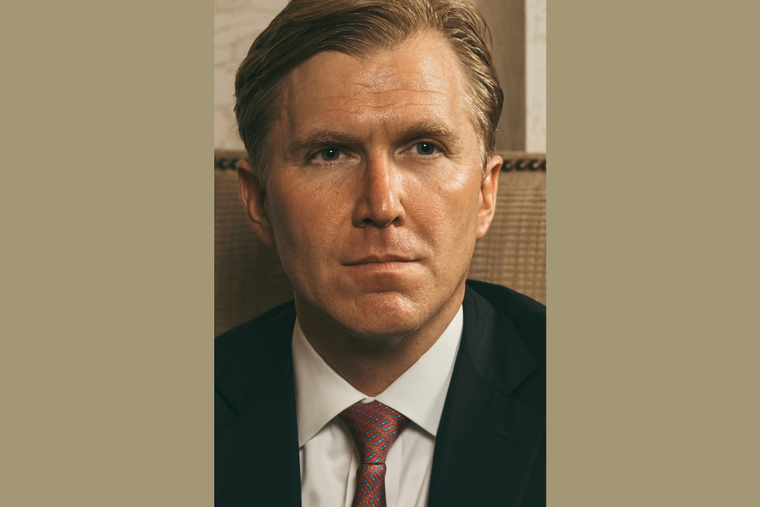
<p>Elbridge “Bridge” Colby, a rising star in Republican Party foreign policy who has been profiled recently in both <i>Politico </i>and <a href="https://www.newstatesman.com/ns-interview/2024/07/elbridge-colby-i-am-signalling-to-china-that-my-policy-is-status-quo"><i>The New Statesman</i></a>, considers himself a realist. </p>
<p>America’s role in the world, he argues in his<i> </i>influential <i>2</i>021 book <a href="https://yalebooks.yale.edu/book/9780300268027/the-strategy-of-denial/"><i>Strategy of Denial: American Defense in an Age of Great Power Conflict</i></a>, should not be to “end tyranny,” as <a href="https://georgewbush-whitehouse.archives.gov/infocus/freedomagenda/">George W. Bush called on America to do</a> in his second inaugural address. Neither, he believes, should America isolate itself from the affairs of other countries as a matter of principle. </p>
<p>Instead, Colby, a Catholic who served in the Trump administration as deputy assistant secretary of defense for strategy and force development from 2017 to 2018, relies upon a word familiar to Catholics to explain his preferred geopolitical strategy for the United States: stewardship. </p>
<p>“The Parable of the Unjust Steward in Luke 16 is essentially an example of someone who is in a position of trusteeship or stewardship and is expected to take account for the reasonably anticipated consequences of his actions, with the goal being the benefit of those in his care,” Colby told the Register. “The proper duty of the state is to serve the security, freedom and reasonable prosperity of people entrusted to its care. The foreign policy that best serves those interests is the right foreign policy. The end goal is to benefit the well-being, the commonweal of the republic.”</p>
<p>Colby’s vision stands at odds from the two dominant perspectives in American foreign policy: neoconservatism and isolationism. </p>
<p>On the one hand, neoconservatism promotes the active employment of military might to reshape the globe according to American ideals. The goal of “spreading democracy,” which was commonly stated during the Bush-era “War on Terror,” comes from this school of foreign policy. Neoconservative thinkers were instrumental in planning and executing the Iraq War. </p>
<p>On the other hand, isolationism eschews foreign entanglements of all kinds, but especially foreign military conflicts. This political philosophy has been ascendent in both liberal and conservative circles following America’s perceived failures in Iraq.</p>
<p>Colby’s profile has risen significantly in recent years in both foreign-policy circles and the general public — he now regularly appears on cable news and in major publications such as <i>The Wall Street Journal </i>and <i>Foreign Affairs.</i></p>
<p>The <i>Politico </i>profile described him as “the intellectual leader and rising star of an insurgent wing in the Republican Party rebelling against decades of dominant interventionist and Reaganite thinking.” And <i>The</i> <i>New Statesmen</i> profile, written by prominent Catholic commentator Sohrab Ahmari, pronounced that “Washington is abuzz with his rising influence.”</p>
<p>Though foreign policy has taken a back seat to the economy as the top priority among voters in the upcoming election, a major international incident, such as an escalation between Russia and Ukraine, could shift political priorities quickly. Such an event would amplify Colby’s voice even further. </p>
<p> </p>
<h3><b>Outcomes-Based Approach</b></h3>
<p>Colby, a graduate of both Harvard and Yale Law School, comes from a family with a storied history in U.S. government. His great-grandfather Elbridge served in the U.S. military before embarking on a career in journalism and academia. And his grandfather William Colby served in the Office of Strategic Services in World War II before eventually becoming CIA director in the 1970s under Richard Nixon and Gerald Ford. </p>
<p>Colby has himself served in several government roles before his role in the Trump administration. From 2004 to 2005, he sat on the President’s Weapons of Mass Destruction Commission. He has become a notable critic of the Iraq War, remarking recently that “<a href="https://x.com/ElbridgeColby/status/1825985706897834356">nothing has done more to reawaken isolationism in America</a>.”</p>
<p>Colby’s version of realism, which he terms a “strategy of denial” because of its emphasis on denying foreign powers the ability to undermine America’s core interests, differs from both because of its primary focus on securing the best possible outcomes, not on promoting some other cause such as “spreading democracy” or isolating America from the world no matter the consequence.</p>
<p>“The foreign policy of intentionality is something that Catholics and Christians tend to get sucked into for obvious reasons,” Colby said. “They are drawn toward a foreign policy that is oriented on solving the world’s problems, on humanitarian goals. The instinct is to say, ‘Well, I have a pure heart; I’m trying to help people.’ The problem is that three, four steps down the road, you might get results that are far worse. If you’re a leader of a state, you’re responsible for a certain group of people. It’s like the responsibility of a parent. Should we judge parents by the purity of their intentions or by whether they did a reasonably good job?”</p>
<p>The dogmatic aspects of both neoconservatism and isolationism lead to poor decision-making, Colby believes, because they have a doctrinaire approach. This isn’t to say, however, that he espouses a purely “consequentialist” application of foreign policy where the “ends justify the means,” which would place his thinking beyond the bounds of Catholic moral teaching. </p>
<p>“I wouldn’t presume to say I’m a good Catholic or a bad Catholic,” said Colby, who cites Pope Benedict XVI as an inspiration for being a great Catholic who is also attuned to the importance of rationality. </p>
<p>“But I’m certainly a committed and serious Catholic, and the strategy I’m laying out is deeply compatible with my understanding of Church teaching.” he said. “Our foreign policy should not be so expansive or selfish that it consumes the goals of others. The policy I’m calling for does not do things that are aggressive. You shouldn’t be sending people to concentration camps, for instance. There are certain things that are inherently evil.”</p>
<p>One foreign-policy strategy that is morally licit, however, is something Colby calls for in his writing and media appearances daily: intelligently strengthening our defenses and industrial base and redirecting resources away from the least consequential global regions and toward the most consequential. For Colby, the latter means the Indo-Pacific, which is the world’s fastest-growing economic region — and where China is rapidly asserting its will and <a href="https://thehill.com/policy/defense/4547637-china-potential-taiwan-invasion-2027-us-admiral-warns/">building up its military for a potential invasion of Taiwan</a> by 2027.</p>
<p>Missouri Sen. Josh Hawley, who also <a href="https://www.hawley.senate.gov/senator-hawleys-speech-rethinking-americas-foreign-policy-consensus/">frequently rings the alarm about China’s growing strength</a>, recently told <i>Politico</i>, “Nowhere is Bridge’s leadership clearer than in the current debate over tradeoffs between aiding Ukraine and deterring China.”</p>
<p>The current U.S. policy under the Biden administration is to defend Taiwan if it is attacked by China. According to Colby, neither the U.S., which is currently spending hundreds of billions to defend Ukraine, nor Taiwan is taking the necessary steps to prepare for a direct military conflict with an ascendent global power — a fact he finds unacceptable.</p>
<p>“China has 10 times the GDP of Russia, so it’s a much more powerful rival by an order of magnitude,” he said. “Russia is a very dangerous state, and it’s waging an iniquitous war with Ukraine. But the most serious and grave consequences for U.S. interests is Chinese domination of Asia. We need to use the military sparingly in ways that are consistent with just-war theory. But on the other hand, we do have to be prepared to use force and use force in a way that would actually achieve those rightful goals.”</p>
<h3><b>On Nuclear Weapons</b></h3>
<p>Colby maintains that nuclear weapons are not intrinsically morally impermissible, especially in relation to great power conflict, which has pitted him at odds on the matter with numerous other Catholic thinkers and ecclesiastics. </p>
<p>“The debate about nuclear weapons often takes place with a mindset that Americans and our allies have total military dominance, and that’s not the case. I think you have to reckon with the reality of nuclear weapons as a prudential matter. And I think that’s consistent with the Catholic tradition,” he said.</p>
<p>“So I think those people who are saying, ‘Oh, we just need to get rid of nuclear weapons’ — those people are not seriously grappling with China as a nuclear power and North Korea increasing its nuclear capability. Iran is on the verge of nuclear weapons. And, of course, Russia has revamped its nuclear weapons,” he noted. “So if we give up our nuclear weapons, that would leave us totally vulnerable to coercion and you know aggression by these kinds of powers. It’s not a serious policy in these times.”</p>
<p>Military-deterrence capability — in which one nation effectively uses the threat of retaliation to prevent conflict from breaking out in the first place — is key to Colby’s strategy of denial. With Chinese President Xi Jinping’s stated goal of transforming the People’s Liberation Army (PLA) into a “world-class military” by mid-century coming to fruition — China now has the world’s largest navy fleet and with<a href="https://www.heritage.org/defense/commentary/the-defense-departments-china-military-power-report-the-threat-worse-advertised"> 100 new nuclear weapons built in the past year</a>, it is the world’s fastest-growing nuclear power — now is not the time to dither or deal in abstractions, but to keep pace in order to secure our liberty for the foreseeable future, he argues. </p>
<p>“I think that it’s possible that this cold war could turn hot,” Colby said. “We don’t want to assume that there would not be a major war, which, thank God, we avoided with the Soviet Union. I talk a lot about war. I think about war. I think it’s clear to somebody who follows what I’m saying and reads my books and so forth that I do not want a war. But it’s very easy for someone to just say, ‘War is evil.’”</p>
</p></div>
<p><br />
<br /><a href="https://www.ncregister.com/interview/catholic-strategist-elbridge-colby">Source link </a></p>
<p><!-- END THEIA POST SLIDER --></p>

Catholic Strategist Promotes Stewardship Approach to Foreign Policy| National Catholic Register