<p><!-- BEGIN THEIA POST SLIDER --></p>
<p> <br />
</p>
<div>
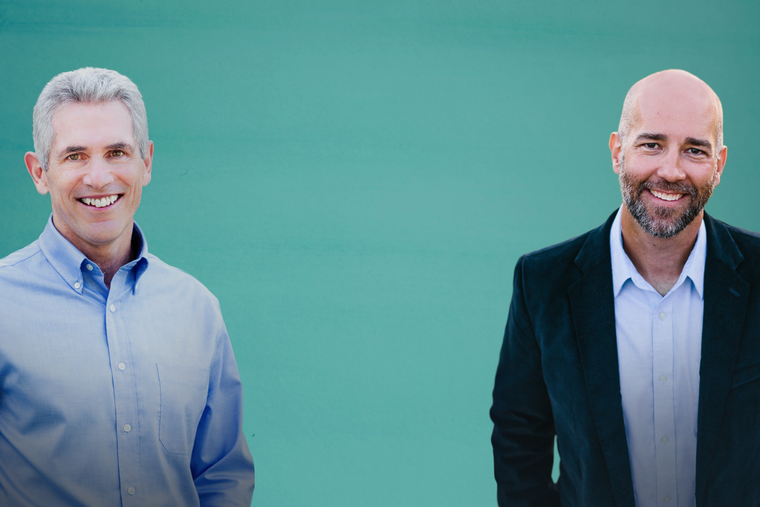
<p><b>Bob Schuchts</b> and <b>Jake Khym</b> bring to the table their more than 50 years of combined experience as Catholic therapists, as they teach and lead people in healing through Jesus Christ in the <a href="https://www.restoretheglorypodcast.com/"><i>Restore the Glory</i></a> podcast.</p>
<p>Schuchts is the founder of the <a href="https://jpiihealingcenter.org/">John Paul II Healing Center</a>, whose mission, according to its website, is<b> </b>to “bring concrete and tangible healing into the lives of people” through the teachings and events of St. John Paul II. Schuchts is the author of many books, including the bestselling <i>Be Healed: Encountering the Powerful Love of Jesus in Your Life</i>, and has spent more than 30 years as a therapist, while also teaching graduate and undergraduate courses in marriage and family relationships, human development, applied psychology, and marriage and family therapy. Khym is the co-founder and executive director of formation and strategic development for <a href="https://www.liferestoration.ca/">Life Restoration</a>, an apostolate that seeks to reconnect humanity to Christ, through evangelization and formation. Khym has a master’s degree in counseling psychology and a Bachelor of Arts in theology, with a concentration in catechetics. In addition to the podcast, they combine efforts in leading conference work with priests and seminarians throughout the United States.</p>
<p>In the more than three years since its inception, <i>Restore the Glory</i> has tackled the journey of healing through many of the thorniest subjects of today — including family wounds, pornography, divorce, and same-sex attraction — with honesty, compassion and the truth of the Gospel. Their guests have included <a href="https://www.restoretheglorypodcast.com/episodes/47">Archbishop Alexander Sample</a> of Portland, Oregon (“Healing and Leadership”), Oblate of the Virgin Mary <a href="https://www.restoretheglorypodcast.com/episodes/73">Father Timothy Gallagher</a> (“Spiritual Discernment and Deliverance”), and <a href="https://www.restoretheglorypodcast.com/episodes/70">Sister Miriam James Heidland</a> of the Society of Our Lady of the Most Holy Trinity (“Healing and the Holy Family”). </p>
<p>Schuchts and Khym spoke about their podcast recently with Register Managing Editor Tom Wehner. </p>
<p><i>You both run very busy apostolates on your own. How did </i>Restore the Glory<i> come about?</i></p>
<p><b>Khym: </b>Bob and I have known each other for about 15 years. We kept hearing about each other as these “Catholic psychology guys,” and we finally got on the phone and talked and realized very quickly, wow, we really look at things in a very similar way. We were brothers at heart, right from the beginning. It was probably five years ago when Bob reached out and said, “Jake, I think it’s time for you and I to start working closer together in our conference work.” Working with priests is the bulk of the work that I do with Bob and the Pope John Paul Healing Center. He does more than that. </p>
<p>We made that decision [for a podcast] in January of 2020, and months later, the whole world shut down. I thought what a gift it was, the perfect time for us to continue dialoguing. We really do just like talking about these things. And we’re shocked by how many people are blessed by it. So it’s wonderful.</p>
<p><b>Schuchts: </b>Yeah, it has been a surprise because, to start with, I never intended to do a podcast and it was never part of the vision. It was just Jake saying, “I want to do this podcast,” and I thought, “Yeah, sounds like the Holy Spirit.” But to get the kind of feedback and the level of response that we’ve heard, it has been really encouraging to both of us. It’s always a joyful surprise to hear how the Lord’s working in people’s lives. It never gets old to hear that God’s meeting somebody through something that you just offered as a gift.</p>
<p><i>How important is Pope John Paul’s theology of the body to what you guys do to reach people in our culture today?</i></p>
<p><b>Schuchts:</b> It’s the foundation of it. Both of us have studied that a lot. Both of us have been a part of the Theology of the Body Institute, and it really gives us an understanding of who we are as human beings and who we are as men and women. And you ask the question about the culture, that’s really under attack at every level in the culture.</p>
<p><b>Khym: </b>I don’t know of a better Christian anthropology that’s been articulated than the theology of the body. It is a lens through which you can see so many things: the human person, human experience, fallen nature. It’s essentially the Gospel rearticulated. And Bob and I knew that foundation, that backdrop, was essential because we knew we’d get into psychological concepts and principles, and if you don’t have that backdrop, it could become a slippery slope, where you’ll find yourself maybe promoting things or talking about things that are contrary to the truth of the human person. Psychology can offer a lot of solutions, but if they’re contrary to the good and dignity of the human person, they won’t actually help you in the long run. And so where do you go to determine or figure out what is good for the human person? That’s anthropology, and John Paul II is the genius who articulated that. To be able to do “good psychology” requires an adequate, healthy, appropriate anthropology. They’re essentially linked.</p>
<p><i>I want to ask you about the anatomy of a wound, as you feature this in a multipart series on your podcast. Can you expand on the concept?</i></p>
<p><b>Schuchts:</b> That term was actually coined by Father Mark Toups [director of seminarian formation for the Diocese of Houma/Thibodaux, Louisiana]. All of us are wounded … by our own personal sin, and then also by the sins of those around us. The things that we received that we shouldn’t have received and the ways in which we weren’t loved well are the ways we’re wounded — and all of us have that history. </p>
<p>But the way that we respond to those wounds is very particular. We have at the center of the anatomy of a wound the experience of the trauma of the wound itself. And then in the circle around that are the beliefs — what we believe about ourselves, what we believe about God, what we believe about other people, and what we believe about life. Then the circle around that are what we call “inner vows.” And those are the resolutions of how we’re going to solve these issues ourselves, how we’re going to save ourselves from the pain. Yet so often those inner vows and beliefs are what perpetuate the pain. And so we really need to be able to understand not only how we’ve been wounded or wounded ourselves, but how we’ve responded, what we believe, and how we’ve acted as a result of those wounds.</p>
<p>I see wounds all together. And I see them, really, as the same one that happened at the Fall, which is this broken communion, broken trust with God. And it just has a whole lot of different variation to it. In our culture right now, I just see all the brokenness in the family and all the brokenness in the Church and in the loss of connectedness, the loss of communion, which is leaving people in all of the different wounds — shame and isolation, abandonment, rejection, powerlessness. I think they’re just all together. And we’re getting further and further away from our identity before God, as made in his image. <i>Restore the Glory</i> is about restoring the glory of God’s image in us as human beings.</p>
<p><i>Was there any particular theme that you addressed that had the most impact on you or your audience?</i></p>
<p><b>Schuchts:</b> I’m touched by every episode. That’s the neat thing about it. I’ll share one that has touched me the most because it involved my family. We did a series on adoption. I have two granddaughters who are adopted by my daughter Kristen. Also my sister and brother-in-law gave their son up for adoption, and they just reconciled with him after 48 years. So we <a href="https://www.restoretheglorypodcast.com/episodes/90">had them on</a>. And it was so deeply moving to me personally, and it touched a lot of people’s lives. Sister Miriam was also on that series. And every time she’s on, she really deeply touches people’s hearts. </p>
<p>I’ll share with you another one: I was at a conference, and a couple came up who wanted to just thank me and Jake for the podcast and said, “We’re married. We’re back together today because of your podcast on reconciliation and marriage.” And the husband started by saying, “I was very abusive to my wife and my children. And I listened to the series on healing and reconciliation in marriage. I was so moved that I went to my wife and asked her to listen, even though we hadn’t talked to each other for six months. When she listened and she could hear my heart was open, we started a conversation which has gotten us back together. We’re here at this conference because we want to continue our healing. We love each other, and we’re respecting each other in a way that we haven’t before.” Even though that’s one couple, one person really touches me deeply. </p>
<p><b>Khym: </b>I’m smiling, because it’s fun to remember all the great guests we’ve had. If I just look at it from the point of view of response, or what’s had the most impact, our <a href="https://www.restoretheglorypodcast.com/episodes/12">“Anatomy of a Wound” series</a> has been very popular among people. And I think that’s the case because it’s a simple way to understand everyday experiences and how to navigate through them. It’s simple, it’s accessible, but it’s effective. </p>
<p>Archbishop Alexander Sample’s was one of the most impactful episodes that we hear about the most. … It is regularly referenced, especially by priests and clergy [we meet at conferences], because he did something that isn’t normal or common, which was talking about his weaknesses and how he was meeting God himself in his weaknesses. And that episode sparked a lot of reflection and thoughts, among the presbytery not only in his archdiocese, but across North America — actually, in the world. We’ve had other bishops talk to us about that episode and how meaningful it was to them and a lot of laypeople who’ve said that it was just so nice to feel that a bishop was real. He was normal. He was accessible.</p>
<p><i>Parents can bring their own wounds into their marriage and unwittingly transfer them to their children. How does that fit in with humanity’s woundedness?</i></p>
<p><b>Khym:</b> We live in a world that’s broken and fallen. Because of that, sin is real, but we’re not made for sin. And when we get hurt or sin happens to us, it was us. We’re made for love, and when we’re not loved, we’re wounded. And we don’t want to be wounded again, so we try to protect ourselves. It’s very normal and appropriate to try to protect ourselves, but the problem is that, often, we believe things that aren’t totally true. The enemy — Satan — is the father of all heresy, and heresy is basically a half-truth. So there are half-truths that we believe all over the place, like, “In that one situation I wasn’t safe,” and therefore now I’m never safe. That leap becomes a defense mechanism. I’m never safe, so therefore I’ll never be vulnerable. The enemy knows that’s all the stuff that’s required for intimacy with God and to make the world turn because we’re made for relationship. The loss of love, the loss of trust, the loss of safety, the belief that I can’t be vulnerable authentically as I am before anybody … really causes a lot of dilemmas that I think we’re seeing now. Trust is kind of the heartbeat of what goes on in our relationships with God and other people, and when it’s damaged, lots of things can go sideways. It can really prevent us from experiencing what God designed and desires for us.</p>
<p><b>Schuchts:</b> First of all, we need to be honest. We don’t need to protect our parents as a false kind of honoring them by not acknowledging the pain that’s there. … Whether it’s a spouse or a teacher or a coach or a priest or anybody else, we need to be honest about what we’ve experienced and not be controlled or manipulated by the situation … but we can honor them by forgiving them, by treating them with respect. As it relates to our own heart, I think we have to do the same thing. We have to be honest with our own sin and, at the same time, honor ourselves as people who are loved by God, even in our sin. </p>
<p><i>You both are very frank about the woundedness you’ve experienced: Bob, from the divorce of your parents, and Jake, from childhood wounds and pornography addiction. You’ve also been honest about your healing. Can you share about that here?</i></p>
<p><b>Schuchts: </b>One of the things we have both done is we’ve gone to our parents — my dad when he was alive, my mom, and Jake’s parents — and we’ve asked their permission [to discuss our stories]. That was a way that we honored them, to have their permission to talk about this in public. </p>
<p>I also think one of the things that’s really important in the whole healing process is having a good prayer life, so that we not only have a concept of being beloved by God, but that we can live in that reality. I don’t think anybody heals by themselves. And so people around us — whether they’re spiritual directors, or therapists, friends who have been on the journey — can walk with us there. That kind of ability to be honest with somebody else and get feedback from somebody else allows us to get secure enough to be able to walk into those areas. Because I think for all of us, basically, we either aren’t aware of how much our suffering is causing suffering to other people — or we’re not aware of how much suffering we are in, even while we’re trying to cope with [it]. </p>
<p><b>Khym: </b>Well, it’s a loaded question because, although I’ve experienced freedom from certain behaviors, or compulsions or sins, I’m not there. I haven’t arrived. But in the area of addiction to pornography, I would say frequent confession, counseling, loving relationships, and then two more: fasting and Truth. All of those combined together were like a healing kind of broth that went into me — and it didn’t happen overnight. Ultimately, if I had to summarize it in a word or a phrase, it would be love and grace.</p>
</p></div>
<p><br />
<br /><a href="https://www.ncregister.com/interview/restore-the-glory-catholic-therapist-podcasters-point-the-way-to-healing-through-christ">Source link </a></p>
<p><!-- END THEIA POST SLIDER --></p>

Catholic Therapist-Podcasters Point the Way to Healing Through Christ| National Catholic Register