<p><!-- BEGIN THEIA POST SLIDER --></p>
<p> <br />
</p>
<div>
<p>It is said that the winners write the history, and this is very much true of women’s history. So, today, when most think about the <a href="https://www.ncregister.com/features/erika-bachiochi-on-being-a-pro-life-catholic-feminist-intellectual-and-mother-of-7-our-hearts-long-for-the-good">women’s movement or “feminism</a>,” it’s a story that begins in the 1960s, or <i>maybe </i>in 1920, when the suffragettes won women the right to vote. The nearly hegemonic view in the progressive academy is that an unbroken line can be drawn between those early women’s rights advocates and the abortion-backed contraceptive “feminist” revolution of the 1960s and ’70s. </p>
<p>This narrative that has played out loudly <a href="https://www.nytimes.com/2022/07/01/opinion/fetal-personhood-constitution.html">since Dobbs</a>: “women’s rights” — when the word “woman” is even used — has <a href="https://papers.ssrn.com/sol3/papers.cfm?abstract_id=4632976">become nearly synonymous</a> with abortion rights. </p>
<p>But this is not how women’s rights were first conceived. The leading women’s rights advocates in the 19th and early 20th centuries, sought civil rights — in education, within marriage, and in the workplace — as a means to carry out their responsibilities to their families and to God. </p>
<p>This original understanding of rights — as inextricably <a href="https://papers.ssrn.com/sol3/papers.cfm?abstract_id=4260320">linked to duties</a> — helps us make sense of the early movement’s now relatively well-known opposition to elective abortion. <a href="https://www.encounterbooks.com/books/pity-for-evil/">Recognizing that</a> pregnant women were responsible for the unborn children in their care, the early feminists demanded that men govern their sexual appetites (as social norms then expected of women) and take up their reciprocal duties as fathers. </p>
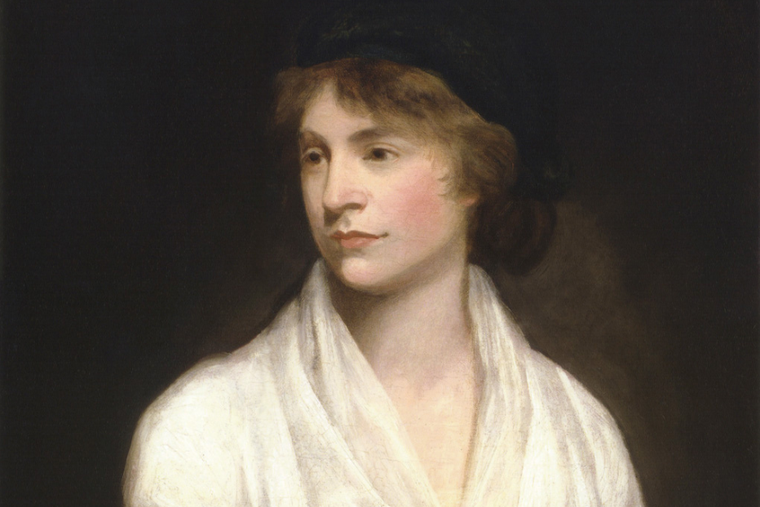
<p>I argue in my 2021 book, <a href="https://undpress.nd.edu/9780268200824/the-rights-of-women/"><i>The Rights of Women: Reclaiming a Lost Vision</i></a>, that this early approach to women’s rights offers a coherent, robust and humane framework from which to craft legal and political arguments in favor of a pro-life, pro-family feminism in our day. And it’s a lost vision, in my telling, that originates with the thought of the late-18th century English philosopher Mary Wollstonecraft. </p>
<p>Carrie Gress’ new book tracing modern feminism’s many ills to early feminism’s origins in Wollstonecraft implicitly challenges my account. Several reviewers — at least three of them philosophers — have in turn challenged her. </p>
<p>In “<a href="https://www.ncregister.com/commentaries/model-mother-mary-instead-of-mary-wollstonecraft">Which Mary Should Catholic Women Follow</a>?” Gress responds to her critics. She writes that these reviewers “voiced disappointment that the book did not include a robust endorsement of Mary Wollstonecraft as a model for today’s women.” But no review I’ve read maintained that Wollstonecraft ought to be followed in the way Catholics follow Our Lady or the female saints. They only wished for a recognizable interpretation of Wollstonecraft’s thought. </p>
<p>As Gress is a colleague of mine at the Ethics and Public Policy Center, I’ve sought to avoid publicly disputing her book’s misrepresentation of a philosopher whose thought, I argue, shares a close kinship with a great Catholic legal scholar, my mentor, Mary Ann Glendon. But after Gress’ essay repeats her book’s serious claims that Wollstonecraft “placed her hope in [Enlightenment] reason,” was “driven by a desire to erase authority,” and even that the basis of her “philosophical ideas” can be implicated in ideologies like communism, I’d like to offer a few thoughts, at the Register’s invitation. </p>
<p><b> </b></p>
<h3><b>Understanding Mary Wollstonecraft: Faith and Reason</b></h3>
<p>Happily, in this essay, Gress now seems to acknowledge that Wollstonecraft was pro-life, pro-marriage, pro-motherhood and fatherhood, that she sought the flourishing of women (rather than the imitation of men), and even that she professed “a Christian faith.” As I point to these noble characteristics in Wollstonecraft’s thought as aspects of the “lost vision” I seek to reclaim, I was heartened to read this. </p>
<p>Nevertheless, Gress’ account in the essay, like that in her book, associates Wollstonecraft’s thought with the most radical, rationalist elements of the French Enlightenment whose excesses led to the Reign of Terror. But Wollstonecraft was neither a Jacobin nor a rationalist, as her own writings make plain. While she (and many other moderates) lacked Burke’s prescience at the start of the revolution, she wrote a book condemning its violent excesses in 1794. </p>
<p>And so I ask: why interpret Wollstonecraft and her account of reason — upon which, as Gress rightly suggests, much depends — through her (male) associates<i> </i>rather than seeking to understand how she herself thinks about reason (and its proper cultivation)? </p>
<p>Wollstonecraft was, in fact, critical of cold, disembodied rationalism, not in favor of it. And she certainly didn’t think, with Kant, that one could reason autonomously to moral absolutes shorn of one’s utter dependence upon and responsibility to God. For her, the moral life is not opposed to our natural inclinations, but rather the perfection of those inclinations through imitation and habituation in the virtues, both intellectual and moral. “Other creatures,” she writes in <a href="https://www.abigailadamsinstitute.org/original-stories"><i>Original Stories from Real Life</i></a> (1788), “only think of supporting themselves; but man is allowed to ennoble his nature, by cultivating his mind and enlarging his heart.” Writing <i>against “</i>the deists,” then, in their doubt-laden quest for “certainty,” she explains:</p>
<blockquote><p>“Reason is indeed the heaven-lighted lamp in man, and may safely be trusted when not entirely depended on; but when it pretends to discover what is beyond its kin, it certainly stretches the line too far, and runs into absurdity.” </p></blockquote>
<p>If her religiosity is more muted in her later political writings than her early pedagogical ones, it is still readily discernible to a careful eye. Ultimately, throughout her life, she placed her hope not in human reason, which she well knew was fallible, but in God’s eternal reason and his promises. </p>
<p><b> </b></p>
<p><b> </b></p>
<h3><b>Freedom Through Virtue</b></h3>
<p>“The main business of our lives,” Wollstonecraft writes in her first book, <a href="https://www.gutenberg.org/files/67466/67466-h/67466-h.htm"><i>Thoughts on the Education of Daughters</i></a><i> </i>(1787), “is to learn to be virtuous; and He who is training us for immortal bliss, knows best what trials will contribute to make us so; and our resignation and improvement will render us more respectable to ourselves, and to that Being, whose approbation is of more value than life itself.” </p>
<p>Although Wollstonecraft’s account of virtue is not systematic — she is no Thomas Aquinas &#8212; she explores how human beings grow in virtue through the gradual and dynamic refinement of the imagination, understanding, judgment and affections. We begin our growth in virtue through imitating the patterns we find in moral exemplars, firstly God himself: “Thank God,” the narrating governess tells her two pupils in <i>Original Stories</i>, “for giving you an understanding which teaches you that you ought, by doing good, to imitate Him.” In a 1787 letter to her sister, she expressed admiration for this definition of virtue: “the doing good to mankind in obedience to the will of God, and for the sake of everlasting happiness.” Schooling the moral imagination through imitation of moral exemplars was the key to acquiring virtue for Wollstonecraft — but so was making virtue one’s own. </p>
<p>Against liberal feminism’s illusions about autonomy-as-radical-independence, Wollstonecraft writes beautifully of not only our deep dependence upon each other as we grow in the virtues, but also our own personal accountability to do so. Both are characteristics, she thought, of our “creatureliness”: “[W]e are all dependent on each other; and this dependence is wisely ordered by our Heavenly Father, to call forth many virtues, to exercise the best affections of the human heart, and fix them into habits.” But we are also, she writes, “created accountable creatures [who] must run the race ourselves, and by our own exertions acquire virtue: the utmost our friends can do is point out the right road, and clear away some of the loose rubbish which might at first retard our progress.” </p>
<p>To grow in the virtues, we need the assistance of mothers and fathers, of teachers, of characters in good books, and of God himself: “Teach us with humble awe to imitate the divine patterns thou hast set before us … and lure us to the paths of virtue,” she pleads in one of four <a href="https://www.abigailadamsinstitute.org/the-female-reader-prayers">beautiful prayers</a> she composed for publication. To that end, in 1789, she published <a href="https://www.abigailadamsinstitute.org/the-female-reader-preface"><i>The Female Reader</i></a>, compiling edifying passages from Scripture, Shakespeare, Milton and others “for the improvement of females.” It is this <i>making virtue one’s own</i> that afforded women “independence”: the capacity of carrying out their obligations to others virtuously and thus <i>freely</i>. </p>
<p>Indeed, Wollstonecraft’s great complaint in her most famous text, <a href="https://www.abigailadamsinstitute.org/vindication-of-rights-of-woman"><i>A Vindication of the</i> <i>Rights of Woman</i></a>, was that an infantilizing system of education had not prepared women for their deeply noble human, social, spousal<i> </i>and<i> </i>maternal obligations, the last of which was “one of the grand duties annexed to the female character by nature.” Caring more about sensual pleasures, self-adornment and preening — and “establishing themselves” socially — these superficial women focused not on their most important work: forming their own characters and those of their children. </p>
<p>This conventional path is a degradation of what women ought to be. Indeed, because women have human souls, they are, like men, created “to rise in excellency by the exercise of powers implanted for that purpose.” Wollstonecraft certainly did not wish for women to become free of the demands of family and society, as Gress argues in her book. Rather, she wanted them to become capable of carrying out their duties as “more observant daughters, more affectionate sisters, more faithful wives, and more reasonable mothers.” </p>
<p><b> </b></p>
<p><b> </b></p>
<h3><b>Wollstonecraft’s Legacy</b></h3>
<p>Scores of biographies have been written over the last two centuries on Wollstonecraft, <a href="https://www.amazon.com/Betwixt-Between-Biographies-Mary-Wollstonecraft/dp/1785271857">reproducing error upon error</a>. And the <a href="https://anthempress.com/wollstonecraft-and-religion-hb">religious orientation</a> of her thought was long whitewashed from anthologies of women’s history, like the ones so many read in college. But in the last few <a href="https://www.amazon.com/Rights-Woman-Chimera-Philosophy-Wollstonecraft/dp/041597853X">decades</a>, <a href="https://press.princeton.edu/books/hardcover/9780691169033/wollstonecraft">serious</a> <a href="https://www.thepublicdiscourse.com/2023/06/89526/">academics</a> and <a href="https://www.amazon.com/Manliness-Harvey-C-Mansfield/dp/0300122543">public</a> <a href="https://www.amazon.com/Natality-Toward-Philosophy-Jennifer-Banks/dp/1324006390/ref=sr_1_1?dib=eyJ2IjoiMSJ9.bumtjojePnn6R0aXL9EZzO_uwh1YapH_wHbR5SFF-vHGjHj071QN20LucGBJIEps.fvNqjzfHt9xiVWmwvGRuMwYXanp9QU86FLK4UFGAr70&;dib_tag=se&;hvadid=656643655864&;hvdev=c&;hvlocphy=9001951&;hvnetw=g&;hvqmt=e&;hvrand=12223633048434621001&;hvtargid=kwd-2040901505641&;hydadcr=10278_13485354&;keywords=natality+toward+a+philosophy+of+birth&;qid=1713890166&;sr=8-1">intellectuals</a> have prioritized <a href="https://canopyforum.org/whats-wrong-with-rights/#:~:text=Biggar%20argues%20that%20we%20ought,courts%20too%20much%20discretion%20to">reading her</a> work closely <a href="https://www.abigailadamsinstitute.org/in-her-own-words">instead</a>. This is just as the early women’s rights advocates did.</p>
<p>Nineteenth century readers of Wollstonecraft, such as Quaker abolitionist and women’s rights advocates <a href="https://curiosity.lib.harvard.edu/women-working-1800-1930/catalog/45-990022060320203941">Sarah</a> <a href="https://www.abigailadamsinstitute.org/grimke-marriage">Grimke</a> and <a href="https://awpc.cattcenter.iastate.edu/2017/03/21/discourse-on-women-dec-17-1849/">Lucretia Mott</a>, made their influential appeals, as she did, on the basis of women as full sharers in the <i>imago Dei</i>. (That they are not remembered as well as the far more radical Elizabeth Cady Stanton is a product of ideological memory-holing too.) Rather than promote “an ideology that undermines faith and family,”<i> </i>Wollstonecraft and her American adherents leaned into their faith to promote the needs of families in an era of great political, economic and cultural upheaval — a time not, in fact, so much unlike our own. </p>
<p>Responding to the deracinating <a href="https://www.firstthings.com/article/2023/04/sex-realist-feminism">impact of liberalism</a> and <a href="https://americancompass.org/pursuing-the-reuinification-of-home-and-work/">industrial capitalism</a> on vulnerable women and children, the antebellum women’s movement fought for a host of rights to carry out their duties: the right to speak publicly against the abominations like slavery, without being targeted as “unwomanly” for doing so; for property and contract rights, to justly recognize their contributions inside and outside the household; for custody rights, so they wouldn’t be forced to abandon their children to escape abuse; for rights of access to education and the professions, so they were not forced into an ill-suited marriage (or prostitution) just to survive; for the right to say No to sex in marriage, against the customary male sexual prerogative; and for just workplace laws and protections. Some of these rights and privileges, so obviously just to most of us today, took 50 to 100 years to secure. </p>
<p> </p>
<p><b> </b></p>
<h3><b> ‘Feminism’: A Perennial Need in a Fallen World</b></h3>
<p>Gress and I are both strong critics of modern feminism, especially the illusory, false and inhumane responses to female vulnerability. Both of us regard monogamous and lifelong marriage to a chaste, virtuous man as the single best response to the same. I have argued as much in my book, and despite the personal circumstances of her romantic life, Wollstonecraft wished for this, too.</p>
<p>But we live in a fallen world. And all too often, what St. Edith Stein called the “specific degeneracy of man” — brutal domination of vulnerable others, especially women — works in devastating concert with the “specific degeneracy of woman”— servile dependence on men — to give rise to very dangerous situations for women, because we are more vulnerable. This is <a href="http://www.laici.va/content/dam/laici/documenti/donna/culturasocieta/english/Women,%20Sexual%20Assymetry%20and%20Catholic%20Teaching.pdf">precisely the risk</a> to women that every “feminist” sees. And so, in our post-Christian, porn-saturated times, following the anti-feminist line all the way down to “restoring the patriarchy” — as Gress <a href="https://pintswithaquinas.libsyn.com/women-need-the-patriarchy-w-dr-carrie-gress">recommends</a> — is, indeed, a dangerous offering for women. </p>
<p>Women, in particular, face enormous threats in our post-industrial technological age: trans ideology, pornography, sex trafficking, surrogacy, and a culture of often violent casual sex. Indeed, because of female vulnerability — and in light of the Fall — something like “feminism” is perennially needed. Although she may disagree with their embrace of the term, those who champion what John Paul II called “new feminism” share the same goal: building what Gress describes as “a civilization in which vulnerability is considered and cared for and the needs of women met.” This is a point on which <a href="http://www.laici.va/content/dam/laici/documenti/donna/culturasocieta/english/Women,%20Sexual%20Assymetry%20and%20Catholic%20Teaching.pdf">we wholeheartedly agree</a>.</p>
<p>If ever there was a time to build a new women’s movement — as a <a href="https://www.youtube.com/watch?v=kIpKqONFhjQ">kind of phoenix rising</a> from the ashes of autonomy feminism’s <a href="https://www.thepublicdiscourse.com/2021/07/76816/">internal combustion</a> — that time is now. Such a movement would look to John Paul II and Benedict’s writings on women; Catholic philosophers like Edith Stein; and smart, articulate, faith-filled Catholic women — like Gress — who seek authentically to form women of faith today.</p>
<p>But if such a movement hopes to <a href="https://www.nytimes.com/2022/05/31/opinion/ezra-klein-podcast-erika-bachiochi.html?smid=nytcore-ios-share&;referringSource=articleShare&;sgrp=c-cb">reach a broader audience</a> — and inform our legal and political debates — such a movement would do well to lean on the religiously inspired, virtue-oriented vision of rights and duties put forward by great public advocates of women well before the modern obsession with autonomy took hold. Wollstonecraft’s thought — and the thought of other brilliant 19th-century and <a href="https://www.nationalaffairs.com/publications/detail/the-contested-meaning-of-womens-equality">early-20th-century women</a> I trace in my book and that <a href="https://www.theamericanconservative.com/when-feminism-was-sexist-and-anti-suffrage/">others</a> are <a href="https://fairerdisputations.org/making-the-world-home-like-fighting-the-sexual-double-standard-in-the-nineteenth-century-and-today/">now</a> <a href="https://www.encounterbooks.com/books/pity-for-evil/">recovering</a> — can help us build anew. </p>
<p>Indeed, the <a href="https://fairerdisputations.org/">new movement</a> has already begun. <a href="https://fairerdisputations.substack.com/">Join us!</a></p>
<p> </p>
</p></div>
<p><br />
<br /><a href="https://www.ncregister.com/commentaries/reason-of-mary-wollstonecraft-erika-bachiochi-feminism">Source link </a></p>
<p><!-- END THEIA POST SLIDER --></p>

Championing Women and Their Moral Formation| National Catholic Register