<p><!-- BEGIN THEIA POST SLIDER --></p>
<p> <br />
</p>
<div>
<p>The response to Humanae Vitae was immediate, vitriolic, predictable — and avoidable.</p>
</p></div>
<div>
<p>The Alabama Supreme Court’s ruling that human embryos manufactured through in vitro fertilization (IVF) <a href="https://www.ncregister.com/cna/alabama-supreme-court-rules-that-frozen-embryos-are-children-under-state-law">are children</a>, and therefore are protected under state law, got me thinking that <i>how</i> we present the Catholic Church’s teachings can be even more consequential than the teachings themselves. </p>
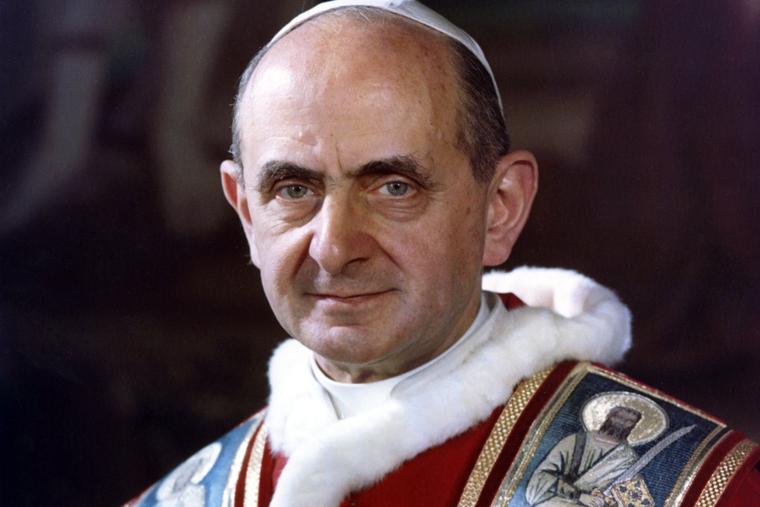
<p>While too young to have experienced the <i>Humanae Vitae</i> controversy of the 1960s, I have wondered for years why the issue was so controversial if Pope St. Paul VI simply reiterated the Church’s teachings against artificial birth control. </p>
<p>I have studied the issue in depth, and have come to a disturbing conclusion: The controversy over <i>Humanae Vitae</i> was partly caused by the delay in presenting the teaching when new questions surrounding birth control arose. </p>
<p>As enunciated in the Catechism of the Catholic Church, the teaching is clear: </p>
<blockquote><p>The use of mechanical (IUDs), chemical (birth control pills), or medical procedures (tubal ligations) to prevent conception from taking place as a result of sexual intercourse &#8230; offends against the openness to procreation required of marriage and also the inner truth of conjugal love (2370). </p></blockquote>
<p>Birth control always has been, and always will be, an intrinsic evil. </p>
<p>At the same time, it seems to me that the controversy over <i>Humanae Vitae</i> was largely avoidable. On Aug. 15, 1930, the Anglican Communion announced its decision to approve artificial birth control for married couples in certain circumstances (these circumstances were soon broadened to approve birth control for any reason). </p>
<p>This new development presented a new challenge to the Catholic Church, which Pope Pius XI answered four months later, on Dec. 31, 1930 (the dates are important), in the encyclical <i>Casti</i> <i>Connubii</i>, where he declared that artificial birth control is both impermissible and immoral. By acting expeditiously, the Holy Father swiftly closed the door to any appearance of change or alteration of Catholic teaching in this area. Catholics by and large accepted the Church’s teaching. The same issue of artificial birth control would rear its ugly head 30 years later, and two other popes would make different decisions, leading to a different outcome. </p>
<p>The birth control pill was available in the early 1950s. I have seen articles about it as early as 1953. Pope Pius XII, <a href="https://www.ewtn.com/catholicism/library/allocution-to-midwives-8965">speaking to midwives</a> in 1951, reiterated <a href="https://www.vatican.va/content/pius-xi/en/encyclicals/documents/hf_p-xi_enc_19301231_casti-connubii.html"><i>Casti Connubii</i></a> in saying that efforts to hinder the natural effects of the conjugal act are immoral. He, like his predecessor, allowed no question about the Church’s position on this issue to arise. </p>
<p>When the issue was brought to Pope St. John XXIII in 1960, in part by those advocating its use in developing countries to reduce growing populations and combat poverty, he gave the issue over to the Second Vatican Council for consideration. When John died in June 1963, Pope St. Paul VI created the Pontifical Commission on Birth Control, which began maneuvering in favor of a change in the Church’s teaching. It was not until five years later, and roughly 15 years after the pill first came on the market, that Pope St. Paul VI finally issued <a href="https://www.vatican.va/content/paul-vi/en/encyclicals/documents/hf_p-vi_enc_25071968_humanae-vitae.html"><i>Humanae Vitae</i></a> (July 25, 1968). </p>
<p>The response to the long-awaited encyclical was immediate, vitriolic, predictable and avoidable. Protests among some bishops, priests and many lay people were loud and boisterous. Newspapers and magazines heaped scorn on both the Holy Father and the Church. By delaying for five years after his accession to the papacy, in addition to the three years during which Pope St. John XXIII issued no clarification, Pope St. Paul VI created the unrealistic expectation that the teaching would change. As weeks, and then months, went by, with no clear statement on the issue of the Pill, both clergy and laity became convinced that the teaching was about to change. </p>
<p>Pope Paul’s silence in these years allowed the issue to fester and become intensely controversial when he finally reiterated the Church’s position. </p>
<p>Paul said he wanted time to reflect and consult with experts. However, so much time allowed unrealistic expectations of a change in Catholic teaching to grow. Paul had the working example of his predecessor, Pope Pius XI, only 30 years previously, to follow. Had Pope John on Dec. 31, 1960 (the 30th anniversary of Casti Connubii), or Paul VI on Dec. 31, 1963, issued <i>Humanae Vitae</i>, the controversy probably would not have been so intense. Some would have reacted negatively, but the faithful would not have been led to believe things would change. </p>
<p>In addition, after waiting so long, the Holy Father failed to argue a strong case, in my view. While it reiterates the Church’s constant tradition on artificial birth control, describes some beautiful qualities of married love, and urges bishops, priests, doctors, scientists and married couples to follow the teaching, it relies too little on arguments from Scripture, moral tradition and patristic teaching. </p>
<p>Both <i>Casti Connubii</i> in 1930 and Pope St. John Paul II’s <a href="https://www.vatican.va/content/john-paul-ii/en/encyclicals/documents/hf_jp-ii_enc_25031995_evangelium-vitae.html"><i>Evangelium Vitae</i></a> in 1994 are superior models of solid and substantive teaching on life issues. <i>Humanae Vitae</i> encyclical never uses the phrases “intrinsic evil” or “mortal sin” when discussing the issue, leaving the impression that this is a “policy change” instead of a serious moral teaching. </p>
<p>Pope St. Paul VI was correct in reiterating the Church’s teaching on this issue. But the tragic delay, for which he and his immediate predecessor are responsible, set the stage for the outright rejection of the teaching. Decades of experiences have shown the contempt for which this sacred teaching is held in many Catholic circles. I write this essay with sadness, but with conviction that we must get history right if we are to learn from it. </p>
<p>To overlook the eight-year delay of two pontificates in issuing the contraception teaching misses a key reason for the rejection, the anticipation of a change that was never going to happen. May we learn to study and teach history honestly, as difficult as that may be.</p>
</p></div>
<p><br />
<br /><a href="https://www.ncregister.com/blog/father-atwood-humanae-vitae">Source link </a></p>
<p><!-- END THEIA POST SLIDER --></p>

Christ ‘Taught as One Having Authority’ — and So Must His Church| National Catholic Register