


A new study released this month by the U.S. Conference of Catholic Bishops (USCCB) is taking a closer look at the impact of the recent National Eucharistic Revival, examining the strengths and weaknesses of the multiyear initiative that was aimed at promoting devotion to the Blessed Sacrament nationwide.
The USCCB launched the initiative in June 2022 with an explicit mission to “renew the Church by enkindling a living relationship with the Lord Jesus Christ in the holy Eucharist.”
Throughout the Revival, Catholics from across the country — more than a million total, according to organizer estimates — took part in special events focused on celebrating Christ in the Eucharist: at their home parishes, throughout their dioceses, and at the national level. The centerpieces of the Revival were the National Eucharistic Congress in July 2024 in Indianapolis and the National Eucharistic Pilgrimages, which spanned the country in 2024 and 2025 (with another similar pilgrimage slated for this summer).
So did Catholic leaders realize their goal of enkindling a renewed relationship with Christ in the Eucharist nationwide? Assessing the effectiveness of the Eucharistic Revival isn’t merely an academic exercise: Costing an estimated $10 million, the Revival took a lot of resources and effort to pull off. Was the investment and considerable effort worth it?
The USCCB-commissioned study, released Jan. 15, aimed to find out. Conducted by the Catholic firm Vinea Research, the study queried several hundred priests, deacons and parish employees, along with several thousand lay Catholics — none of whom were formally involved with organizing the Eucharistic Revival. They were asked to evaluate their faith life “then” in 2021, prior to the start of the Revival, versus “now” in 2025, when the respondents were surveyed. To ensure unbiased results, the questions regarding faith activities over time were not linked to the Eucharistic Revival until later in the survey.
Here are seven key takeaways from the study.
1. Clergy were left feeling encouraged and confident.
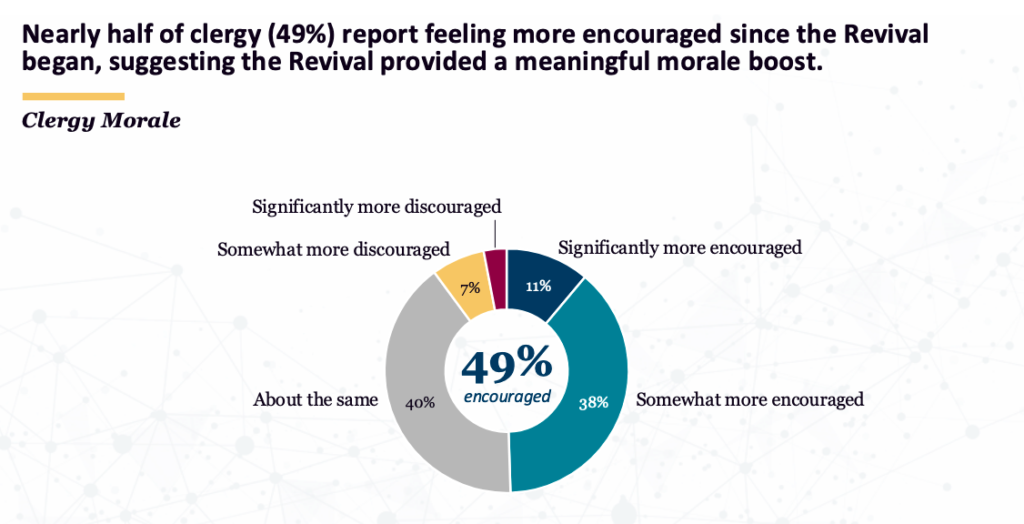
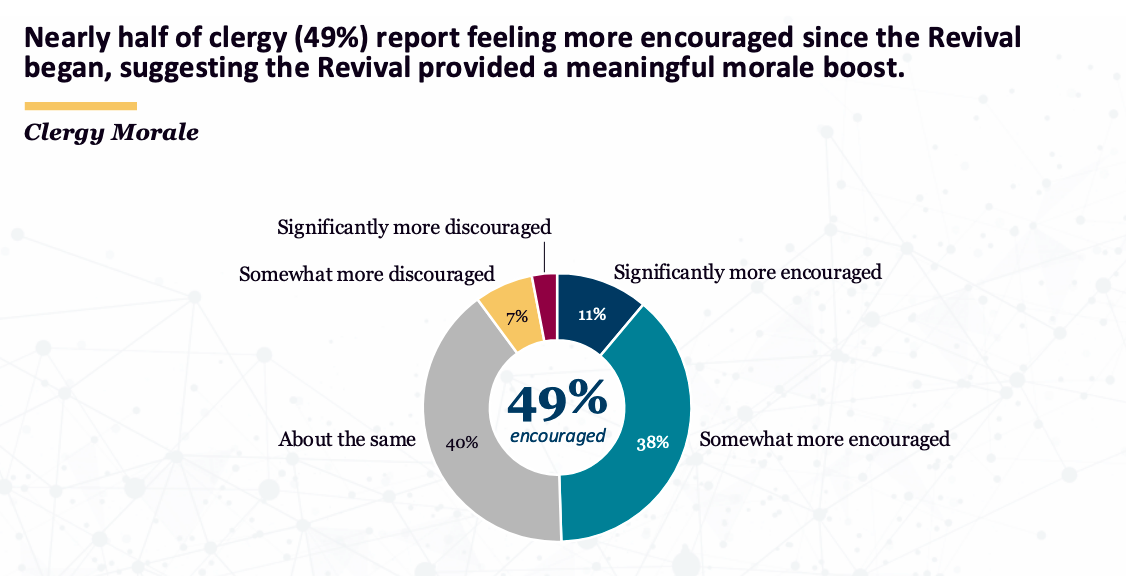
Nearly half (49%) of clergy reported feeling more encouraged since the Revival began, and a similar number said they feel more comfortable encouraging others to share their faith, indicating, the researchers said, an impact on removing barriers to evangelization.
The Revival also influenced clergy’s pastoral approach and homiletic content, the researchers concluded. This included a larger number of priests encouraging parishioners in their Eucharistic devotion, a greater emphasis on evangelization and outreach, and more time spent by the priests themselves in adoration.

2. National events made headlines, but local events also proved fruitful.
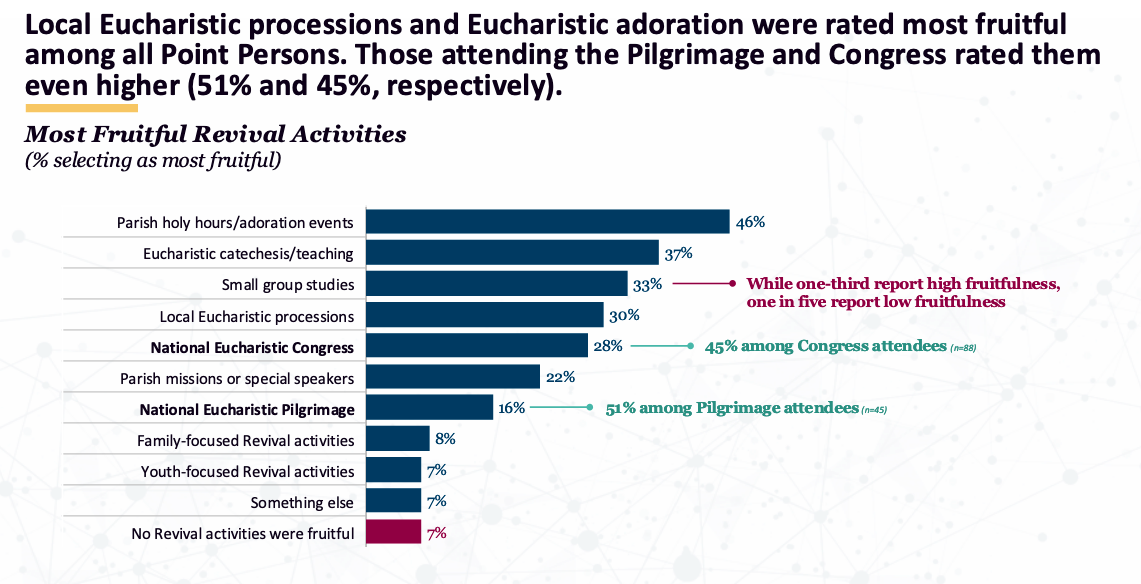
More than half (53%) of respondents said Holy Hours and adoration events at their own parishes were the most “fruitful” for them in terms of positively impacting their spiritual lives, along with 39% who cited local Eucharistic processions.
Roughly a quarter of Catholics overall said the national events, like the congress and the pilgrimages, were the most fruitful events for them; among Catholics who actually attended those events in person, however, roughly two-thirds cited those events as the most fruitful.
Even among those not actively participating in Revival events, awareness of the events was high — with “Catholic media” cited as the No. 1 source for information about the Revival. Cost and scheduling conflicts were cited as the top reasons for not attending national events.

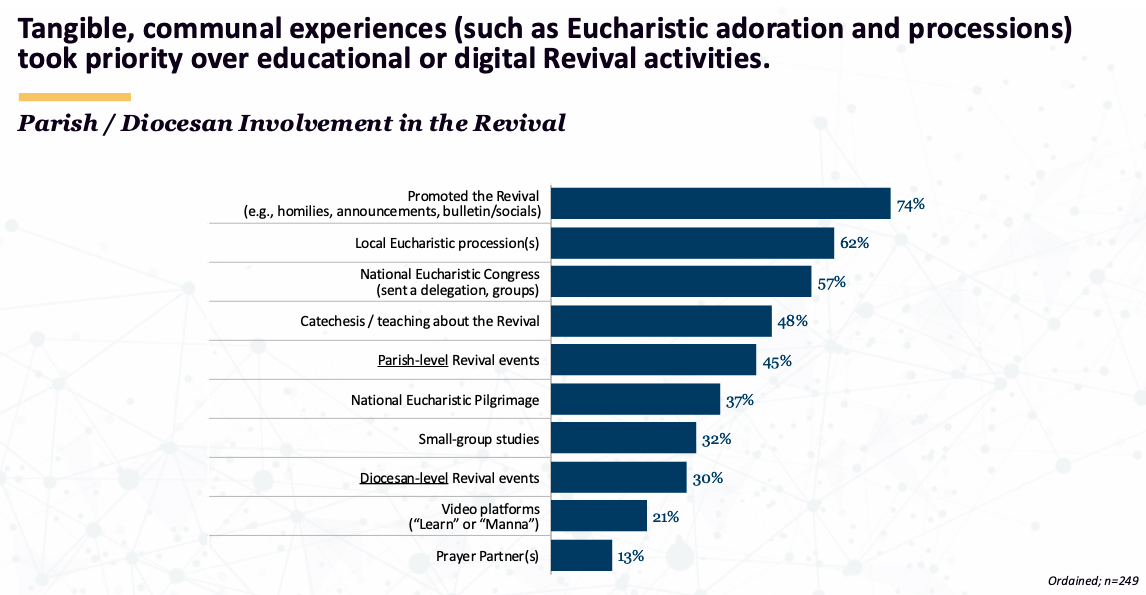
3. Tangible, communal experiences (such as Eucharistic adoration and processions) took priority over educational or digital Revival activities.
The in-person Eucharistic Congress and — as mentioned — local Holy Hours, processions, and other events were ranked highest by respondents in terms of “fruitfulness.”
In contrast, participation in digital aspects of the Revival, such as an online educational video series, were ranked far lower.

4. Clergy reported measurable gains in their parishes.
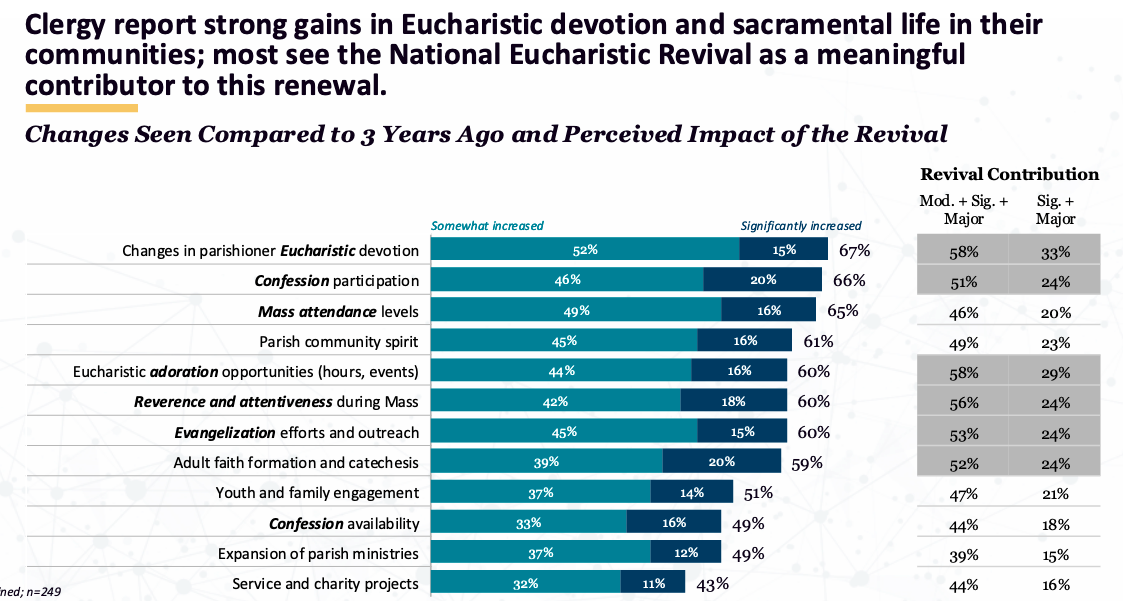
Clergy report strong improvement in Eucharistic devotion and sacramental life in their parish communities, and most said they see the National Eucharistic Revival as a contributor to this renewal. Nearly three-quarters of the clergy and laypeople involved in the Revival reported they have since increased their focus on Eucharist-centered teaching and preaching.

5. Holistic spiritual growth experienced by lay Catholics.
While the Revival efforts had the greatest impact among Catholics who were already engaged in their faith, most respondents across all groups of Catholics reported at least some impact on their faith lives.
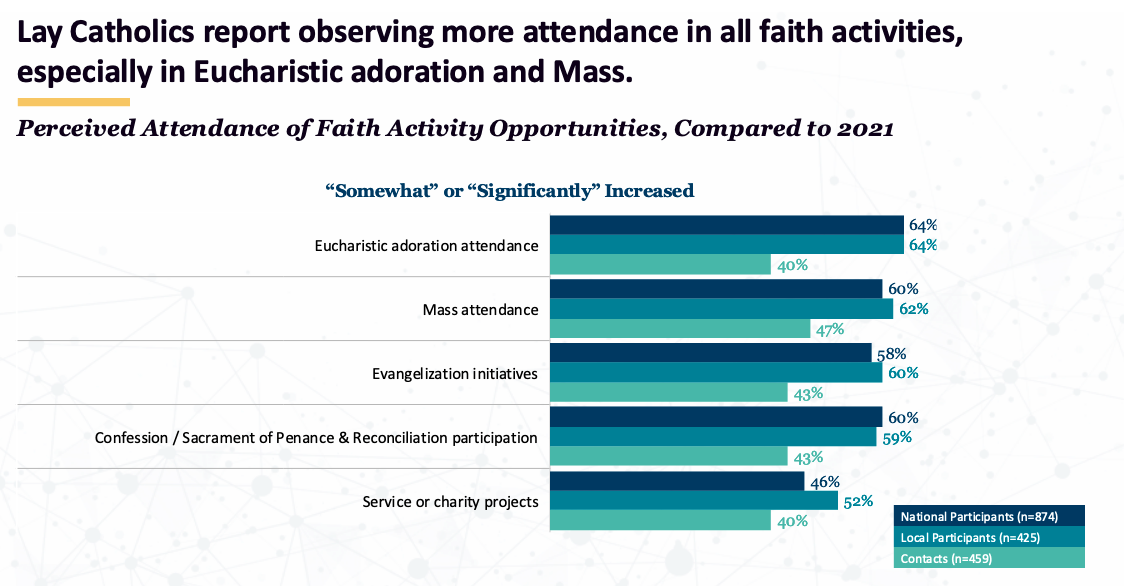
Self-reported participation in faith-related activities — such as attending Mass, Scripture reading and study, spending quiet time in Eucharistic adoration, and going to confession — all showed significant increases among respondents since 2021. Among these activities, “volunteering in their community” experienced the greatest net increase since the Revival.
A large majority of lay Catholics who took the survey described their overall level of faith as stronger now than in 2021, with more than one-third reporting it is “much stronger” rather than just “somewhat stronger.”
In terms of belief, Catholics who took the survey also showed double-digit gains in their self-reported belief in the Real Presence of Jesus in the Eucharist, their desire to deepen their relationship with Jesus, and their comfort in explaining Catholic beliefs about the Eucharist to others — though those particular numbers were still quite low, hovering around 40% on average.
Still, even if Catholics didn’t always feel entirely comfortable doing so, evangelization activities — sharing faith with others, inviting people to church, and discussing the Eucharist — greatly increased since 2021, according to the responses. This increase was more prevalent among Revival participants than among Catholics as a whole.

6. There is room for improvement in reaching non-engaged Catholics.
Clergy who served as point persons for their local Revival events were asked how effective they think the Revival was at reaching and engaging different groups of Catholics.
In reaching Catholics who already attend Mass regularly, 98% of those clergy thought the Revival was successful. In reaching families with children, 85% of the clergy thought the Revival was successful.
In contrast, 26% of those clergy opined that the Revival was not successful in reaching young adults, and 30% said it was not successful in reaching less-engaged or lapsed Catholics.
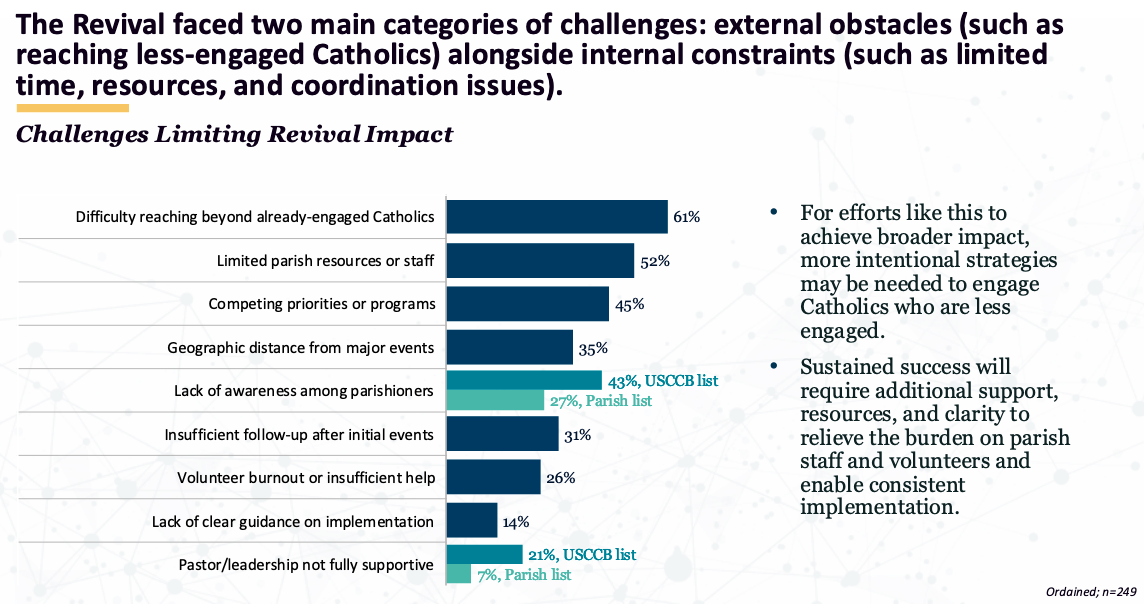
Among lay point people for the Revival, two-thirds of them said they encountered difficulties reaching beyond already engaged Catholics — the No. 1 cited challenge limiting the Revival’s impact, they said.

7. Commitment to Eucharistic devotion is sustained.
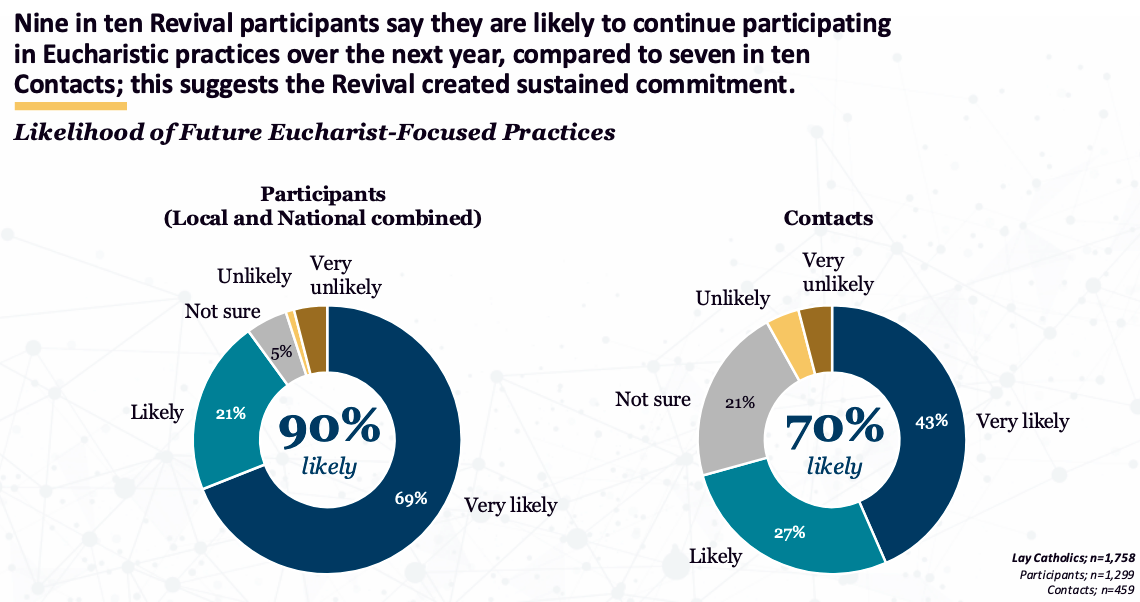
Lay Catholics reported that their parishes and dioceses now offer more opportunities to participate in evangelization initiatives and Eucharistic adoration. This growth has the hallmarks of being sustainable, with 90% of respondents saying they are likely to continue their Eucharistic practices over the coming year, including 69% who are “very likely” to do so.
This commitment is mirrored at the local level, where clergy and laypeople report that initiatives like perpetual adoration have “stuck” and remain “going strong” months after major national events.

The study shows that the Revival was by many measures successful in encouraging Catholics, both clerical and lay, in their Eucharistic devotion and the overall practice of their faith. Going forward, it’s clear that there remains much to be done to figure out how to reach non-Catholics, Catholics who are fallen away, or those Catholics who are not already actively living out their Catholic faith — thereby bringing them to a deeper encounter with Jesus in the Eucharist.