<p><!-- BEGIN THEIA POST SLIDER --></p>
<p> <br />
</p>
<div>
<p>The ‘facts’ of the materialist, devoid of metaphysical truth, do not hold water.</p>
</p></div>
<div>
<p>Let’s begin our discussion of faith and fiction by playing devil’s advocate, or, at least, by giving the devil his due. </p>
<p>It cannot be denied that the devil has had great success in convincing many people that faith and fiction are synonymous. In our materialistic age, many believe that faith in God is no more “real” than fiction. The problem is that such people do not really understand faith, fiction or reality. They believe that reality is confined to the purely physical and that there is no reality beyond the physical. The cosmos is comprised of three dimensions, which we perceive with our five senses. And that’s all there is. Anything else is purely fiction. As we shall see, however, such skepticism can be exposed as false merely by sticking to the cold hard facts.</p>
<p>The fact is that faith is an essential and unavoidable part of reality. Each of us proceeds in our daily lives on the basis of faith. We believe that the store we visited last week will still be there this week; we believe that we, who are here this week, will still be here next week. On the assumption that we are in healthy and happy marriages, we believe that our spouses will remain faithful to us in our absence. In each case, there is no absolute guarantee that the things we believe in faith will be borne out by reality. Nonetheless, we proceed as though the things that we accept in faith are as good as certain. But, our devil’s advocate will insist, these are merely rational judgments based on experience and probability. It would be foolish not to have faith in something which we know, in all probability, will come to pass. Precisely, we reply, and we can show that belief in the metaphysical and the supernatural, and ultimately in God himself, is as probable as these other things that we take for granted and, as such, we can show that it is folly to lack faith in the Divine. </p>
<p>This is not the time or place to offer a definitive summary of the wealth of rational evidence for the probability of God’s existence, and for the probability of metaphysics and the supernatural. Suffice to say, the vast majority of philosophers through the ages have accepted and shown the rational probability of the Divine and its metaphysical consequences. This is important and must be insisted upon. Indeed, it is worth reiterating: Philosophers throughout the centuries have shown that the existence of God is so likely, rationally speaking, that religious faith is based on a probability verging on certitude. </p>
<p>Having iterated and reiterated the rational foundations for faith, we cannot avoid the irony inherent in the irrational faithlessness of the materialist. Most materialists have never so much as considered the rational evidence for religious faith or metaphysics. They have never read Plato or Aristotle, or Augustine or Aquinas. Many, no doubt, have never even heard of them. The fact is that most materialists have accepted materialism as a matter of blind faith without examining the evidence. Secure in the arrogance of their ignorance, they accept in faith something that they cannot defend in reason. Isn’t this a definition of superstition? Might it not be said, therefore, that materialism is the superstition of the modern man? </p>
<p>So much for faith, what about fiction?</p>
<p>Many materialists, priding themselves in their practicality, dismiss fiction in the same manner in which they dismiss faith, as something which is ultimately untrue. Give me the facts, they insist, and nothing but the facts. The problem that they have not considered is that facts are not all that they seem to be, or, more accurately, facts are more than they seem to be. The materialist fails to see that “the facts and nothing but the facts” must become “the truth, the whole truth, and nothing but the truth.” The fact is that the “facts” of the materialist, devoid of metaphysical truth, do not hold water. Indeed the case for materialism is so full of holes that it sinks. What, therefore, are the true facts that give materialists that sinking feeling?</p>
<p>One axiomatic truth that punctures a hole in the claims of the materialist is that mathematics and physics accept metaphysical assumptions. Take, for example, the mathematical use of imaginary numbers, such as minus one, or the way in which electrical engineering uses the square root of minus one. Take, as another instance, the way in which mathematics does not confine itself to the three dimensions of the materialist but works in an infinite number of dimensions, which can’t be said to exist physically. The delightful paradox is that physics depends upon metaphysics. Since, for the materialist, metaphysical assumptions do not exist, the materialist can be seen to be as irrational in his approach to science as he is in his approach to philosophy or religion. If, for the materialist, fiction can be defined as the invention of imaginary things that do not exist in the “real world,” he must believe that physics is fiction! Imaginary numbers are, after all, figures or figments of the mathematical imagination, or what might be termed the imaginative products of scientific creativity.</p>
<p>Defeating our devil’s advocate, we have seen that faith is rational and that fiction can be true. Furthermore, and not to be overlooked, literary fiction can be as true as the fiction upon which physics depends. Throughout the centuries, writers have used fiction to tell the truth in ways that support and buttress the telling of the truth by philosophers and physicists. Great Greek writers, such as Homer and Sophocles, grappled with ethical questions of hubris and humility and the lessons to be learned through the acceptance and embrace of suffering long before the great Greek philosophers, Socrates, Plato and Aristotle, grappled with the same questions. Boethius considered the consolations of philosophy with allegorical flourish and Dante ascended to Heaven on the wings of Thomistic theology. And, of course, the list continues to get longer as the weave of faith and fiction in human history is spun: Chaucer, Shakespeare, Austen, Dickens, Dostoyevsky, Tolkien …</p>
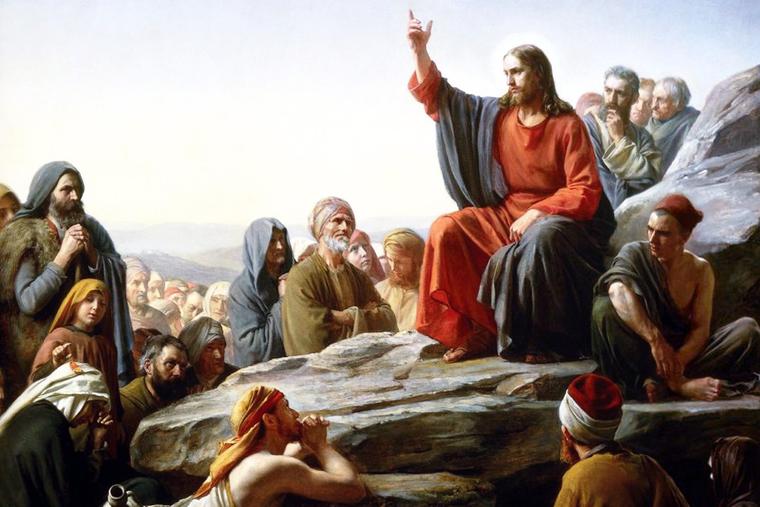
<p>Having begun with the devil’s advocate, we’ll finish with the devil’s vanquisher. The Son of God, the Incarnate Word, is the greatest of all storytellers. History is his story. Having entered his own story at the Annunciation, he proceeded to tell us even more stories. As the life of Christ is the Greatest Story ever lived, the parables of Christ are the greatest stories ever told. Jesus Christ, the Son of God and Father of Fact, taught us the Faith in fiction. What therefore God hath joined together, let not man put asunder.</p>
</p></div>
<p><br />
<br /><a href="https://www.ncregister.com/blog/joseph-pearce-faith-and-fiction">Source link </a></p>
<p><!-- END THEIA POST SLIDER --></p>

Faith Is Rational and Fiction Can Be True| National Catholic Register