<p><!-- BEGIN THEIA POST SLIDER --></p>
<p> <br />
</p>
<div>
<p>The great Dominican artist was beatified by Pope St. John Paul II, who declared him the patron saint of artists.</p>
</p></div>
<div>
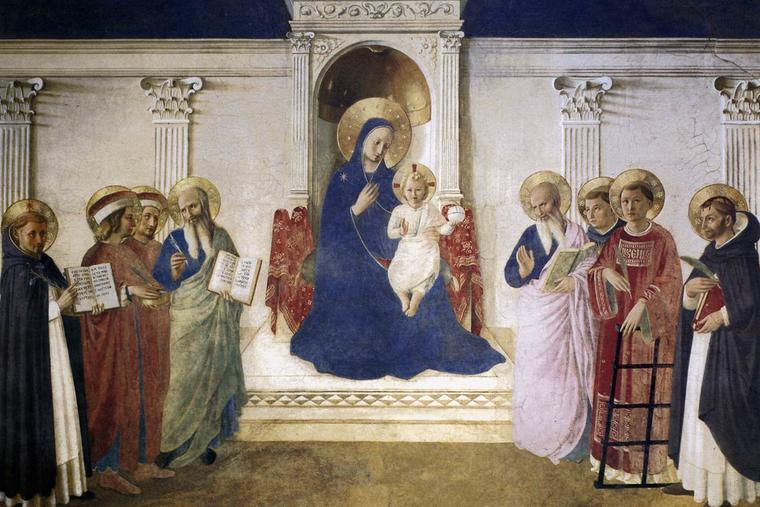
<p>Fra Giovanni da Fiesole, or Fra Angelico (1395-1455), was a Dominican friar and gifted artist of the early Renaissance. Known as “the Angelic Painter,” he created many magnificent works of religious art that adorn churches and religious houses in Italy. Among his most famous works are the Annunciation and Descent from the Cross. His feast day is Feb. 18. </p>
<p>Fra Angelico was born in Rome and joined a Dominican community known for its strict observances in 1420. He began his career as an artist illustrating manuscripts and choir books. To him, to paint was to pray, and he began each artistic endeavor begging God to bless his work. He painted only religious art and never went back to touch up or alter his work.</p>
<p>His talent was quickly recognized, and he was asked to paint interiors of convents and churches. His earliest works were done in Cortona during his novitiate, painting frescos, most of which no longer exist today. He continued his work at Fiesole and Florence.</p>
<p>His best-known pieces include an altarpiece, preserved in the National Gallery of London, showing the intricacy of his work depicting Christ in glory surrounded by 250 saints. His famous image of the Annunciation was painted at the request of the influential Cosimo de’ Medici in Florence in the 1440s. He was summoned to Rome by Pope Eugenius IV to paint church interiors and rooms used by the pope. He returned a second time to paint at the Vatican at the request of Pope Nicholas.</p>
<p>Pope St. John Paul II was asked about miracles attributed to Fra Angelico upon his beatification, and the Pope pointed to his art and said, “These are his miracles.” </p>
<p>Fra Angelico was also known for his holiness of life. Giorgio Vasari, known as the father of art history, noted:</p>
<blockquote><p>Fra Angelico was most gentle and temperate and lived chastely, withdrawn from the snares of the world. He would often comment that the man who occupies himself with the things of Christ should cling to Christ. … Whenever he painted a crucifixion, the tears would stream down his face; and it is no wonder that the faces and attitudes of his figures express the depth and sincerity of his Christian piety.</p></blockquote>
<p>He was beatified by Pope St. John Paul II in 1982. In 1984, the Pope declared Fra Angelico the patron saint of artists “because of the perfect integrity of his life and the almost divine beauty of the images he painted, to a superlative extent those of the Blessed Virgin Mary.”</p>
</p></div>
<p><br />
<br /><a href="https://www.ncregister.com/blog/fra-angelico-feast-february-18-73kiz7el">Source link </a></p>
<p><!-- END THEIA POST SLIDER --></p>

Fra Angelico’s Paintings Were His Miracles| National Catholic Register