


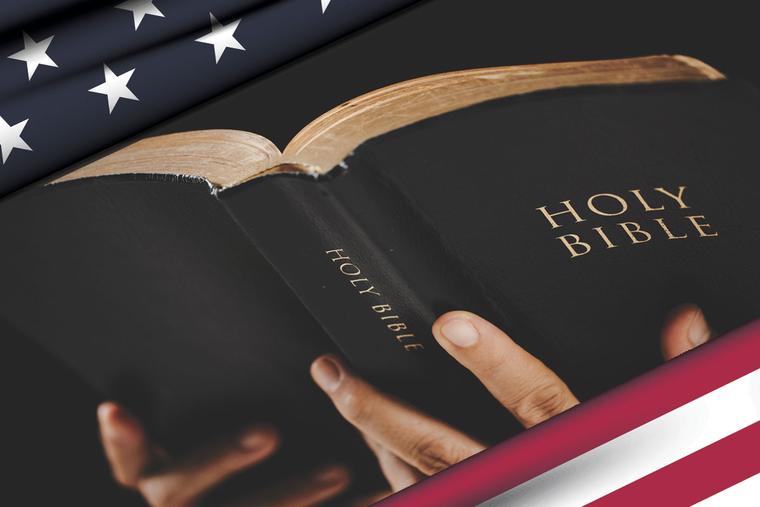
The virtue of patriotism is the habit whereby we offer properly ordered love and service to our country. It is a duty of Catholic citizens to be patriotic. Here is how the Catechism of the Catholic Church describes this duty:
“It is the duty of citizens to contribute along with the civil authorities to the good of society in a spirit of truth, justice, solidarity, and freedom. The love and service of one’s country follow from the duty of gratitude and belong to the order of charity. Submission to legitimate authorities and service of the common good require citizens to fulfill their roles in the life of the political community” (2239).
We should love and serve the land of our birth and/or the place we have chosen to reside.
Last year, I spoke of the particular duty of Catholic citizens to give witness today to the fact that there is such a thing as truth and justice knowable through right reason. All that is said there is still, in my opinion, very relevant today.
But there is more we Catholic citizens must do. We must help our nation maintain its allegiance to God. One outward sign of this allegiance is the Pledge of Allegiance most of us learned and recited daily as children. But some would like the traditional pledge to be rewritten.
For example, the film director and provocateur Michael Moore has proposed the following pledge: “I pledge allegiance to the people of the United States of America. And to the democracy for which we all stand: One person, one vote, one nation, part of one world, everyone! A seat at the table! Everyone! A slice of the pie! With liberty and justice, equality, and kindness and the pursuit of happiness for all.”
Well, my first reaction to this proposal as someone who occasionally teaches political theory is that the U.S.A. is not a democracy but a constitutional republic. But leaving the technicalities behind, one very glaring omission in this pledge is the removal of the key phrase “under God.”
But sadly, many social and political commentators greatly desire the removal of any reference to God from our public space. I recall listening in horror to the 2012 Democratic Convention in Charlotte, North Carolina, when then-Gov. Terry Strickland of Ohio, an ordained Methodist minister, proposed to “attest and affirm that our faith and belief in God is central to the American story and informs the values we’ve expressed in our party’s platform.” Then very loud and audible boos broke out in the arena. They actually had the audacity to boo God!
I believe there is great value in a civic (or civil) religion. A civil religion, is, as Robert Bellah has defined it, “certain common elements of religious orientation that the great majority of Americans share. These have played a crucial role in the development of American institutions and still provide a religious dimension for the whole fabric of American life, including the political sphere” (“Civil Religion in America,” Daedalus, Winter 1967).
One element of America’s civil religion is belief in God. Our national motto, “In God we trust,” is printed on much of our currency. Our Declaration of Independence speaks of the “Laws of Nature and Nature’s God,” of a Creator who endows unalienable rights, and of a Supreme Judge to whom a people can appeal their case.
Although the concept of God as experienced in American civil religion is far from that revealed in sacred Scripture (the God of Abraham, Isaac and Jacob who has made himself visible and known in Jesus of Nazareth), it is not in contradiction either. It is that of a Supreme Being who governs the world with Divine Providence and is rightfully recognized, honored, obeyed and worshipped.
Why is this albeit limited understanding of God important?
First, if we acknowledge God, we decenter ourselves from the main focus of concern and importance. I sometimes joke that modernity has answered the question of whether the sun or the Earth is at the center of the universe by asserting that the selfish “I” is the center of everything. If we acknowledge there is a God, then we make a huge step towards recognizing our own need for humility and service.
Second, the truth matters. And the truth is that there is a God. He exists and loves and governs all things. He holds all that is in existence and has ordered the universe by natural and moral laws that are discernible, unchanging and righteous. This means that there is truth — scientific and moral truth — that can be discovered, known and understood by mere humans.
Yes, Virginia, there is moral and scientific truth discoverable by reason.
Third, by affirming that God exists and that we the people acknowledge his existence and Divine Rule, we exclude from any serious consideration ideologies and political theories that are built on assumptions of atheism or radical materialism. This rules out communism, socialism, fascism, secularism and postmodern relativism.
It is vitally important that these false and destructive ideologies are opposed by all true American patriots. A dedication to the true good of one’s nation excludes these false political theories based on lies and totally incorrect or incomplete visions of the human person.
The phrase “under God” was not always in the Pledge of Allegiance. In fact, it was a Kansan, President Dwight Eisenhower, who officially added it when he signed into law this addition to the pledge. The original had first been introduced in 1892 by Baptist minister Francis Bellamy in celebration of the 400th anniversary of Columbus’ coming to the Americas.
It was to a large extent the work of the Knights of Columbus during the 1940s and ’50s that led to the addition of “under God.” The Knights’ many petitions and efforts led U.S. Rep. Louis Rabaut, D-Mich., to introduce the bill to officially change the pledge.
According to Becky Little, writing for the History Channel, Rabaut reasoned that the phrase “under God” gave “a deeper understanding of patriotism” to the young and would serve as “a bulwark against communism.” In this case, the congressman was correct.
President Eisenhower recognized the central role that the Knights of Columbus played in amending the pledge. He wrote to Supreme Knight Luke Hart in 1954 thanking the Knights for their efforts. In this letter, the president said,
“We are particularly thankful to you for your part in the movement to have the words ‘under God’ added to our Pledge of Allegiance. These words will remind Americans that despite our great physical strength we must remain humble. They will help us to keep constantly in our minds and hearts the spiritual and moral principles which alone give dignity to man, and upon which our way of life is founded. For the contribution which your organization has made to this cause, we must be genuinely grateful.”
What was true in 1954 is true today. A nation under God must be a people who strive for humility. And a people who are under God must know that there are spiritual and moral truths that must be known and followed. Our very dignity as a people and as individuals depends on it.
As we celebrate the 249th Independence Day this year, may we all recognize that true freedom comes from acknowledging and living out our total dependence on the God who is. May God bless our land, our nation and our people. God bless America!