<p><!-- BEGIN THEIA POST SLIDER --></p>
<p> <br />
</p>
<div>
<p>Once suppressed under communist rule, the feast of St. Stephen is now the country’s defining civic and religious holiday.</p>
</p></div>
<div>
<p>In 1989, after 40 dark years of communist rule, Hungary was ready for a fresh start.</p>
<p>When the seemingly indomitable influence of the Soviet Union collapsed, changes came suddenly and all at once in Central and Eastern Europe: Democratic elections were held, economies opened to the prosperous West, and faith was allowed to flourish once again.</p>
<p>Some of the most tangible signs of the new era of freedom were changes in symbolism. In Hungary, the communist coat of arms disappeared from the flag, the giant communist red star was removed from the top of the Parliament Building in Budapest, and the first democratically elected government had an important decision to make: Which day would become Hungary’s new primary national holiday?</p>
<p>During the communist era, the national holiday was April 4, the date of the Soviet Union’s so-called liberation of Hungary during World War II. (The Soviets did come and expel the Nazis, but as Hungarians like to say, they forgot to leave.) The government sought to replace more than 1,000 years of Hungarian history and heritage with a new regime-approved national story. Unable to draw on a long history of their own, these holidays celebrated things like “revolutionary youth” and the Hungarian Bolshevik Revolution of 1919.</p>
<p>Aug. 20, the feast of St. Stephen, presented a problem for the communists. Hungarians had celebrated the feast for centuries and the Austro-Hungarian Empire had established it as a public holiday in 1891. It was clearly incompatible with communist values.</p>
<p>St. Stephen was Hungary’s first Christian king and has long been celebrated as the founder of Christian Hungary. The day was a celebration of the nation’s Christian identity, rooted in Stephen’s unifying and evangelizing of the Hungarian people in the 11th century.</p>
<p>Stephen was a zealous Christian intent on bringing the Hungarian people to Christ. After winning a bitter contest for the throne with a pagan rival, Stephen was crowned king on Christmas Day in the year 1000, with a crown bestowed by Pope Sylvester II.</p>
<p>On his deathbed on the feast of the Assumption in 1038, St. Stephen dedicated the country to Mary. He was canonized, along with his son Emeric, on Aug. 20, 1083, by Pope St. Gregory VII.</p>
<p>The new communist regime’s solution was to subvert the holiday’s meaning. The communists intentionally chose Aug. 20, 1949, as the date to ratify the new Stalinist constitution. </p>
<p>Aug. 20 now came to symbolize the country’s new communist foundation. The holiday’s religious elements were suppressed and harvest celebrations, already traditionally celebrated in late August, were emphasized instead. It now symbolized a turning away from a Christian past and toward a new atheistic communist future.</p>
<p>Members of Hungary’s first elected Parliament considered three new holidays. In addition to Aug. 20, they weighed March 15, commemorating the 1848 revolution against Austrian Habsburg rule, and Oct. 23, commemorating the 1956 revolution, a brief but heroic uprising against communist rule.</p>
<p>All would be celebrated, but they needed to choose which would stand above the rest as Hungary’s primary national day, Hungary’s Fourth of July.</p>
<p>Left-leaning parties like the Hungarian Socialist Party favored March 15. They opposed the idea of giving pride of place to an explicitly Christian holiday and reasoned that the 1848 revolution was a better symbol for a country emerging out of tyranny and into liberal democracy. Right-leaning parties argued for Aug. 20, seeking to bring Hungary back to the roots of its cultural heritage and Christian faith. The conservatives were in the majority, and Aug. 20 became Hungary’s new national day.</p>
<p>The 20th century was brutal for Hungary: two world wars, the Iron Curtain, and a loss of two-thirds of the country’s territory — but Aug. 20, 1991, marked a return to brighter days.</p>
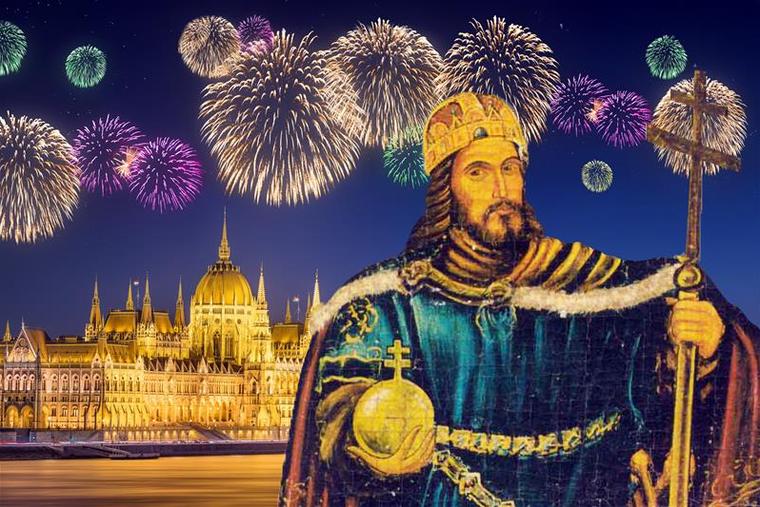
<p>This Aug. 20, Hungarians carry on the centuries-long tradition, celebrating St. Stephen with Masses, parades and fireworks throughout the country. In Budapest, Catholics process with the <a href="https://www.ncregister.com/blog/st-stephens-holy-right-and-the-mystery-of-relics">relic of the “Holy Right</a>,” the right hand of St. Stephen, which is displayed throughout the year in St. Stephen’s Basilica.</p>
<p>At the conclusion of the 2023 fireworks show along the Danube River, <a href="https://x.com/Sachinettiyil/status/1694312063349489870">a shining cross made of drones appeared high in the sky in front of Parliament</a>. The giant display was a small sign that in 21st-century secular Europe, there is at least one country that still honors its ancient Christian roots.</p>
</p></div>
<p><br />
<br /><a href="https://www.ncregister.com/features/larson-hungary-st-stephen-feast">Source link </a></p>
<p><!-- END THEIA POST SLIDER --></p>

How a Saint’s Feast Became Hungary’s National Holiday After Communism| National Catholic Register