


This year, I turn 90. This, of course, is no big deal, except that my age gives me an excellent vantage point from which to tell a true pro-life story.
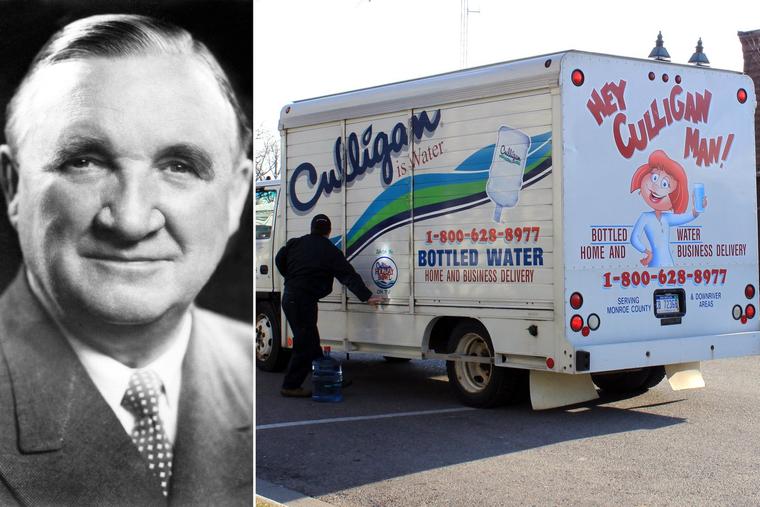
My father was Emmett J. Culligan, the renowned “Culligan Man” who founded the worldwide water-conditioning industry. He and my mother, Anna Bridget Harrington, both of strong midwestern Irish-Catholic stock, together raised seven children. I am the youngest and now the only one remaining. My father’s business success provided us with a home life that, while not extravagant, was very comfortable and incredibly enriching. But it was not always so.
In 1929, my brother John was born, my parents’ sixth child in 10 years. My father was struggling in Arizona to start a business to manufacture zeolite, a chemical that makes hard water soft. My mother was exhausted from a decade of childbearing. They decided that six was enough — no more children.
In 1932, my father and his brother John, a physician in Minnesota, began promoting what was then called the “rhythm method” — a predecessor to modern natural family planning. My father wrote Life Begins With Marriage to extol the method and explain how it works. Uncle John developed a handy slide rule called the “Rule of Life” to help women determine their less-fertile period. They were convinced their combined efforts would, as stated in the book, “provide married people information which may make their lives fuller and richer by showing them the wonder and grandeur of nature and truth, and the tragedy of untruth.”
Early in 1935 came two unexpected developments that startled the Culligan brothers. First, they found the “Rule of Life” was not infallible. Second, as a result, my parents discovered that another child was on the way.
Living now in La Grange, a suburb of Chicago, where my father was a zeolite salesman for National Aluminate Company (NALCO), they faced the greatest decision of their marriage. The country was in the midst of the Great Depression. My father was nearly broke. My mother was emotionally fragile, but they reaffirmed their Catholic faith in Divine Providence with an unequivocal “Yes.” With financial help and prenatal care provided by the Archdiocese of Chicago, I was born on Oct. 26, a “charity case” at Lewis Memorial, the Catholic maternity hospital on South Michigan Avenue.
My birth brought joy to our entire family, although my father quietly felt the weight of now seven children to raise, a wife in poor health who would soon be hospitalized with a postpartum psychiatric condition, a new business to launch, and endless bills to pay.
How could he possibly manage it all on a zeolite salesman’s salary? Reflecting on these problems one night as he drove home to La Grange from the hospital, he suddenly stopped his car, got out, dropped to his knees on the side of the road, and prayed. He begged God for the grace to let go of his lifelong ambition to be rich and famous like Henry Ford or Andrew Carnegie and to surrender himself to Divine Providence, asking only that he be able to take good care of his family.
Soon afterward, his life changed. Dad often commented that God not only gave us our daily bread, but it came buttered. In March 1936, at the age of 43, he resigned from NALCO and started Culligan Zeolite Company in the Chicago suburb of Northbrook to manufacture quality zeolite at a cost much lower than other competitors in the field.
In 1942, he contracted with the U.S. government to produce silica gel for the war effort in World War II. Another synthetic chemical made similarly to zeolite, silica gel is a moisture-absorbing desiccant that, in large quantities, can keep arms and munitions dry when shipped across the ocean to the troops in battle. Ideally, this valuable material is most efficiently and economically produced in a year-round warm climate that allows solar drying of the gel.
To meet this requirement, our family moved from Chicago with its cold and snowy winters to San Bernardino, California, where the sun shines almost every day, warming citrus groves and grapevines at the foot of snowcapped mountains. This beautiful city was also a major hub for the Atchison, Topeka and Santa Fe Railroad, making possible the rapid shipping of newly produced silica gel to military destinations.
Following the end of World War II in 1945, my father quickly resumed his dream of giving good water to America at the turn of a faucet, “The Culligan Way.” Within three years, responding to the postwar housing boom with its demand for clean water, his newly named Culligan Soft Water Service had more than 350 franchise dealers in cities, towns and villages in 30 states throughout the country.
In 1964, the company expanded overseas, building a new factory in Diegem, Belgium, to serve the growing European hard-water market. By 1970, as it began treating water needs in developing countries across the world, Culligan Zeolite Company and Soft Water Service became Culligan International.
But the magic year was 1958. Radio and TV audiences across the United States heard “Hey Culligan Man!” for the first time. The high-pitched voice of a harried housewife calling for help with her domestic water problems captured the nation’s imagination. Sales skyrocketed from just over $4 million the year the ad appeared to nearly $30 million nine years later, the year Culligan joined the New York Stock Exchange at $25 per share on the first day, Dec. 8, with CUL as the ticker symbol.
Due to declining health, my father retired as chairman of the board of directors and CEO of Culligan in 1965. He was now a household name everywhere and a wealthy man, although he gave most of his money away to his children and his own private charities and new entrepreneurial projects.
Earlier, on June 19, 1949, Pope Pius XII had made him a papal knight of St. Gregory the Great in recognition of his financial support of education in the newly formed Diocese of San Diego. In 1969, the American Schools and Colleges Association honored him with its annual Horatio Alger Award, alongside U.S. Supreme Court Justice Thurgood Marshall and California Governor Ronald Reagan.
Looking back over his 40-year business career, Dad considered his greatest accomplishment to be giving good water to the world, while at the same time providing jobs to thousands of men and women eager to work hard for an honest living. All the while, he instilled in his employees a love of God and of one another as “The Culligan Way” of doing business. Both my parents deeply believed that the prosperity and recognition that came to my father over the years were solely God’s blessing upon them for saying “yes” to new life during the dark times in 1935.
More than wealth and fame, my parents always thought God’s greatest blessing was their family. In addition to John, my father had a sister and a brother, Anne and Leo. Although Aunt Anne never married, the three brothers together had 21 children, plus numerous grandchildren.
My mother, the oldest of the Harrington family, had two younger sisters and three younger brothers. Together, they had 26 children, as well as numerous grandchildren. Since 1920, this clan has produced one United States congressman, an FBI agent, military personnel, homemakers, businessmen and businesswomen, farmers, ranchers, animal caregivers, doctors, nurses, physical and occupational therapists, social workers, lawyers, architects, engineers, contractors, laborers, educators, artists, musicians, writers, editors, journalists, and other valuable contributors to American society — including three priests and two women religious, one a Missionary of Charity in Mother Teresa of Calcutta’s community.
My mother and father were justly proud that their family responded so enthusiastically to the opportunity America offered our forefathers. As poor immigrants in the mid-19th century, they left an Ireland devastated by potato blight for a new land with a new hope for a new life. This immigrant experience forever convinced them that the United States of America’s greatest natural resource — past, present, future — is family.
As for me, after six years of Jesuit education at Loyola High School in Los Angeles and Seattle University, I joined the Order of Discalced Carmelites in 1955 and was ordained a Catholic priest in 1963. For more than 60 years in this “dream job,” Jesus Christ has directed me to proclaim to thousands of people the Good News of God’s incomprehensible love for our entire human family and for each one of us individually through pastoral ministry, liturgical celebration, preaching, teaching, publishing and evangelization in Asia, Australia and Africa. I, too, have always considered these joyful years as my sharing in the blessing God gave my parents. If they had said “No” to me, my own light never would have shone in the world.
However, this story is not about me; rather, it is a grateful tribute to my parents who courageously trusted completely in Divine Providence and to God who never forgets his children when they surrender themselves totally into his loving arms.
Discalced Carmelite Father Kevin Culligan is a member of the Carmelite community at the National Basilica and Shrine of Mary, Help of Christians, at Holy Hill, Wisconsin.
