


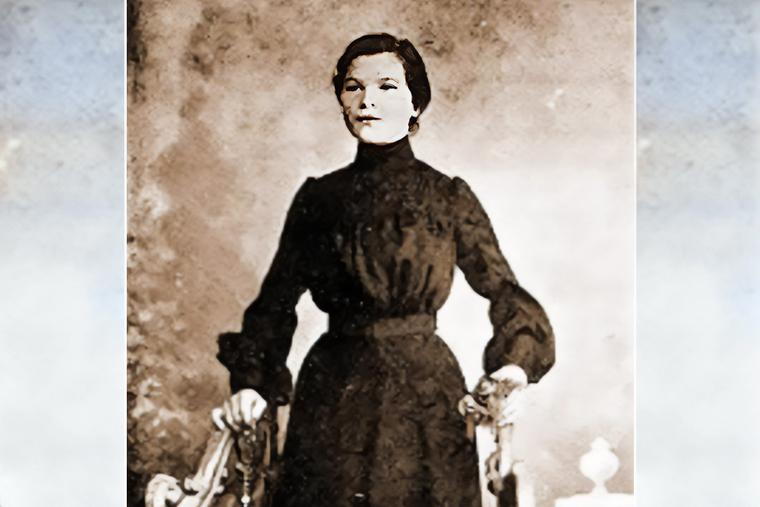
A mystic formed by suffering and Eucharistic adoration, Blessed Aniela Salawa embodied the Gospel truth that God chooses what the world casts aside.
St. Augustine, asked about progress in the spiritual life, wrote: “If you ask me what is the first precept of the Christian religion, I will answer first, second, and third: humility.” That, of course, mirrors Our Lord’s teaching about the humble and exalted, the teaching of him “who humbled himself even to death, death on a cross” (Philippians 2:8). And if one is looking for a patroness of humility, one can hardly do better than Blessed Aniela Salawa. In the city of man, she was a poor and frail domestic servant in various houses in Kraków, Poland, before and during World War I. In the city of God, she was a rich and robust mystic, devoted to the Eucharist.
Aniela came into the world in Siepraw, a village south of Kraków on September 9, 1881, into a poor rural family of multiple children. She probably suffered from malnutrition in childhood, in part responsible for her delicate health. In 1881 this region, collectively known as “Galicia,” was under Austrian rule: along with Prussia and Russia, Austria had wiped Poland off the map in the second half of the 18th century, and it would not return until 1918.
Galicia was a poor area because of the foreign occupation and because farm land over multiple generations had been progressively subdivided, making prosperity impossible. The mass immigration of Poles to the United States from 1880-1920, which laid the foundations of the modern Polish-American community, is referred to in Poland as the emigracja za chlebem (the “emigration for bread”) because the occupiers’ policies had impoverished the country. That was the world into which Aniela came.
As a child, Aniela wanted to help her family but her weak constitution limited the farm work she could do, so she was often sidelined. She had two years of formal schooling. But it was also a time when she developed a deep interior, mystical life, later detailed in the Dziennik (Diary) her confessor required her to keep. In that Diary, Aniela describes how she felt in her childhood home: “At home, I was like that piece of broken junk, cast off in the corner.”
Later, however, she had a vision of Christ pondering her. She wrote: “But one day the Lord Jesus came to me and, looking with pity upon me, thought to himself: “just maybe something might be made from that broken piece of junk?” And he did with me just what he thought.”
At age 16, Aniela made her way to the big city, Kraków. For the rest of her life, she would support herself as a servant in peoples’ houses. At 18, she made a private vow of perpetual chastity.
When she was not at work tending to domestic duties, she was in a Kraków church praying. She eventually came to be spiritually guided by the Franciscans and entered the Third Order in 1913. She was a daily communicant and frequently could be found in Eucharistic adoration in the many churches of the city.
Poland was a battleground in World War I between Russian and German/Austrian troops. During the War, Aniela volunteered to tend the sick and hospitalized in Kraków and help prisoners-of-war. Although she was a poor servant girl, she gave alms.
It was also during this period that her health deteriorated. She suffered during the last five years of her life from stomach cancer, tuberculosis, and multiple sclerosis, which made it impossible for her to work. She survived on free-will donations from benefactors while she passed her last years in a Kraków basement room. She died March 12, 1922 at the age of 40.
She was buried in Kraków’s famous Rakowicki Cemetery, where she lay until her remains were exhumed in 1949 in connection with the start of investigation into her cause. She is buried today in the Basilica of St. Francis of Assisi in Kraków. Pope St. John Paul II beatified her in 1991. Her feast is observed as an optional memorial in the Archdiocese of Kraków on Sept. 9, her actual birthday.
Speaking of Blessed Aniela, the Pope then reflected on how he often meditated on her words: “Lord: I am alive because you have commanded it. I will die when you want. Save me, because you can!”
By worldly standards, Blessed Aniela was a peasant servant girl. But her life proves that God can do all things including “just maybe [making something great] from that broken piece of junk.” In a world of lonely, throwaway people, God made a holy woman who even in her own life inspired those whose lives she touched. She proved, decades before Vatican II spoke of the universal call to holiness, that sanctity is everybody’s concern. She showed that active participation in the Eucharist and contemplative adoration of the Blessed Sacrament went together.
In 1 Corinthians 1:27-28, St. Paul says “God chose the weak of the world to shame the strong, and God chose the lowly and despised of the world, those who count for nothing, to reduce to nothing those who are something.” For God, being made into “something” is the fruit of a different calculus.