<p><!-- BEGIN THEIA POST SLIDER --></p>
<p> <br />
</p>
<div>
<p>EDITORIAL: Hope of a spiritual rebirth has not been extinguished in the land of St. Patrick.</p>
</p></div>
<div>
<p>There is a very understandable desire among the faithful in Ireland — and elsewhere — to interpret <a href="https://www.ncregister.com/news/ireland-march-2024-referendum-no-no">this month’s rejection by Irish voters</a> of a pair of “woke” constitutional amendments as a decisive Catholic inflection point.</p>
<p>According to this narrative, the unexpected and overwhelming rejection of these amendments represents a watershed moment in terms of reversing the tide of secularization that has washed over Irish society in recent decades.</p>
<p>Unfortunately, that’s probably untrue. </p>
<p>What happened instead this month is that the large majority of Irish voters, secular and religious alike, correctly judged that the two proposed amendments to the Republic of Ireland’s Constitution were “solutions” to problems that exist only in the minds of the progressive activists who were primarily responsible for pushing forward the amendments.</p>
<p>The first amendment would have deleted an existing element of the Irish Constitution that constructively emphasizes the societal importance of at-home mothers. </p>
<p>Yet the reality on the ground is that the large majority of Irish women — just like their sisters in other developed countries — want their national government to provide more support to allow them to stay home and raise children, not less. It was obvious to anyone not blinded by progressive ideology that the amendment would not advance this widely shared aspiration. Instead, it would have entrenched the radical feminist perspective that views promotion of motherhood as oppression, not as an asset.</p>
<p>Similarly, with respect to the second amendment that would have widened the constitutional definition of the family to include other “durable relationships,” as well as marriage, voters understood the agenda in play wasn’t to make Irish society more inclusive towards same-sex couples and other groupings that depart from the traditional definition of the family. Like it or not, that’s already happened in Ireland. </p>
<p>Voters could readily discern that what social radicals were really seeking was the institutionalization of their own hostile attitude toward families headed by a man and woman joined in marriage — ignoring the positive and foundational role these families continue to play in the lives of most Irish people.</p>
<p>But the hostility of voters toward the progressive inanities expressed by both amendments can’t be taken as a sign that secularism is now generally on the wane in Ireland — or that a concomitant rebirth of Catholic faith is broadly underway. The outcome of other recent referenda establishes that strong public support now exists in Ireland for so-called abortion rights and for same-sex “marriage,” in both cases in direct contradiction to what the Church teaches about an issue of fundamental moral importance. Alongside a multitude of other indices, these electoral outcomes communicate just how far contemporary Ireland has strayed from its profound historical attachment to the tenets of Christian faith.</p>
<p>And, wounded by the fallout from the clergy sexual-abuse crisis as well as by the social and economic factors that have inclined so many local Catholics towards secularism, the condition of Ireland’s institutional Church remains dire. </p>
<p>According to Irish census data, weekly Mass attendance among Catholics plunged from 91% in 1975 to only 36% in 2016. <a href="https://gript.ie/41-of-irish-catholic-mass-goers-have-not-returned-post-covid-new-polling/">A further precipitous decline</a> has ensued this decade as a consequence of the Irish government’s lockdown of churches during the COVID-19 pandemic. Almost half of Ireland’s priests are at least 60 years old; the average age of Irish nuns, whose numbers have dwindled by more than two-thirds over the last 50 years, is over 80; and vocations have been decimated, with only 20 seminarians studying for the priesthood last year at the national seminary in Maynooth. </p>
<p>Still, history assures us that this undeniably depressing numerical litany doesn’t mean hope of a spiritual rebirth has been extinguished in the land of St. Patrick, which has served as a beacon of Christian light for so many other lands since his time. Ebbs and flows in the depth and breadth of Catholic fidelity have been a fact of life in Ireland across the succeeding centuries, as in every other locale where the faith has taken solid root.</p>
<p>But a durable turnaround won’t result from favorable political outcomes, welcome though they might be. What’s required today in Ireland is the same thing that’s needed throughout the secularized societies of the West: sprouts from the seeds of the New Evangelization, generating holy and faithful disciples — both lay and clerical — who are willing to proclaim the Good News of Christ through their actions and words, no matter what the personal cost. </p>
<p>Such disciples are in fact already at work, often unnoticed by secular eyes but never without impact upon the hearts and minds of the people whose lives they lovingly touch.</p>
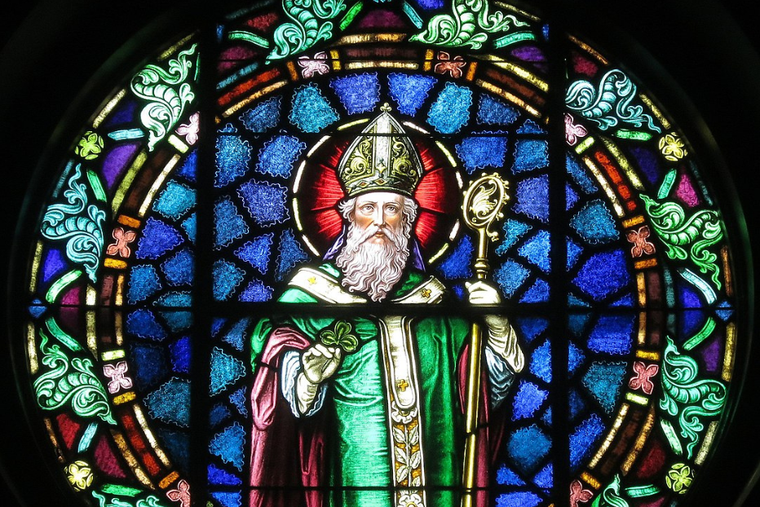
<p>We should recall that in St. Patrick’s own time, it was his saintly witness that legendarily was responsible for driving the snakes permanently out of Ireland. And it’s the saints of the present day who are the instruments that God intends to use to shoo away the contemporary snakes of secularization that beset our world today.</p>
</p></div>
<p><br />
<br /><a href="https://www.ncregister.com/commentaries/ireland-s-snakes-of-secularization">Source link </a></p>
<p><!-- END THEIA POST SLIDER --></p>

Ireland’s Snakes of Secularization| National Catholic Register