<p><!-- BEGIN THEIA POST SLIDER --></p>
<p> <br />
</p>
<div>
<p>‘Unity, indissolubility, and openness to fertility are essential to marriage.’ (CCC 1664)</p>
</p></div>
<div>
<p>At Catholic tribunals across the dioceses of America, the subject of marital infidelity is a frequent discussion. Since <i>the intention of sexual fidelity at the time of the marriage</i> is required for marriage validity, a future act of infidelity is sometimes viewed as grounds for annulment. In the eyes of some tribunalists, an act of infidelity serves as proof that fidelity was never intended in the first place. Is this a logical and theologically sound stance? The answer is <i>no</i>.</p>
<p>Before the comments box fills up with notions that I am somehow defending sexual infidelity, let me be clear. Sexual infidelity is serious — that is, mortal sin — matter. It makes one an enemy of God and thus of the good angels. It destroys relationships with human persons. It very often causes severe scandal and irreparable harm to spouses, entire families, and on a broader scale, entire societies. Considering Mary’s message at Fatima, we have every reason to believe that many souls go to Hell for eternity because of unconfessed sexual infidelity.</p>
<p>All this said, however, infidelity is not grounds for annulment.</p>
<p>If the bride or groom at the ceremony intends to be unfaithful, and simply mouths the words promising faithfulness, the marriage is not valid. Along with <i>openness to children</i> and <i>affirmation of indissolubility</i>, the intention of sexual fidelity is required.</p>
<p>On the other hand, if a Catholic bride and groom intend lifelong fidelity, future infidelities do not and cannot cancel the fact that they formed a valid marriage. Everything necessary regarding the intention of sexual fidelity was present at their wedding; this is an <i>unchangeable</i> reality. There might be impediments illustrating that theirs was never a marriage, but an act (or many acts) of infidelity can change nothing about the validity of the marriage.</p>
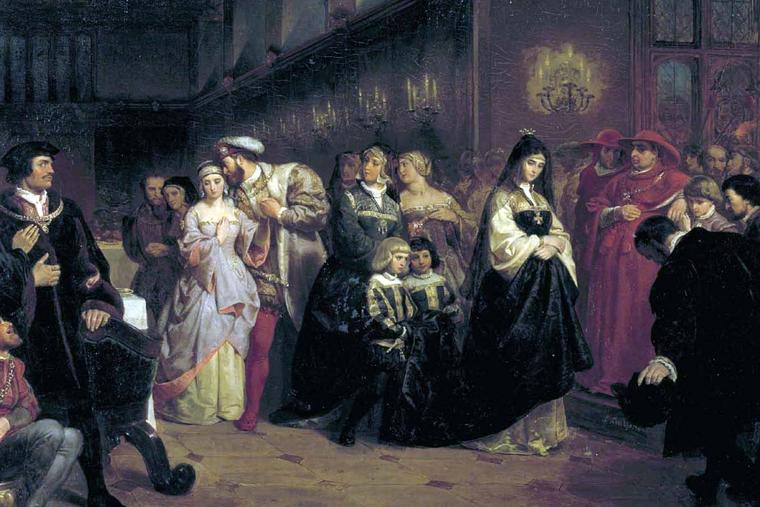
<p>History offers us confirmation of this sacramental reality. It was widely known throughout Christendom that King Henry VIII cheated on Catherine of Aragon with numerous women. Yet, Rome affirmed the validity of Henry’s marriage to Catherine — as did St. Thomas More all the way to the scaffold.</p>
<p>Many readers might be asking questions like: But what about a woman who carries on an affair only 18 months after her wedding? Wouldn’t that affair provide evidence that she never intended fidelity in the first place? For that matter, what about a scoundrel who cheats on his wife during his own honeymoon at Niagara Falls? Certainly, that would be an invalid marriage, right? After all, it would be impossible to believe that a man — who truly intended fidelity just days prior — cheated on his wife, right?</p>
<p>Wrong.</p>
<p>To illustrate why this is wrong, we can remain within the realm of sacramental theology. Imagine a man goes to Confession with deep sorrow for his sins along with a firm purpose of amendment. The priest hears his sins, grants the man absolution, and the man says or does his penance. But imagine that the man commits one of those same sins just three days later. Is that evidence that his sorrow was merely an act? Does that prove that his purpose of amendment was fraudulent? We might follow these questions with a more introspective one: Who among us has never been in that man’s shoes?</p>
<p>When pondering these questions, we should also keep in mind that the Church recommends frequent confession. How frequent? At Fatima, Our Lady asked us to go to Confession on five consecutive months. But if <i>firm purpose of amendment</i> meant never sinning again, what need would there be of going to Confession ever again, much less every month? Clearly, a man could have a sincere and firm intention of amendment, yet fall back into the same sins. But this does not make his Confession invalid. Nor should we even entertain thoughts that his absolution might be invalid.</p>
<p>Let’s illustrate this a bit further. Dioceses have marriage tribunals that investigate and help determine the validity of marriages. But for a moment, imagine that there existed tribunals not just to determine the validity of the vocational sacraments, but for all seven sacraments. Imagine that a confessional tribunal convened to determine a penitent’s validity based on his level of sorrow and his firmness of amendment. The opening statement of the prosecutor would likely be: “It would be impossible to think that a man — who supposedly intended a <i>firm purpose of amendment</i> just days prior — committed a sin no more than 72 hours later!” </p>
<p>The penitent intended amendment at the moment, and that is what matters. Subsequent actions cannot change that reality. The same is true for marriage.</p>
<p>Society has normalized the tragedies of infidelity, contraception and no-fault divorce. And that mentality — whether we realize it or not, whether we want it to or not — has split over into our view of annulments. That mentality puts the sacraments in dangerous harm. Because to argue that infidelity makes a marriage retrospectively invalid is to misunderstand not only Matrimony, but to misapprehend the very nature of the sacraments.</p>
<p>So let’s be clear. Nothing can “make” a consummated Catholic marriage <i>invalid</i>. Not a local marriage tribunal, not your bishop, not the pope (neither the Petrine nor Pauline privilege applies to consummated Catholic marriages). They could no more un-make a marriage than they could un-baptize a baby, un-absolve absolution, un-confirm a teenager, un-consecrate the Eucharist, un-anoint the sick or un-ordain a priest. Sacraments are unshakable physical, metaphysical and spiritual realities. To doubt this is the stuff of heresy, apostasy, schism and sadness.</p>
<p>One last point. Over the years, I have made it a habit that whenever I write about mortal sin, I always reference Confession. The virtues of truth, justice and charity demand as much. This topic of infidelity is no different. In the sacrament of Penance, God forgives sexual infidelity. Never doubt that. A man may walk into Confession with thousands of mortal sins on his soul that he has accumulated for many decades. But he walks out in the state of sanctifying grace — an indwelling of the Trinity and a friendship with God. The sacraments — <i>all</i> the sacraments — are powerful indeed.</p>
<p>As is the mercy of God.</p>
</p></div>
<p><br />
<br /><a href="https://www.ncregister.com/blog/john-clark-infidelity-and-indissolubility">Source link </a></p>
<p><!-- END THEIA POST SLIDER --></p>

Nothing on Earth, Not Even Mortal Sin, Can Dissolve an Indissoluble Marriage| National Catholic Register