


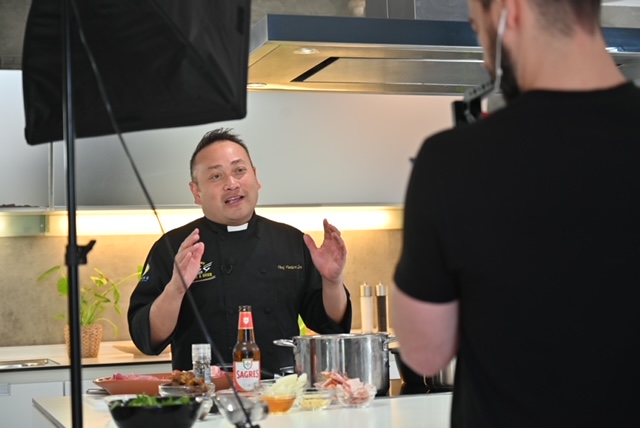
I manage social media for some of America’s most widely followed Catholic priests.
When people hear about my work, the reactions vary. Some immediately tell me how they listen to their podcasts or look forward to videos on Instagram as “spiritual food” for their day. Others raise an eyebrow and question whether the Church is drifting toward a culture of “celebrity priests” (a concern I completely respect).
That question resurfaced last week after Pope Leo XIV’s closed-door conversation with priests of the Diocese of Rome, summarized by Vatican News under the headline, “Be friends, beware of envy and the internet.” Upon publication of the article, I received messages from both supporters and critics of digital ministry, concerned that the Holy Father had firmly condemned priestly use of social media.
As I read through the information available about the meeting, which touched on a variety of topics from social media and AI to isolation and priestly fatigue, it became clear that Pope Leo was not discouraging social media evangelization but rather expressing concern about the interior disposition with which it is used by the clergy. His warning was based upon what he described as “an illusion on the internet, on TikTok,” namely the temptation to treat likes and followers as a reliable measure of priestly fruitfulness. If the message of Jesus Christ is not being transmitted, he said, then serious and humble self-examination is required.
The Church has always been blessed with great preachers, apologists and evangelizers who have promulgated the Good News far and wide. In fact, the Church is preparing to celebrate the beatification of one of these great evangelists, Venerable Fulton Sheen, later this year. What is new is the power of algorithms and social contagion that threaten the virtue, discernment and selflessness of the evangelist in front of the camera.
Social networks create an environment that provides immediate feedback on ideas, often feeding obsessive checking of comments, counting views and relying on numerical metrics to determine evangelical success. In this environment, it is easy for engagement metrics to begin determining the content, often with the lure to be controversial or self-promoting in order to garner likes and public support for personal gain rather than ministry.
Pope Leo spoke about invidia clericalis, also known as “clerical envy,” which social media can stoke. Monitoring the parish assignments or ecclesial appointments of brother priests and having constant insight into their ministries through social networks can give rise to jealousy, pride and distraction from one’s own calling within the mission of the Church.
Today, among priests on social media, social comparison can become a distraction from the Holy Spirit’s work. A priest observing another’s online reach can reduce unique ministries serving particular communities to a numbers game, rather than focusing on the flourishing of individual souls. If “success” in ministry is boiled down to comparative Instagram followings, we have lost sight of what digital ministry is about — encountering souls with the Good News through creativity and calling them to deeper relationship with God and neighbor.
This hyperfixation on digital content is surely a problem among the laity as well. Lay Catholics often scrutinize episcopal appointments and parish assignments through the lens of ideological preference and politics, turning pastoral decisions into culture-war analysis and a source of drama within the Church.
In both cases, attention shifts away from one’s own sphere of responsibility and impact and convinces the faithful that they must be alerted to every decision, complete with cultural commentary. Though knowing Church “inside baseball” through social media can be interesting, it should never distract us from our mission within our families, friend groups and communities.
Pope Leo’s focus is to restore interior peace and missionary clarity among priests and all of the faithful.
This urgent discussion is happening just weeks after former Italian priest Alberto Ravagnani, widely known as an “influencer priest” with hundreds of thousands of followers, left the priesthood amid controversy surrounding lifestyle content, brand partnerships and public criticism of celibacy and sexuality. His departure raised serious questions about whether social media contributed to a misunderstanding of vocation and a departure from Church teaching. While one unfortunate case should not set a precedent for clerical social media use, it does illustrate how fragile vocation and identity can be when lived under the scrutiny of hundreds of thousands of people around the world.
It would be a mistake, however, to conclude that priests should remove themselves entirely from the digital continent. Pope Benedict XVI, the first pope to directly address social media and create the Twitter account @pontifex, encouraged the faithful to cultivate an authentic presence in the digital world during his 47th World Communications Day Address:
The exchange of information can become true communication, links ripen into friendships, and connections facilitate communion. If the networks are called to realize this great potential, the people involved in them must make an effort to be authentic since, in these spaces, it is not only ideas and information that are shared, but ultimately our very selves.
Pope Francis remarked during his 2019 World Communications Day Address that we must “invest in relationships and affirm the interpersonal nature of our humanity, including in and through the network.”
Pope Leo’s comments about social media and artificial intelligence carry the same core concern: authentic relationship and encounter.
Pope Leo also discouraged the use of AI when preparing homilies. “To give a true homily is to share faith,” he stated, and AI “will never be able to share faith.” This once again highlights his concern that technology can create barriers between the shared experience and discernment of shepherds and their flock.
Perhaps the most important dimension tying these ideas together is the Pope’s remarks concerning loneliness. Young people, he observed, increasingly experience isolation. Priests are called to “organize, think, seek initiatives that can be a form of outreach.” He continued, “We must go ourselves, we must invite other young people, go out into the streets with them; perhaps offer different ways.” This outreach can surely be initiated and strengthened through proper use of social media networks as a means of bringing people together.
Priests must focus on fostering relationships as spiritual fathers, not simply becoming talking heads on a phone screen, though digital presence can be a meaningful extension of ministry.
The Holy Father himself is no stranger to the power of social media. Soon after his election as Supreme Pontiff, the Dicastery for Communications launched Pope Leo’s official social media channels with the message, “Peace be with you all!” His following surged into the tens of millions within days, drawing not only Catholics but also those filled with curiosity and excitement at the election of our first American pope.
From my vantage point, digital ministry is essential in the time in which we live. Every day, I see messages from people to their favorite priests on social media sharing how a video or post encouraged them to return to confession or Mass. The fruits of humble, holy priests online are undeniable.
I have also seen priests struggle in their personal lives because of the temptations that come with having a public profile. In cases like these, my recommendation is to step back. An unhappy or spiritually unhealthy priest cannot serve his people locally, much less thousands online.
The priests who navigate this terrain most fruitfully understand that the goal is not expansion of a personal brand but directing people toward a real-world encounter.
These digital priestly ministries have become a vital part of evangelization for those experiencing spiritual drought around the world. When believers lack access to the sacraments, spiritual directors or formation, digital media has become a powerful tool for nourishing souls, no matter where they are.
The central questions a priest should ask before stepping into social media are these: Is this truly about sharing the Good News, free from any desire for personal gain? And does this content lead people off their phones and into the Church to receive the sacraments Christ entrusted to us? There is a reason these sacraments are not attainable virtually. They are encounters of intimacy with the love and mercy of Jesus Christ.
Discernment, as in anything else, is essential. Some priests are well suited to digital evangelization and remain anchored in prayer, fraternity and humility. Others find that constant exposure undermines their peace and distracts from local responsibilities. Removing oneself from situations that strain spiritual growth and stoke pride is what Pope Leo is asking priests to consider.
Pope Leo’s guidance for priests is something we should all pray about. The Church does not need fewer missionaries, but missionaries whose interior lives are strong enough to withstand the pressures of a digital age.
Through the intercession of the great saints who gathered crowds around the truth of Jesus Christ, may our priests be filled with zeal for the faith, brother priests to walk with, and the obedience to respond to how the Lord wishes to use their gifts in the great story of salvation.