


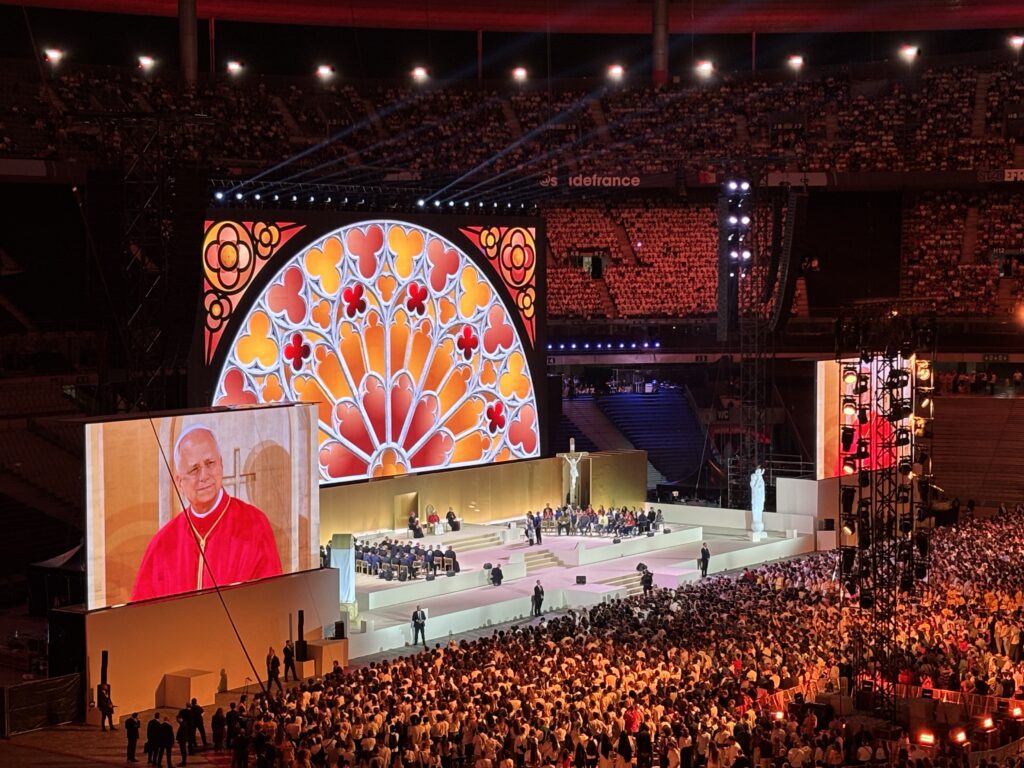
PARIS — “I have to ask: Who, aside from the Pope, is capable of bringing together 600,000 people in France in 2026? Who else but him is able to foster a sense of national unity in our country?”
These words from renowned French journalist Stéphane Bern, a leading figure in the defense of France’s cultural heritage, were expressed in an interview with French media just days before Pope Leo XIV’s Sept. 25-28 visit to France.
At the time, Bern’s remarks may have raised more than a few eyebrows in newsrooms accustomed to the broad consensus surrounding the country’s sacrosanct principle of laïcité.
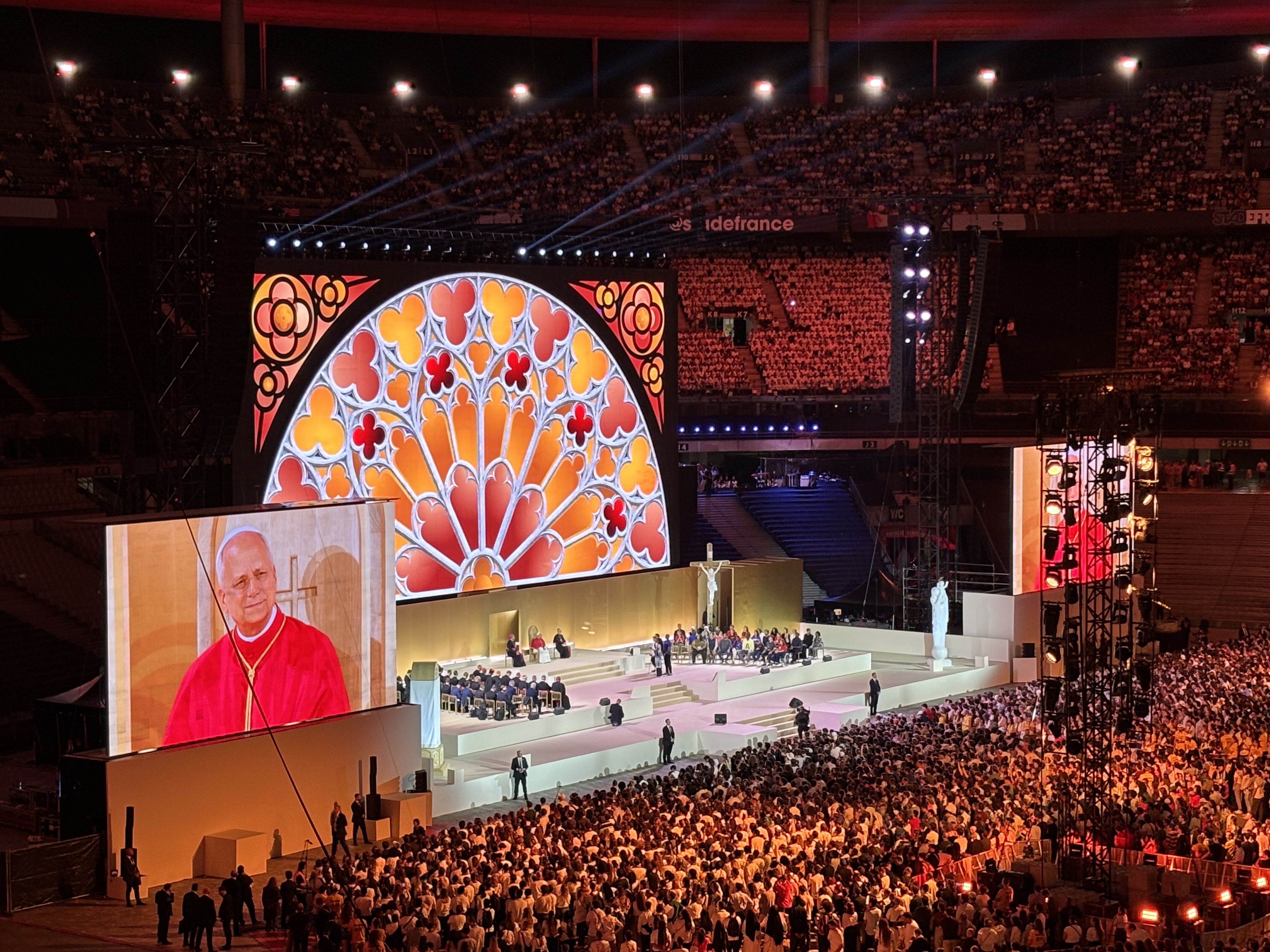
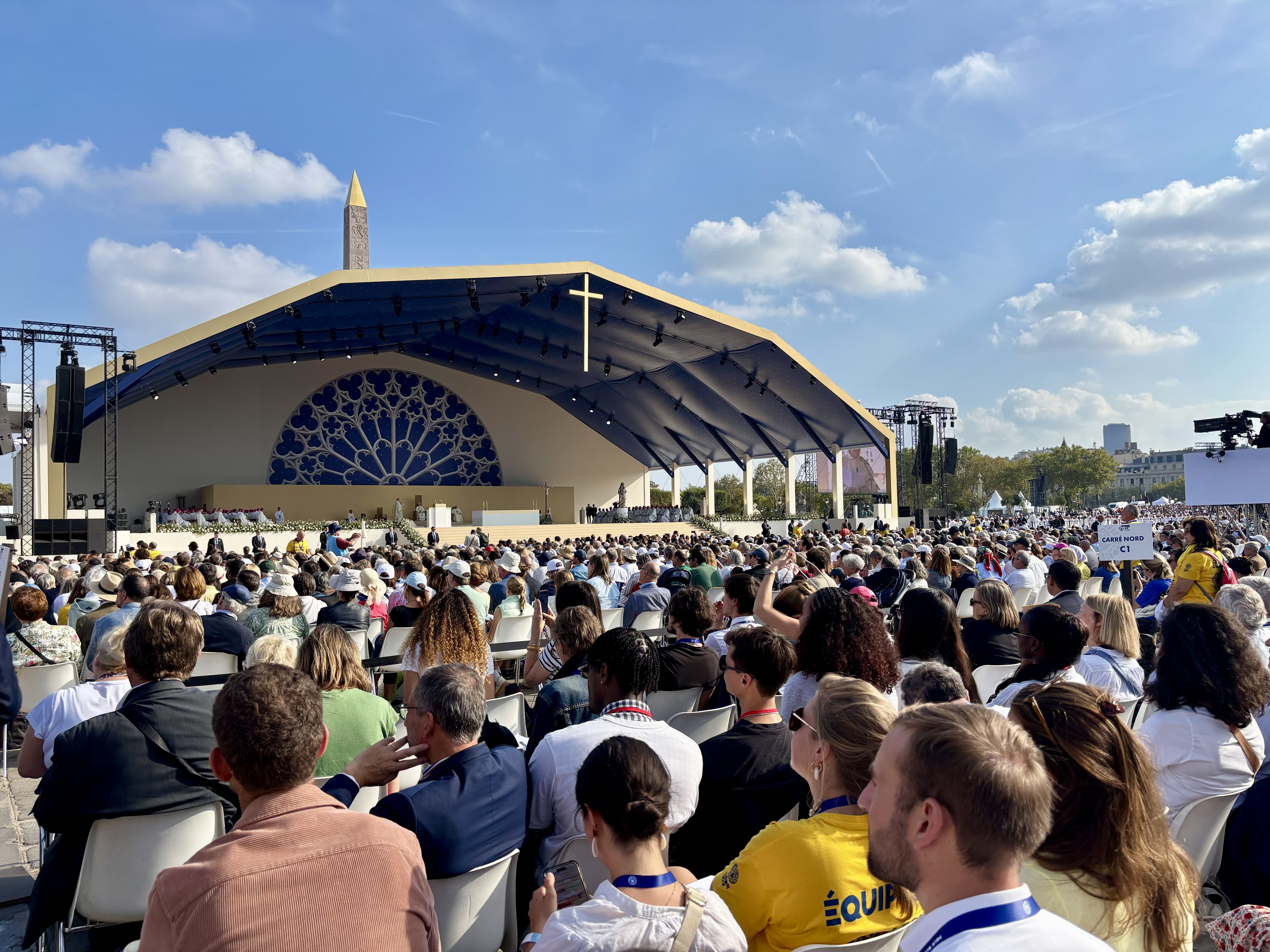
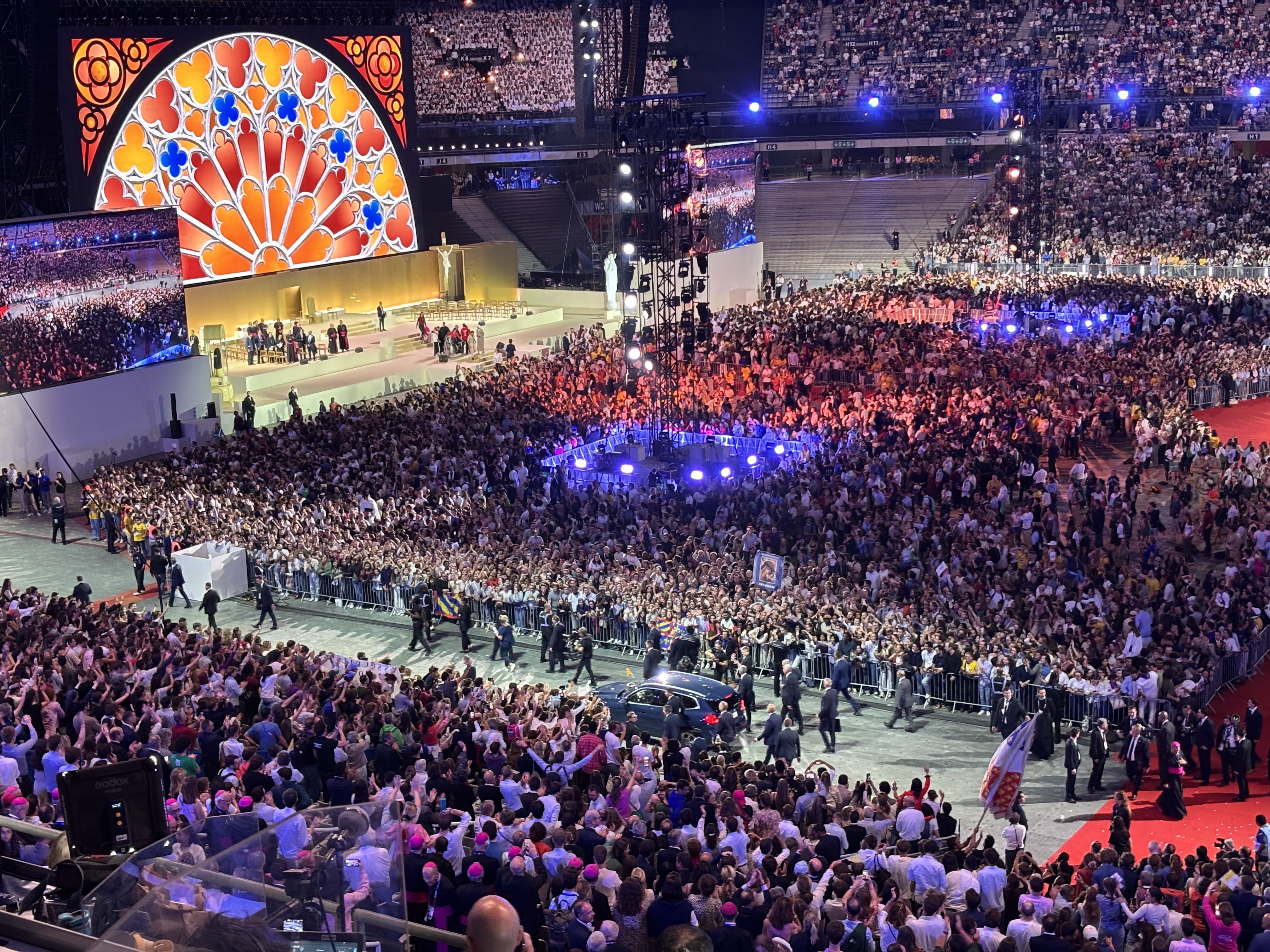
And yet, more than 800,000 people packed the Place de la Concorde and the Champs-Élysées for the Pope’s Mass on Sept. 26 — including some 200,000 who decided to try their luck at the last minute despite tickets having already run out. Meanwhile, young people had snatched up all 80,000 tickets ahead of the Sept. 25 vigil, presided over by Pope Leo, at the Stade de France.

The crowds alone were among the many signs of the extraordinary popular fervor surrounding the visit. The enthusiasm has led some observers to wonder whether the visit could mark a new stage in a religious awakening already visible in France’s remarkable surge in adult baptisms.
When ‘France Rhymes With Hope’
The impact of the visit could already be measured by the number of public figures — politicians, journalists and intellectuals who had never professed any Christian faith — sharing images of the Pope embracing and blessing children and people with disabilities, expressing their emotion at what they described as a rare moment of unity and solidarity.
It echoed what could be heard throughout the weekend in the streets of Paris, from the neighborhoods surrounding Notre-Dame to the Stade de France and the Place de la Concorde, where some complained — perhaps true to the French people’s worldwide reputation for grumbling — that their thirst to draw closer to the Vicar of Christ had gone unsatisfied.
“It isn’t fair that only clergymen are allowed inside Notre-Dame with the Pope,” exclaimed a middle-aged woman in the crowd. “I don’t understand why the authorities imposed these capacity limits. All of France should be allowed to take part in the Pope’s celebrations,” said Arthur, 30, who explained that although he was not a believer, the visit had aroused his curiosity.
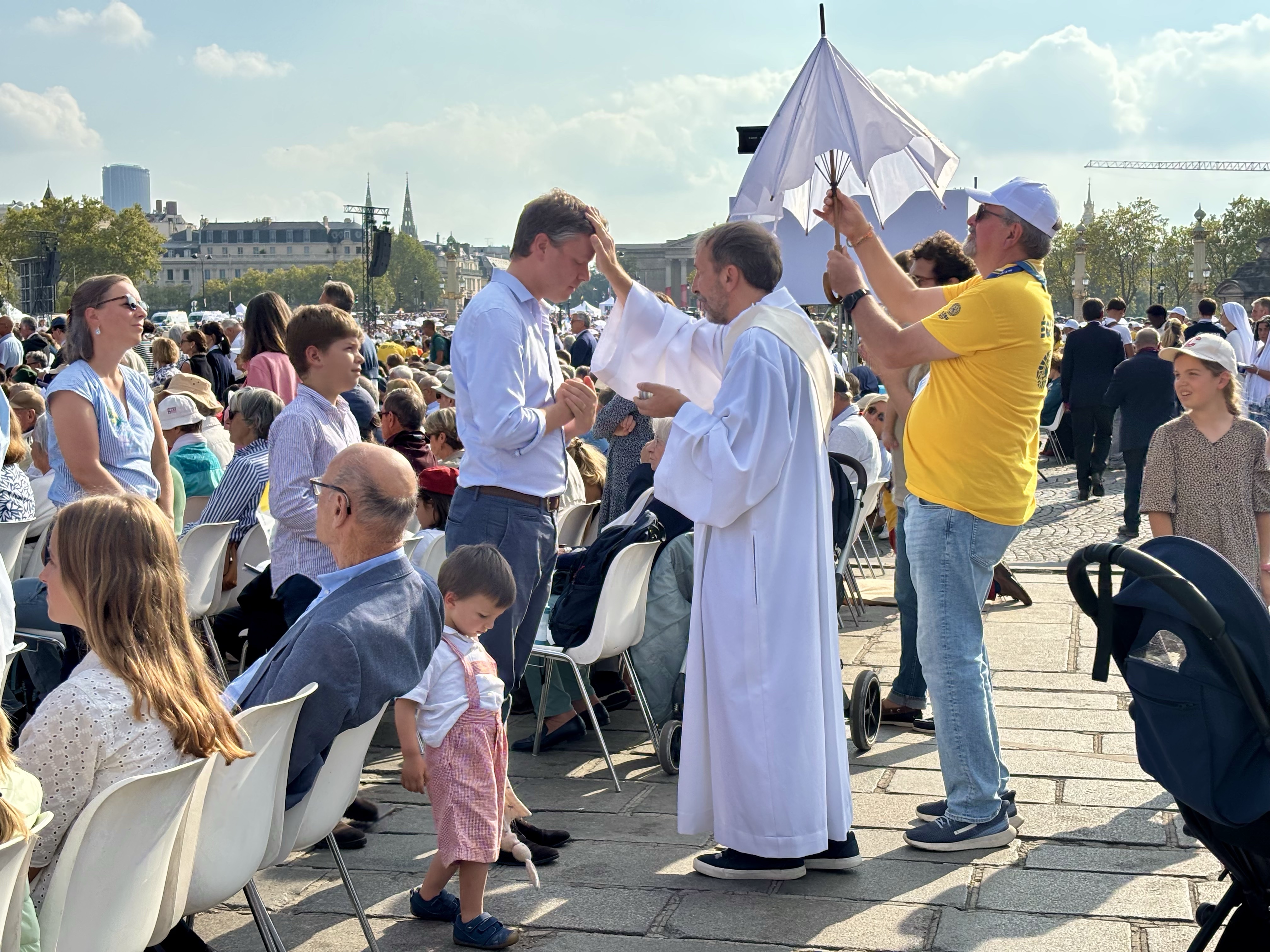
For many, it was also an opportunity to rediscover a faith whose codes had become foreign to them, with Spanish tourists readily explaining Catholic symbols and protocols to curious bystanders. Middle-class families with 10 children stood alongside tattooed goths and people from all walks of life, sharing in the same joy, waiting to catch a glimpse of the Holy Father.
Something similar unfolded at the Stade de France, where the vigil transcended some of the fault lines that ordinarily run through French Catholicism. Traditional chants in Latin mingled with charismatic praise and worship, while a striking range of spiritual sensibilities and social backgrounds were represented in the stands.
“Never forget that France rhymes with hope!” (France rime avec espérance) the narrator exclaimed at the conclusion of a performance at the vigil that retraced the history of the saints of France.
Pierre Lombard, a Catholic influencer behind the Christatus account, said he interviewed about 20 young people outside the stadium after the vigil and was struck by the unanimity of their reactions. “What kept coming back, over and over, were the words peace, hope and joy — the joy of seeing so many Christians and realizing that the Church is actually incredibly alive,” he told the Register.

For Julien Dodeman, who runs the evangelization channel Cathoglad, the gathering at the Stade de France was also the moment when many seemed to realize that being Catholic did not have to mean discreetly wearing a cross around one’s neck.
“We were 80,000 shouting our joy at loving Christ,” he told the Register. “It was simply incredible for a country like ours, where faith tends to be relegated to the private sphere.”
“I had dreamed of this moment,” he continued. “I had told myself that the day the Church managed to do something like this, we would have reached a crucial milestone. And here we are.”
A Newfound Catholic Pride
The images of Pope Leo’s visit resonated well beyond France’s borders. Some foreign commentators like American writer Rod Dreher went so far as to speak of a “miracle” unfolding in Paris — a striking reversal of perspective barely two years after the opening ceremony of the 2024 Paris Olympics sparked outrage among Christians around the world over scenes widely perceived as mocking Christianity.
“I think this brings people together enormously, and there is indeed a sense of victory — of Catholicism in France being brought into the public square,” Dodeman said.
That shift was perceptible even outside Christian circles. Susumu Sakamoto, a journalist with Japan’s Asahi Shimbun who covered the papal visit, told the Register that the level of interest in the Pope was something relatively new in Japan. Against the backdrop of wars, mounting international tensions and the upheavals generated by artificial intelligence, he said, the words of a figure capable of speaking across national boundaries had acquired particular weight — especially in France, where extreme secularization now appears to coexist with a sudden spiritual revitalization.
But one of the clearest signs of a changing mood came from French Catholics themselves, who appear more willing than ever to bring their faith into the open — a marked departure from a longstanding culture of discretion, often driven by fears of professional or social repercussions. Until recently, many preferred to testify anonymously or give only their first names.
It is precisely that habit Jacques-Henri de Livron, a 28-year-old volunteer at the Stade de France whose faith has deepened in recent years, wanted to break when he made a point of giving his full name in an interview with EWTN News. “As Christians, I think we shouldn’t be afraid of speaking up anymore,” he said. His attitude contrasted with that of several national-media journalists covering the visit, who declined to say whether they had faith, considering the question too personal.
It is a change Corentin Dugast is helping to foster. Better known online as “Un Homme Catholique,” Dugast — author of books on Charlie Kirk and Fulton Sheen — points to U.S. Catholics as a model of the public confidence he believes French Catholics have long lacked.
“What I expect above all from the Pope’s visit is that it will help put a lasting end to the timidity surrounding the faith, particularly among bishops, who sometimes seem afraid of their own shadow and reluctant to proclaim the Gospel when it challenges the world,” he told the Register.
The stakes are particularly high as the Pope himself has been closely following France’s Catholic revitalization, driven in large part by a Generation Z that is thirsting for meaning, direction and a clear message.

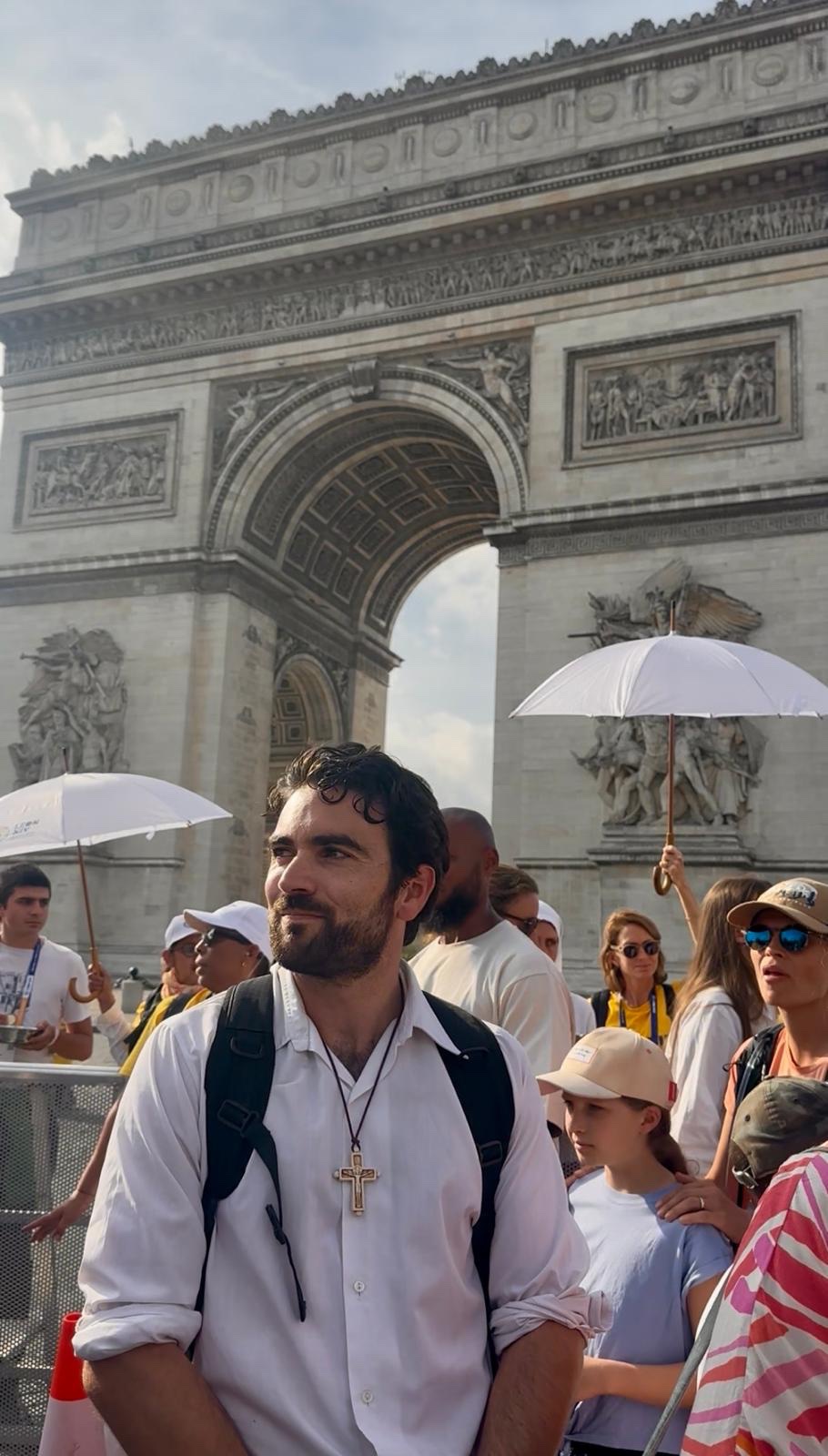
One striking illustration is Paul Criner, baptized last Easter at 33, whose viral conversion testimony presented Christ as the ultimate model of masculinity and a path to healing for a generation of men lacking strong father figures.
“You would have to be blind not to see that the Holy Spirit is at work,” he told the Register, describing the young people’s faith as deeply rooted and powerful. “This is no longer simply a faith inherited through tradition, but a faith freely embraced. Something very beautiful is taking shape. This is only the beginning.”
With that beginning, he said, also comes a responsibility. “Something momentous is coming — in the world, but perhaps especially in France,” which, as “the eldest daughter of the Church,” has “an important role to play.”
For now, the missionaries of the “digital continent” appear to be among the first to embrace that responsibility. A major gathering they organized on Sept. 24, the eve of Leo’s arrival, drew such interest that it had to be moved from the Madeleine to the much larger Saint-Sulpice church, where nearly 2,500 people gathered, while at least 100,000 more followed the event online.
For Cathoglad’s Julien Dodeman, the true scope of this “new Pentecost” will be measured once the crowds disperse. “We can’t simply remain on Mount Tabor, holding on to this moment,” he said. “We have to come back down into society and bring this drive for evangelization to everyone.”
“We have to come down from the mountain,” he added. “But then we have to go out and meet the world.”