<p><!-- BEGIN THEIA POST SLIDER --></p>
<p> <br />
</p>
<div>
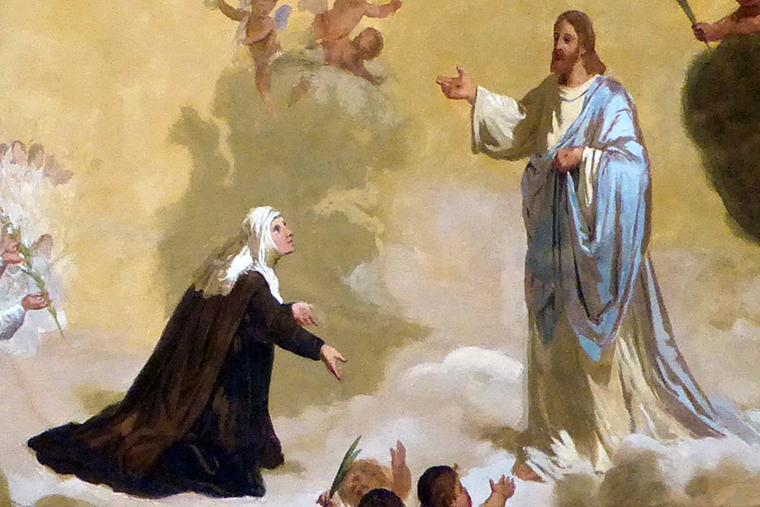
<p>St. Angela Merici was canonized in 1807, and today her Order of St. Ursula operates in 30 countries.</p>
</p></div>
<div>
<p>Centuries ago, a young woman became furious at the lack of quality education available for girls and women. She deemed it a grave injustice on the part of their parents, and quickly surmised that any society in which women were not educated, and educated well, would soon fall into disarray. Filled with conviction, she set to work launching a revolutionary style of education that would rectify this wrong, serving girls throughout her country and eventually the world.</p>
<p>Who was this young firebrand? Perhaps a disciple of Mary Wollstonecraft, the (in)famous author of “A Vindication of the Rights of Women?” Or maybe a contemporary of the early suffragettes and pioneers for women’s education?</p>
<p>In fact, the girl in question was named Angela Merici, a Third Order Franciscan living in Northern Italy at the end of the 15th century. Orphaned young, Angela was raised by an uncle who taught her the faith. Upon his death when she was 20, Angela returned to her hometown, where she was scandalized by the dearth of education for young women. Angela was not motivated in her horror by some rankled sense of justice about opportunities for women, but because she aptly noted that these girls were equal in dignity to boys, and their souls needed formation suited to their status as daughters of God. Unlike later activists for women’s rights, equality itself was not the end. It was unity with Christ. How could the girls be expected to live virtuous lives, to become saints, if they were left with unformed souls and poor catechetical instruction?</p>
<p>Fortified by her faith and instructed by the Holy Spirit to remedy this problem, Angela opened up her home and began to teach girls from the surrounding area herself. Through example and gentle instruction, she catechized and formed them in the faith, allowing them to fully understand for the first time the full sacramental graces available to them in the Church. She then modeled for them how to cultivate habits of virtue and prayer so they could witness the Truth to those around them.</p>
<p>Angela’s mission was double-pronged. On the one hand, she believed wholeheartedly that thorough formation and full participation in the life of the Church was the owed inheritance of each of the young girls she taught. On the other hand, she also knew that the majority of these women, those who did not seek religious life, would become wives and mothers, and they would be responsible for cultivating the faith in their own households. To this end, she saw their education as a mission to serve society as a whole by way of vibrant, faith-filled families. She frequently reminded her students and fellow instructors: &#8220;Disorder in society is the result of disorder in the family.&#8221;</p>
<p>Everything Angela did with her girls was centered within the home and on building Christian virtue in family life. She wrote a Rule of Life for her followers, and accordingly the women in her community made their pledges of consecrated virginity, obedience, and poverty, but they did not live in seclusion. They remained in the community and taught their students in their own homes. Eventually, her order of Ursulines, named after St. Ursula, a patroness of students and universities, became the first teaching order of women in the Catholic Church, establishing schools and orphanages throughout Italy.</p>
<p>St. Angela Merici died in 1540, four years before her rule was officially approved by the Pope. She was canonized in 1807, and today her Order of St. Ursula operates in 30 countries.</p>
<p>St. Angela Merici, pray for us!</p>
</p></div>
<p><br />
<br /><a href="https://www.ncregister.com/blog/kelly-marcum-st-angela-merici-pray-for-us">Source link </a></p>
<p><!-- END THEIA POST SLIDER --></p>

St. Angelica Merici, Pray For Us!| National Catholic Register