


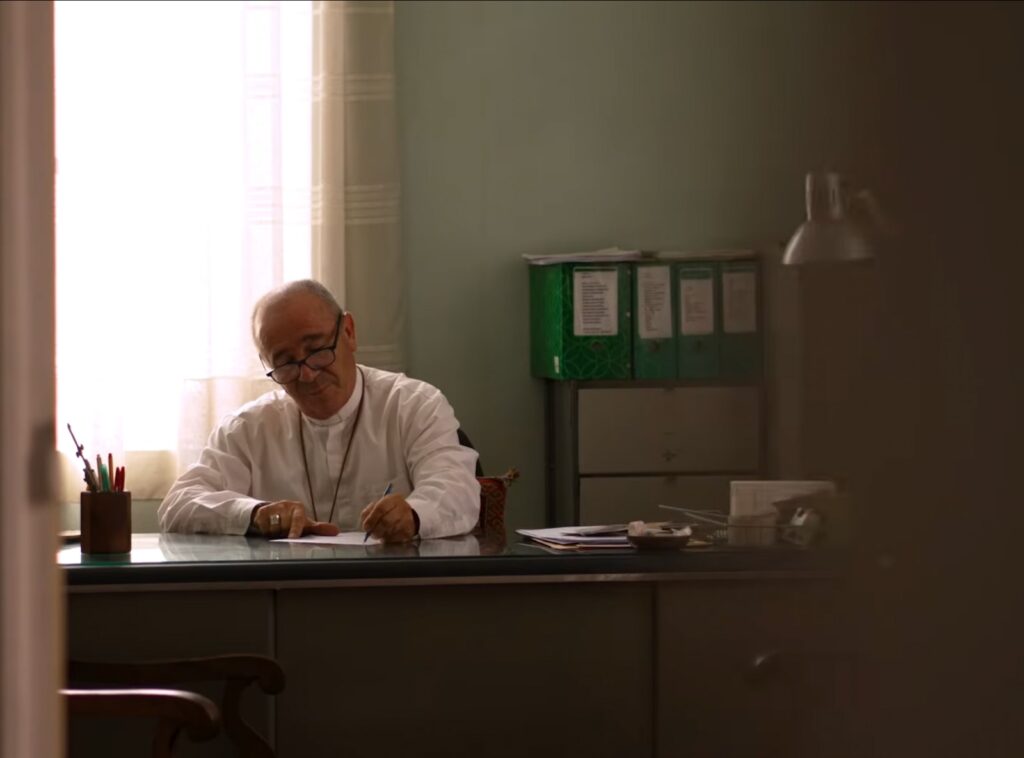
The diocese is called Constantine, the city is called Annaba, formerly Hippo, but everything about that place — the Algerian region that Pope Leo XIV is set to visit in mid April — evokes St. Augustine.
Bishop Michel Guillaud, St. Augustine’s episcopal successor, is preparing to welcome the Pope, himself an Augustinian, during the Algerian leg of his April 13-23 trip to Africa.
In his interview with the Register, Bishop Guillaud, a French missionary bishop and Islamic studies graduate who has been living in North Africa since 2006, discussed the characteristics of Algeria’s Catholics and highlighted how the figure of Augustine is a point of reference for Muslims as well as Christians.
“Being a small minority in a Muslim population, we focus on what we have in common,” he told the Register. “It is a privilege to experience this ecumenical dimension together.”
Bishop Guillaud also underscored the importance of the country’s small Catholic flock (5,000 in total, .01% of the population) and reflected on the significance of the Pope’s upcoming trip.
Leo XIV is preparing to visit Algeria — a son of St. Augustine in the land of St. Augustine. How much weight does Augustine’s legacy have in your diocese?
When, on May 8, 2025, the newly elected Pope said, “I am the son of St. Augustine,” all of Algeria was moved. Initially, Algerians thought Pope Leo XIV was a descendant of Algerians who had emigrated to the United States. Then they realized he was Augustine’s son in another sense. But they maintained a sort of bond with him because Augustine is important to them. He is one of the most famous “Algerians” in history.
For Christians, St. Augustine is the patron saint of our northeastern diocese. The basilica that bears his name, on Hippo Hill, at the entrance to the modern city of Annaba, is very important. It welcomes numerous visitors every year, the vast majority of whom are Algerian Muslims.
Every year, we organize the Augustinian Study Days, with lectures that allow everyone — Christians and Muslims — to deepen their understanding of Augustine. The basilica of Hippo is packed with Christians and Muslims. Last November, all three speakers at these study days were Algerian.
But who are these visitors?
They are Annaba residents who consider the basilica part of their local heritage and enjoy strolling among the olive trees on Hippo Hill; tourists who come for the beaches and take the opportunity to visit the city’s attractions; and even school and university groups. They are welcomed by a team led by the fathers of the Order of St. Augustine.
How is Augustine remembered?
On Hippo Hill stands the basilica, whose numerous stained-glass windows depict the life of Augustine. There, God is honored through prayer. There is also a retirement home, run by the Little Sisters of the Poor, where God is honored through service to the poor. Finally, there is the house of the Augustinian fathers, with a large library, where God is honored through study and theological reflection. This library specializes in Augustinian studies and is open to academics and researchers.

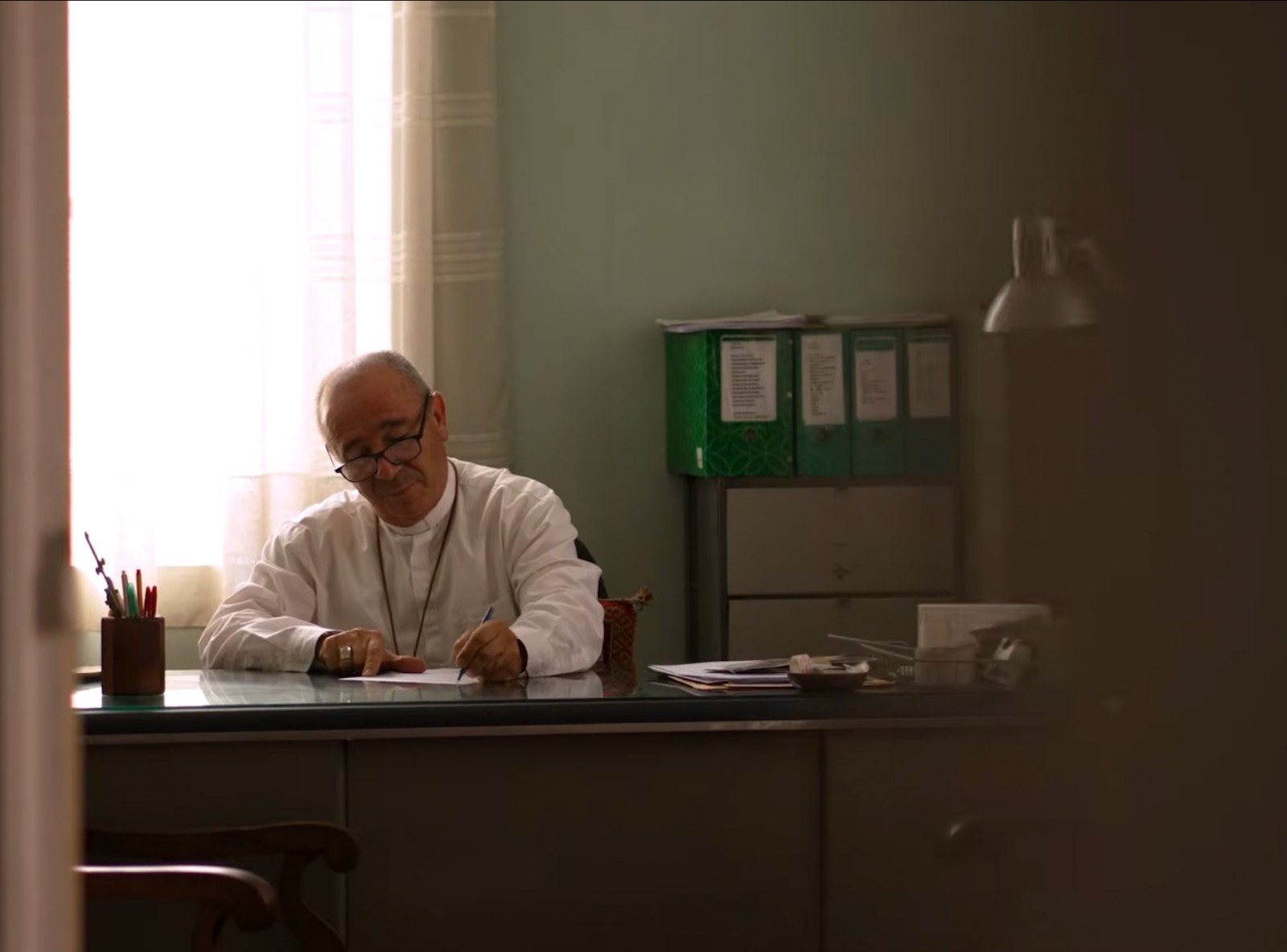
Who are the Catholics in the diocese?
Most Catholics are foreigners. Most are students from Sub-Saharan Africa on scholarships from the Algerian state. Algeria welcomes them regardless of their religion.
What challenges does your community face?
First, the distance between our parishes, which are at least 100 kilometers (62 miles) apart. We have seven centers in the diocese. Some Christians, therefore, have to travel great distances to reach a Christian community.
Then there are languages since we can have people who speak French, English, Arabic, Portuguese and so on in the same congregation. Since Sunday is a weekday, Sunday Mass is held on the weekend, either on Friday or Saturday.
We don’t have a resident priest at each of our locations. Christians must therefore arrange to meet even if there isn’t a priest every weekend.
Our communities often include Christians of other denominations (Anglican, evangelical, etc.). Being a small minority in a Muslim population, we focus on what we have in common. It is a privilege to experience this ecumenical dimension together.
We also face other challenges, such as the difficulty of obtaining visas for priests and nuns.
What will be the key moments of the Pope’s visit?
The Holy Father’s visit is divided into three parts: official meetings with the authorities, opportunities to meet with the Algerian people, and moments with the Church.
The two events we are certain of will both take place within the Church. The first will take place on Monday, April 13, in Algiers, at the Basilica of Our Lady of Africa, for a meeting with the Church and its friends. The second will take place 500 kilometers east, in Annaba, at the Basilica of St. Augustine of Hippo, for the celebration of Mass.
How do Catholics live as a minority in Algeria?
Our presence is small compared to the population. The Church is visible mainly through a few emblematic sites: the Basilica of Our Lady of Africa in Algiers, the Basilica of St. Augustine in Annaba, and the Shrine of Our Lady of the Holy Cross in Oran. [Also] the monastery of Tibhirine and the hermitages of Charles de Foucauld at Beni Abbes, Tamanrasset and Assekrem and his tomb at El-Meniaa.
The Mass is broadcast by a national public radio station on Christmas, Easter and Pentecost mornings.
The Church officially exists as an association.
Being a minority in a deeply religious community that often asks us about our religion … is a stimulus for each of us to make a decision, deepen our faith, join a parish, and take our faith seriously. The Holy Father’s visit will be a great encouragement and a great joy!