<p><!-- BEGIN THEIA POST SLIDER --></p>
<p> <br />
</p>
<div>
<p>When it comes to theology, which is the study of God, we are all beginners, none of us expert enough that we can ever dispense with faith. In fact, citing a definition set in stone since at least the 12th century by St. Anselm of Canterbury, what else is theology but faith in constant search of understanding?</p>
<p>Not the understanding of a problem, mind you, which is more or less soluble because, in theory at least, an answer is always available, depending on how much time and money one is prepared to throw at it. Putting an astronaut into space, for instance, is purely the result of rocket science, along with sufficient determination — and dollars — to execute the plan. Not so with mystery, which manages to escape even the best minds around, who vainly bend every effort to solve that which, because it implicates more than brute matter, remains forever beyond the reach of human intelligence. How to land a man on the moon to collect rocks for scientists to study back home, it turns out, is far less challenging than figuring out how a man can get along with other men on planet earth.</p>
<p>When someone you love is about to die, it is no use asking the pathologist who did the biopsy revealing the cancer, to tell you why. His job is merely to solve a problem, not resolve a mystery. The question you are asking is not about medicine, anyway, but metaphysics. Why must anyone die? Why is there death? Why not just life? Indeed, a life so intensely alive that it can outrun death?</p>
<p>In a comprehensive study of the subject written years ago by Frank Sheed called <i>Theology For Beginners</i>, he takes on the whole nature of mystery, telling us, “It does not mean a truth that we cannot know anything about, but a truth that we cannot know everything about.” In other words, mystery is not to be confused with mystification, but rather with something that, once God himself has revealed it, we can never fully exhaust. That God loves us is surely an article of our faith, but that he should go all the way to the Cross to demonstrate it, is a truth entirely transcendent to human reason.</p>
<p>“The heart,” as Pascal would say, “has reasons of which reason knows nothing.” And when it is the heart of God? There can be no end of the mystery then.</p>
<p>An anonymous poem from the 15th century nicely captures the point:</p>
<blockquote><p>A God, and can he die?<br />A dead man, can he live?<br />What wit can well reply?<br />What reason reason give?<br />God, truth itself, does teach it;<br />Man’s wit sinks too far under<br />By reason’s power to reach it.<br />Believe and leave to wonder. </p></blockquote>
<p>What happens, however, when what you are being asked to believe — told to, actually — becomes, not just a mystery, but a misery? When the truth, or what others have assured you is the truth, becomes a torment? What is a man or woman of faith expected to do in a situation like that? Is there a way out, or must one simply acquiesce? Even when one cannot square it with the experience of faith itself? And if not, does one then despair?</p>
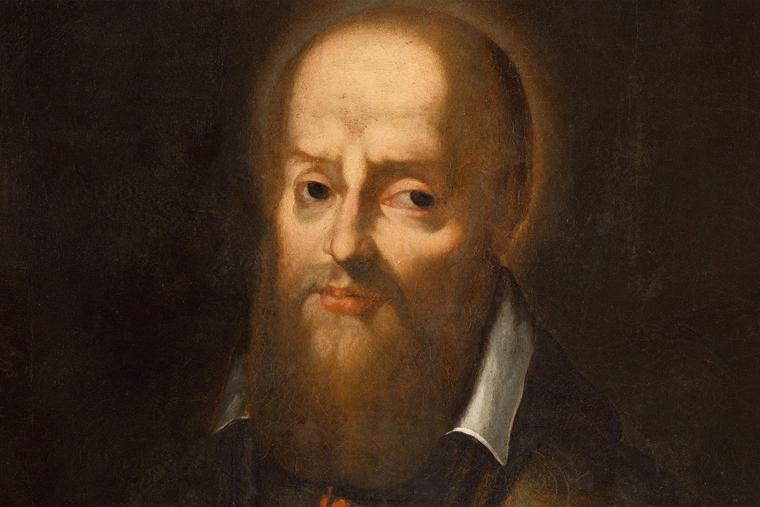
<p>Here is a harrowing and instructive example of what I’m getting at. It is taken from the life of a very great saint, Francis de Sales, who lived more than four centuries ago — and who, as a young and avid student of theology, came to believe that God had predestined him to eternal damnation. His teachers at the Sorbonne had quite persuaded him that, despite even the most ardent love of God, Francis was doomed never to see his face.</p>
<p>“He fell,” St. Jane de Chantal reports, “into a great temptation and an extreme anguish of mind. It seemed to him absolutely that he was damned and that there was no salvation for him.” </p>
<p>So certain was he of this forlorn fact that no experience of God’s love, which heretofore he had repeatedly savored, could do anything about it. “Should I then,” he asks, “be deprived of the grace of him who has made me taste so suavely of his gentleness, and who has shown himself so lovable to me?” Alas, the answer for de Sales was <i>Yes</i>. And from the coils of so adamantine a conviction, he makes the following appeal, which is no less astonishing than the judgment of damnation itself:</p>
<blockquote><p>Ah! Whatever it is to be, Lord, at least let me love you<br />in this life if I am unable to love you in eternity.</p></blockquote>
<p>Is there, then, no way out? Because, absent a solution, the alternative appears to be despair. The loss of God forever. The struggle, intolerable at every turn, goes on for two months, from December 1586 to January 1587. Until one day when, as Mother de Chantal tells the story, “It pleased Divine Providence to deliver him.”</p>
<p>How so? The answer came to Frances soon after entering the Dominican Church of Saint-Etienne-des-Gres in Paris where, in a side chapel dedicated to the Black Virgin, he pours out his heart in an act of heroic abandonment, telling God that if “because my merits demand it, I must be cursed among the accursed who will not see your most sweet face, grant me, at least, not to be among those who will curse your holy name.”</p>
<p>He thereupon takes up a tablet hanging from the railing, on which is written the prayer of the Memorare. And no sooner has he finished saying the prayer than all at once the temptation ceased. “He found himself,” writes Mother de Chantal, “perfectly and entirely cured, and it seemed to him that his sickness fell at his feet like the scales of a leper.”</p>
<p>It was Pascal who once said (I am paraphrasing) that the reason God instituted prayer was so that he might confer upon his creatures the dignity of becoming a cause. Construing it quite literally, which is how God himself intended that we should understand prayer, it means that by our prayers, we cause things to happen. And when it is Mary to whom we pray, who is at the same time joined with us in prayer to our common Father in heaven, think what prodigies of causality we might then effect!</p>
<p>It helps, of course, to choose the right prayer. Mother Teresa, whose sanctity, while no less great than that of Francis de Sales, was of a very different sort, would often pray what she called “the flying novena,” consisting of nine Memorares, followed by a tenth in thanksgiving for Mary having answered the novena. Such confidence she must have had in Our Lady’s intercessory power. But then, as the Little Flower, who possessed an unbounded trust in God, once put it: “One receives as much from Him as one hopes for.”</p>
</p></div>
<p><br />
<br /><a href="https://www.ncregister.com/blog/on-never-expecting-too-much-from-god">Source link </a></p>
<p><!-- END THEIA POST SLIDER --></p>

St. Francis de Sales Lived in Fear of Hell — Then Found Peace in This Prayer| National Catholic Register