<p><!-- BEGIN THEIA POST SLIDER --></p>
<p> <br />
</p>
<div>
<p>The Supreme Court Wednesday morning kept in place a Tennessee law banning medical “gender transitions” on minors. </p>
<p>The 6-3 decision in <a href="https://www.supremecourt.gov/opinions/24pdf/23-477_2cp3.pdf"><i>U.S. v. Skrmetti</i></a> protects vulnerable children from the snares of gender ideology and safeguards our Constitution from being manipulated by this sinister ideology.</p>
<p>In 2023, Tennessee restricted medical “transition” treatments for minors, enacting <a href="https://wapp.capitol.tn.gov/apps/Billinfo/default.aspx?BillNumber=SB0001&;ga=113">SB1</a> — the Prohibition on Medical Procedures Performed on Minors Related to Sexual Identity. Three “transgender” youth, their parents and a doctor challenged the law, claiming that it violated the equal protection guarantee of the 14th Amendment. </p>
<p>A trial court partially stopped SB1, ruling that transgender people are a “quasi-suspect” class, that the Tennessee law discriminates against people on the basis of sex and transgender status and that the law could not survive heightened judicial scrutiny. The 6th Circuit reversed, holding that the law did not require such scrutiny and survived review under the less rigorous “rational basis” review. The Supreme Court agreed. </p>
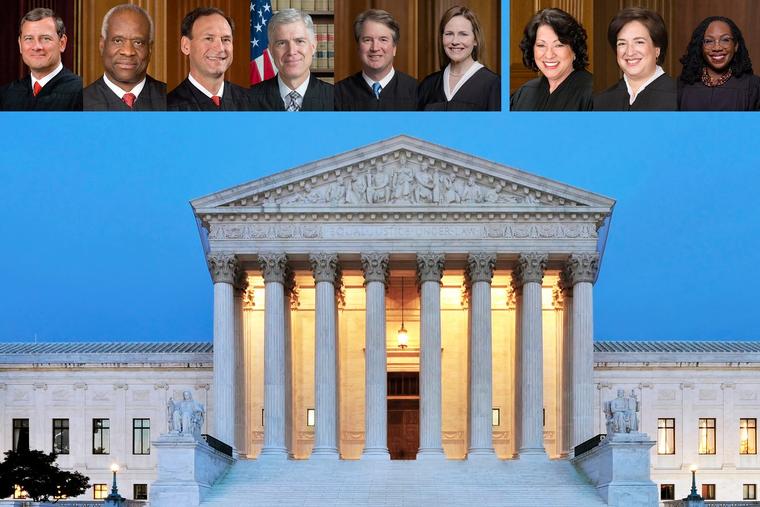
<p>The Court split, with the majority opinion being authored by Chief Justice John Roberts. Justice Samuel Alito concurred in part and concurred in the judgment. Justice Clarence Thomas wrote a concurring opinion, and he also joined a concurring opinion by Justice Amy Coney Barrett. Justices Elena Kagan, Sonia Sotomayor and Ketanji Brown Jackson dissented.</p>
<p>The majority opinion is a helpful primer on the court’s past analysis of cases alleging violations of the 14th Amendment, which commands that no state shall “deny to any person within its jurisdiction the equal protection of the laws.” Consistent with this edict, the Supreme Court has held that if a law involves some sort of classification that neither burdens a fundamental right nor targets a suspect class, the law will be upheld as long as it bears a rational relationship to some legitimate end. </p>
<p>Certain classifications, however, are subject to more exacting review by courts. </p>
<p>As Chief Justice Roberts explained for the majority, “laws that classify on the basis of race, alienage, or national origin trigger strict scrutiny” and “sex-based classifications warrant heightened scrutiny.” Heightened scrutiny, he continued, requires the government to show that the classification “serves important governmental objectives and that the discriminatory means employed are substantially related to the achievement of those objectives.” </p>
<p>Much to the chagrin of gender ideologues, I imagine, a majority of the court concluded that “SB1 does not classify on any bases that warrant heightened review.” As Roberts explained, “On its face, SB1 incorporates two classifications.” The first is a classification “on the basis of age.” The second classifies based on “medical use.” Contrary to the claims of the plaintiffs, explained Roberts, neither of the classifications “turns on sex.” Tennessee’s law does not create facial sex-based classifications by defining prohibited medical care based on a patient’s sex. </p>
<p>“The mere use of sex-based language does not sweep a statute within the reach of heightened scrutiny,” Roberts wrote. Nor does the application of the law “turn on sex.” Key to this conclusion, explained Roberts, is the “underlying medical concern the treatment is intended to address.” </p>
<p>The Court rejected the argument that SB1 unlawfully enforces “a government preference that people conform to expectations about their sex” adding that there was no evidence that SB1 was “motivated by an invidious discriminatory purpose” nor have the plaintiffs pointed to anything evincing “sex-based stereotyping.” </p>
<p>Roberts explained that the Court also concluded that SB1 does not classify based on transgender status. SB1 “does not exclude any individual from medical treatments on the basis of transgender status but rather removes one set of diagnoses — gender dysphoria, gender identity disorder, and gender incongruence — from the range of treatable conditions” and “divides minors into two groups: those seeking puberty blockers or hormones to treat the excluded diagnoses, and those seeking puberty blockers and hormones to treat other conditions.” Thus, explained Roberts, “there is a ‘lack of identity’ between transgender status and the excluded diagnoses.” </p>
<p>And finally, Roberts rejected the application of its reasoning in <a href="https://www.supremecourt.gov/opinions/19pdf/17-1618_hfci.pdf"><i>Bostock v. Clayton County</i></a> to the case at hand. In <i>Bostock</i>, the Supreme Court disappointingly held that an employer who fires an employee from being gay or transgender discriminates “because of sex” in violation of Title VII of the Civil Rights Act. While noting that the Court has “not yet considered whether <i>Bostock</i> reaches beyond the Title VII context,” Roberts states that <i>Bostock</i>’s reasoning does not apply in this case. “Sex is simply not a but-for cause of SB1’s operation.” </p>
<p>Applying “rational basis” review, the Court noted Tennessee’s findings that medical transition can lead to sterility, an increased risk of certain diseases and adverse and sometimes fatal psychological consequences. The state also flagged that not all harmful effects are fully known when medical interventions of this sort are performed on minors. Furthermore, the state found that discordance between sex and gender can often be resolved by less invasive approaches. SB1’s age and diagnosis-based classifications were “plainly rationally related to these findings and the State’s objective of protecting minors’ health and welfare.” </p>
<p>In closing, Roberts wrote that “this case carries with it the weight of fierce scientific and policy debates about the safety, efficacy, and propriety of medical treatments in an evolving field. The voices in these debates raise sincere concerns; the implications for all are profound.” The Constitution “does not resolve these disagreements.” Instead, the court chose to stay in its lane, deciding to “leave questions regarding its policy to the people, their elected representatives, and the democratic process.” </p>
<p>Thomas pushed back hard against “outsized credit to claims about medical consensus and expertise” in support of the banned interventions. He specifically noted “recent revelations that suggest that leading voices in this area have relied on questionable evidence, and have allowed ideology to influence their medical guidance.” He also cited research that the sorts of procedures banned in Tennessee pose harmful risks to minors and that states like Tennessee have a “legitimate interest” in asking “whether they are <i>ethical</i>.” </p>
<p>Ever-brilliant Barrett, joined by Thomas, wrote in a concurring opinion to address why transgender status should not constitute a “suspect class.”</p>
<p>“To begin,” she wrote, “transgender status is not marked by the same sort of ‘obvious, immutable, or distinguishing characteristics’ as race or sex.” Barrett added, “Nor is the transgender population a ‘discrete group,’ as our cases require.” </p>
<p>Finally, recognizing “transgender people” as a suspect class “would require courts to oversee all manner of policy choices normally committed to legislative discretion.” On top of this, Barrett noted that for purposes of the 14th Amendment, courts must consider whether a group has been “subject to a longstanding pattern of discrimination <i>in the law</i>.” As the group of “transgender individuals” is “an insufficiently discrete and insular minority,” the issue of whether plaintiffs had shown a history of “<i>de jure</i> discrimination” was, in Barrett’s words, “largely academic.” </p>
<p>For future cases — and there will be many — Barrett explained that she would “not recognize a new suspect class absent a demonstrated history of <i>de jure</i> discrimination.”</p>
<p>Justice Sonia Sotomayor penned a dissent that she read from the bench. “Tennessee’s law expressly classifies on the basis of sex and transgender status, so the Constitution and settled precedent require the Court to subject it to intermediate scrutiny,” she wrote. She then denounced her colleagues in the majority, saying that “by retreating from meaningful judicial review exactly where it matters most, the Court abandons transgender children and their families to political whims.” </p>
<p>Predictably, Sotomayor’s dramatics have been picked up by “trans-rights” activists, including the publishers of <a href="https://www.teenvogue.com/story/skrmetti-gender-affirming-care-decision-everything-we-know"><i>Teen Vogue</i></a><i> </i>and <a href="https://www.vox.com/scotus/417281/supreme-court-skremett-transgender-tennessee-health"><i>Vox</i></a>,<i> </i>as well as public officials like California Attorney General <a href="https://oag.ca.gov/news/press-releases/following-scotus-ruling-us-v-skrmetti-attorney-general-bonta-reaffirms__;!!GfxeEQ!VzEB4WmOshzexjHr3OujljykJNpkP0hnaZFkjzRMAdCL1JwUAoP43SKBsgfndo7uBTqI_yYNc1M9FINb_ik_CO4%24">Rob Bonta</a>, who promised, “In California, we will continue to promote and protect access to healthcare, not restrict it. My office and I remain committed to safeguarding and upholding the healthcare rights and freedoms for all individuals, including our transgender youth.”</p>
<p>A growing number of states in the country have <a href="https://biologicalintegrity.org/">passed laws</a> similar to Tennessee’s SB1 that aim to “<a href="https://familypolicyalliance.com/help-not-harm/">help not harm</a>” children struggling with gender dysphoria and related illnesses. </p>
<p>President Donald Trump issued an <a href="https://www.whitehouse.gov/presidential-actions/2025/01/protecting-children-from-chemical-and-surgical-mutilation/">executive order</a> earlier this year protecting minors from chemical and surgical mutilation while directing the Department of Health and Human Services to “increase the quality of data to guide practices for improving the health of minors with gender dysphoria, rapid-onset gender dysphoria, or other identity-based confusion, or who otherwise seek chemical or surgical mutilation.”</p>
<p><i>Skrmetti</i> offers an important legal defense of such crucial legislation and executive action.</p>
</p></div>
<p><br />
<br /><a href="https://www.ncregister.com/commentaries/scotus-skrmetti-protects-minors">Source link </a></p>
<p><!-- END THEIA POST SLIDER --></p>

Supreme Court Protects Minors From Gender Ideology| National Catholic Register