


This story begins, like most haunting melodies, with a simple, perhaps familiar-sounding, chord. Call it coincidence, accident or Providence, I recently heard that first chord. What began as a straightforward story idea prompted by a piano concert exploded into a virtual symphony of lives impacted by the atomic bomb that devastated Nagasaki, Japan, and the witness of Servant of God Takashi Nagai, whose Catholic faith rose from those ashes.
The concert was planned for Aug. 3 by Anli Lin Tong, a Juilliard-trained pianist. But it was not just any concert, or any day: The date was chosen by her to coincide with two anniversaries, the 10th anniversary of Anli’s father’s death in 2015 and the 80th of the atomic bomb drop on Nagasaki, Aug. 9, 1945. What brings two such seemingly divergent anniversaries together at the hands of a concert pianist in California?
Bells — and, most particularly, The Bells of Nagasaki. It is to that song, and the history of destruction and redemption it captures, for which Anli’s program was dedicated.
I met Anli, who was born in Taiwan and lives in southern California, at a retreat this summer for “Artists and Art Lovers” hosted by the Benedict XVI Institute.
Anli played for the attendees there, from every artistic discipline, and talked about the trajectory of her musical life. She relayed how the idea of doing a piano recital on the theme of bells to honor her father had been percolating for a while, but a hand injury had kept her from performing for over a year.
“I had thought my program would be later in the year, to give my hand more time to recover. The retreat for artists inspired me to pursue this concept further. And God had a different plan and a different timeline for me: to have the concert as a prelude to the Aug. 9 events in Nagasaki.”
Anli’s father, En-Kwei Lin, was a Christian surgeon trained in Tokyo during the lead-up to the Allied bombings. He was also instrumental in developing Anli’s prodigious musical talent.
From age 5, when she started piano, her father supervised her at the piano daily. As a preteen, Anli lived without her family, studying with masters at The Juilliard School in New York.
Until her father died in Taiwan, his influence was keenly felt in Anli’s life.

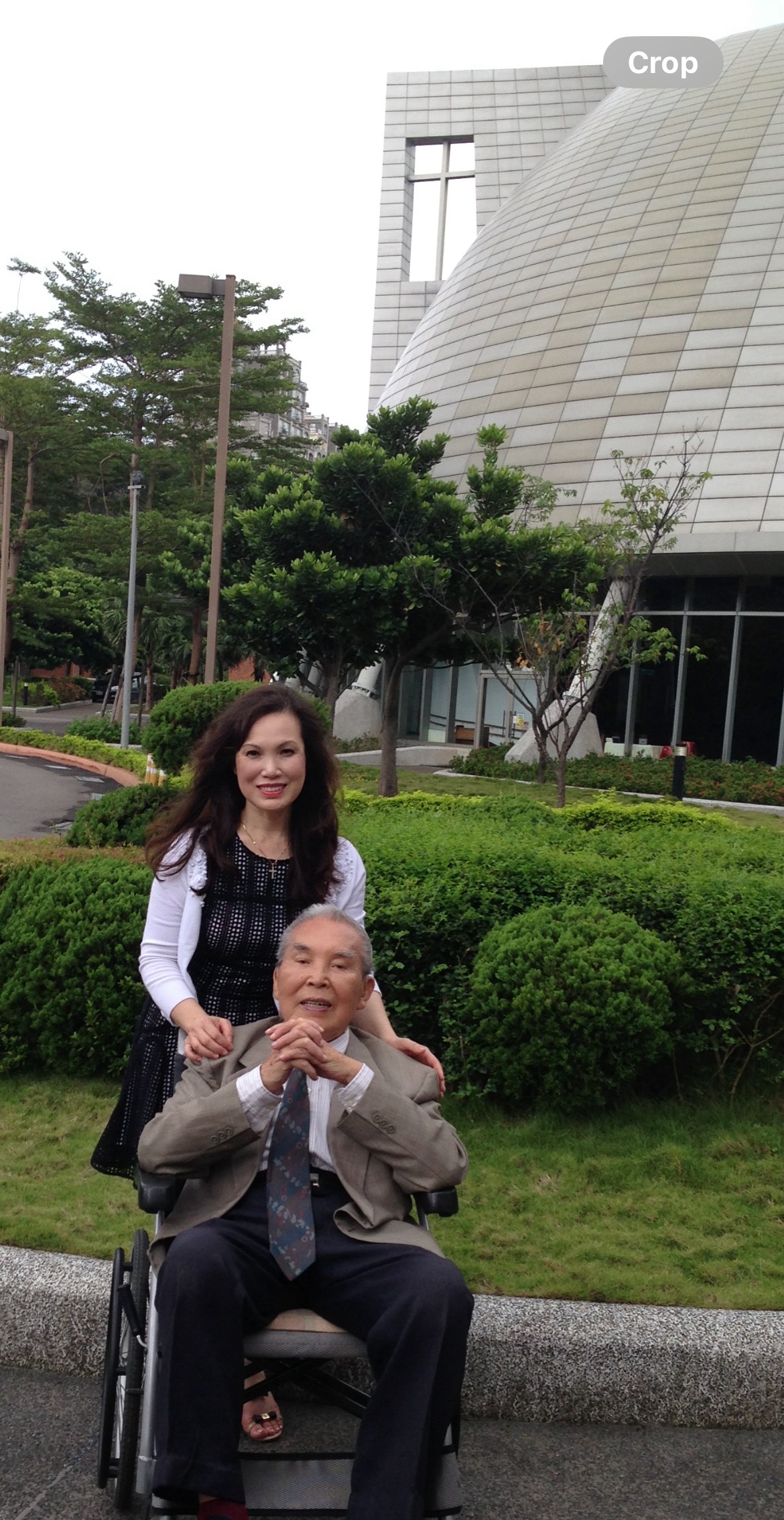
It was at the care center in Taiwan where he eventually died that Anli first heard The Bells of Nagasaki.
“Papa sang daily the song and told me — his American-raised-and-educated daughter — about Nagasaki’s unique history and the 16th-century Christian martyrs in Japan,” Anli explained.
“Through this song,” she added, “I learned about Dr. Takashi Nagai and his incredible faith.”
The Bells of Nagasaki song, written by Hachiro Sato and composed by Yuji Koseki, was inspired by the book of the same name by Nagai, a Japanese-Catholic radiologist and a survivor of the Nagasaki bomb, who lost his wife among the thousands who died that day and afterwards. He, too, died of leukemia, but only after having treated many other survivors in relief efforts for six years.
For Anli, Nagai’s faith — the Catholic Church has declared him a “Servant of God” — “speaks of forgiveness in the face of one of humanity’s cruelest acts against itself.”
The bomb that killed thousands, and ended World War II, also destroyed Nagasaki’s Urakami Cathedral, tumbling the twin towers and silencing its commanding bells, memorialized by Nagai.

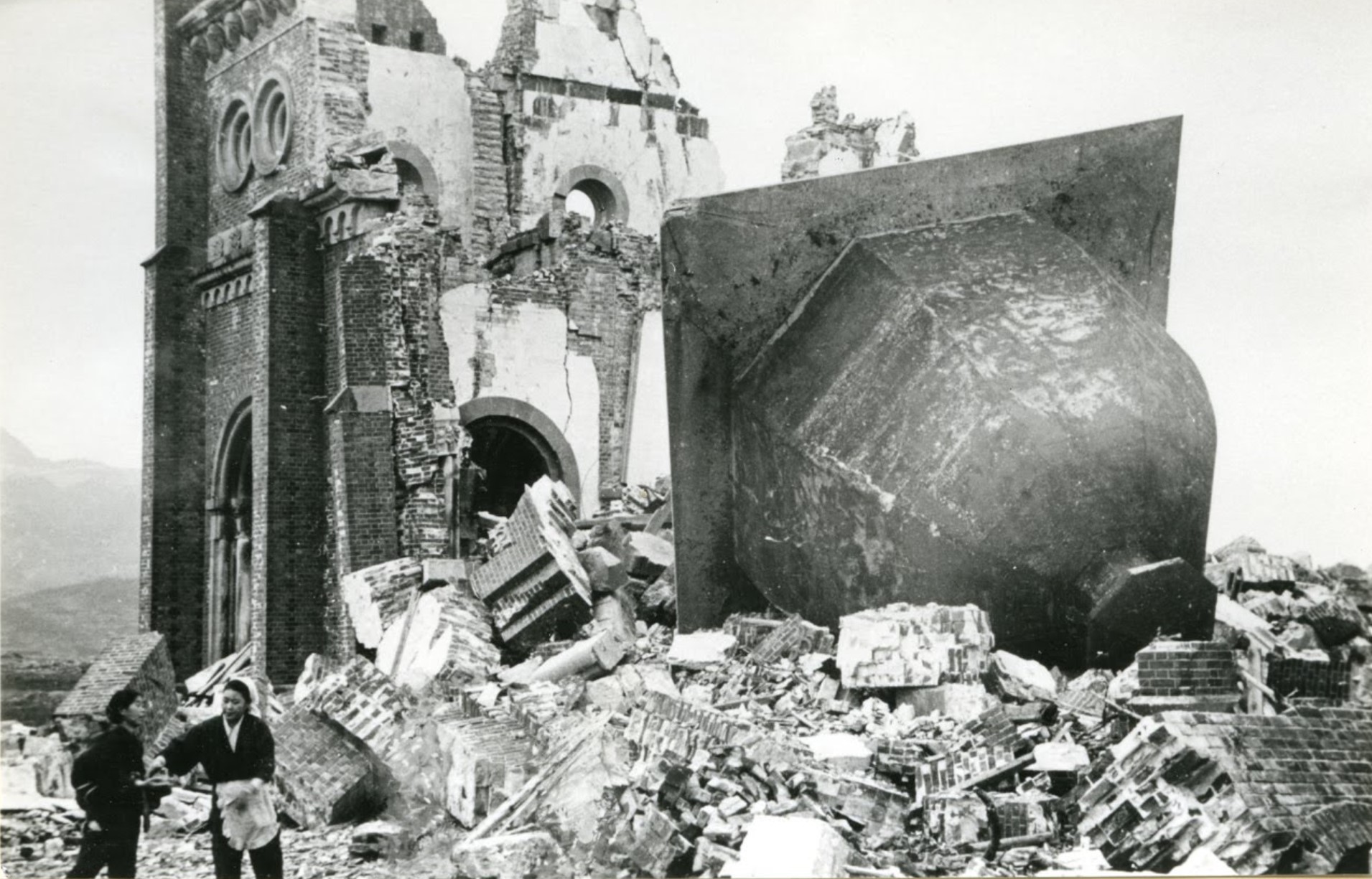
Urakami Cathedral and its bells were — and remain — a powerful symbol to the Catholic faithful who secretly maintained their beliefs during generations of suppression. Construction began in 1895, when power shifted, and was completed in 1925.
The sacred edifice was also less than a mile from the bomb’s epicenter. A handful of damaged statues and a single bell survived. The other bell remains lashed in its grave on the riverbank where it landed.
But even in that dark time, strains of hope resurfaced.
The important cathedral destroyed by the bomb rose a second time, after the war, rebuilt by the faithful within 10 years — but without one of its iconic bells. Now, 80 years later, in Urakami’s second tower, empty and silent for decades, a bell for Urakami has been resurrected.
Anli heard of the project to cast a new bell and donated to the effort. It was then she learned that it was undertaken by professor James Nolan Jr. of Williams College. Nolan is the grandson of James Nolan, the chief medical officer for the Los Alamos site of the Manhattan Project. The younger Nolan learned of the bell’s demise — and its vital link to Japanese Catholics — from a parishioner he met during a visit there. The St. Kateri Institute (of which Nolan is president) has raised the $125,000 to “make and give to the Nagasaki Catholics a new bell for the left tower.”
Nolan will be in Nagasaki for the ringing of the two bells together at 11:02 a.m. Aug. 9 — for the first time since they fell in 1945. The Nagasaki Bell Project was born, Nolan said, as a “gesture of healing, reconciliation and hope for peace.”
The new “Kateri Bell of Hope” is named after another Catholic convert, St. Kateri Tekakwitha, a member of the Mohawk tribe who was orphaned at age 10 and suffered abuse at the hands of her own people after she converted.
From the institute’s website: “The bell’s inscription is a prayer of reconciliation and hope: ‘I sing to God with a constant ringing, in the place where so many Japanese martyrs, with honor, have worshipped — and have, by their example, called their brothers and sisters and their descendants to the fellowship of the true faith and of heaven.’”
And Anli played “Music for Contemplation” on Aug. 3 at St. John Fisher, the very church where in 2024 she entered the Catholic Church. (And, in a final synchronicity to this story, as she learned from James Nolan Jr., the church is where he served as an altar boy.) The concert honored her father, who, she said, taught her that “the role of the artist is important in society. Problems that cannot be solved by economists or politicians can be solved by artists — the arts can be a great force for the good.”
Her program honored the memory of Bells author Nagai, whose words led the program:
“I pray and strive for this bell of peace to continue ringing until the last day of the world.”
As Anli told me, “God’s hand is in all of this.” May the resounding chorus of this haunting melody continue to reach across time and space as a call to peace.
Valoree Dowell writes from Marine on St. Croix, Minnesota.