<p><!-- BEGIN THEIA POST SLIDER --></p>
<p> <br />
</p>
<div>
<p>COMMENTARY: Horrors are possible in our time, and in places not far away.</p>
</p></div>
<div>
<p>Catholics in Canada and the United States are inclined to admire the popular piety of Mexico, looking forward to the upcoming 500th anniversary of the apparitions at Guadalupe in 2031.</p>
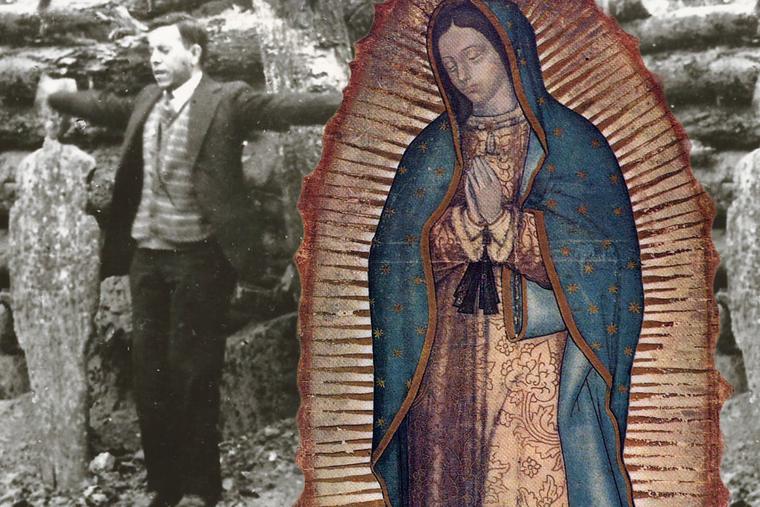
<p>But 100 years ago, Mexico was suffering a fierce anti-Catholic persecution. The administration of the sacraments was suspended for three years, and faithful Catholics were hunted down and killed. </p>
<p>Pope St. John Paul II decided to celebrate the canonization of the Mexican martyrs in the Great Jubilee of 2000 — a year in which he was very particular about which saints were selected to be canonized.</p>
<p>The “Cristiada” or “Cristero Rebellion” was one of the several lamentable persecutions that arose in countries of deep Christian identity after World War I — itself a massive failure of Christian civilization. It is plausible that the great secularizing trends of the 20th century were in part the result of the loss of Christian credibility during the Great War.</p>
<p>In the aftermath of World War I, anti-Christian persecution broke out in historically Christian lands, including Russia (communism), Italy (fascism) and Germany (Nazism). </p>
<p>Mexico is often forgotten. John Paul wanted that memory to remain alive in the 21st century.</p>
<p>“Cristóbal Magallanes and his 24 companion martyrs [mostly] belonged to the secular clergy and three were laymen seriously committed to helping priests,” <a href="https://www.vatican.va/content/john-paul-ii/en/homilies/2000/documents/hf_jp-ii_hom_20000521_canonizations.html">John Paul preached</a> at the canonization in 2000. “They did not stop courageously exercising their ministry when religious persecution intensified in the beloved land of Mexico, unleashing hatred of the Catholic religion. They all freely and calmly accepted martyrdom as a witness to their faith, explicitly forgiving their persecutors. … Today they are an example to the whole Church and to Mexican society in particular.”</p>
<p>What happened in Mexico exactly 100 years ago?</p>
<p>The Mexican Revolution (1910-1920) threw off a longtime dictatorship and led to a new constitution in 1917. The constitution included explicit limitations on religious liberty, seeking to reduce the influence of the Catholic Church in Mexican society and culture. </p>
<p>The Church’s right to teach religion was limited, Church property was made subject to government disposition, no public worship was permitted off Church property (for example, processions) and priests were forbidden from wearing clerical garb outside the churches. (The last provision was still in effect when John Paul visited in 1979, but the Mexican president symbolically paid the fine for the violation.)</p>
<p>The anti-religious and anti-Catholic laws caused great distress for Mexican Catholics and were strongly opposed by the Church in Mexico. But conflict and crisis were largely avoided as the constitutional provisions were simply not enforced. </p>
<p>That changed with a new Mexican president in 1924, Plutarco Calles. Staunchly anti-clerical, he chose to increasingly apply the constitutional restrictions on religion, finally signing in June 1926 the “Calles Law,” mandating strict enforcement of the anti-Catholic measures beginning the following month. </p>
<p>The Mexican bishops vehemently protested — to no avail. They consulted with Pope Pius XI and, with his support, announced that the Calles Law would make proper religious worship, sacraments and education impossible; therefore, all religious services requiring a priest — including Holy Mass and the sacraments — would be suspended in Mexico by decree on July 31, 1926. </p>
<p>It is hard to imagine today, but the logic was similar to an excommunication. Sometimes an offense is so grave that a Catholic can be barred from receiving the sacraments altogether, the severity of the penalty intended to make clear how urgently repentance and conversion are needed. By analogy, the Mexican bishops, with papal support, excommunicated the entire nation to indicate the gravity of the government’s offense against religious freedom and Catholic rights.</p>
<p>Sometimes the suspension by the Mexican bishops is likened to a “strike” or protest, but it is better considered a nationwide penalty to move the national government to change course. It was also thought that popular dissatisfaction would put irresistible pressure on the government to reverse itself. Who could imagine a Mexico without Masses, baptisms, weddings or funerals?</p>
<p>The tactical judgment proved incorrect. The Calles government became even more committed to its path and more intense in its persecution.</p>
<p>In parts of Mexico, opposition to the government took the form of armed rebellion, which in turn led to Mexican federal forces hunting down the rebels and their sympathizers, which, by definition, they considered to include all priests. Priests — and those who aided them — were martyred in their churches or hanged in public places. </p>
<p>The most famous of them was Jesuit Father Miguel Pro, killed by firing squad in 1927 and beatified in 1988.</p>
<p>The Catholic rebels were called <i>Cristeros</i>. Their story was dramatically told by novelist Graham Greene in <i>The Power and the Glory</i> and in the movie <i>For Greater Glory</i>.</p>
<p>The <i>Cristiada</i> began a few days after the suspension of the sacraments, Aug. 3, 1926. Neither the rebellion nor the suspension led to a quick resolution. Indeed, the <i>Cristiada</i> continued for three years until 1929, reaching a resolution only after Calles was no longer in office. The sacraments resumed the same year.</p>
<p>The Cristero Rebellion seems so alien today — the Church suspending her own sacraments, a vicious persecution of the Church in a Catholic country, Mexico as a place of anti-Catholic persecution. Yet all of it happened a century ago. Mexico in the 1920s is a reminder of the fragility of a Catholic culture, and how quickly peace and order can be lost to revolution, violence and martyrdom.</p>
<p>The blood of the martyrs maintained the integrity of the faith and bore fruit in the return of Mexican piety, but the events of a century ago remain a stark warning. Horrors are possible in our time, and in places not far away.</p>
</p></div>
<p><br />
<br /><a href="https://www.ncregister.com/commentaries/desouza-cristero-rebellion">Source link </a></p>
<p><!-- END THEIA POST SLIDER --></p>

The Cristero Rebellion of 1926 Offers a Sober Warning Today| National Catholic Register