<p><!-- BEGIN THEIA POST SLIDER --></p>
<p> <br />
</p>
<div>
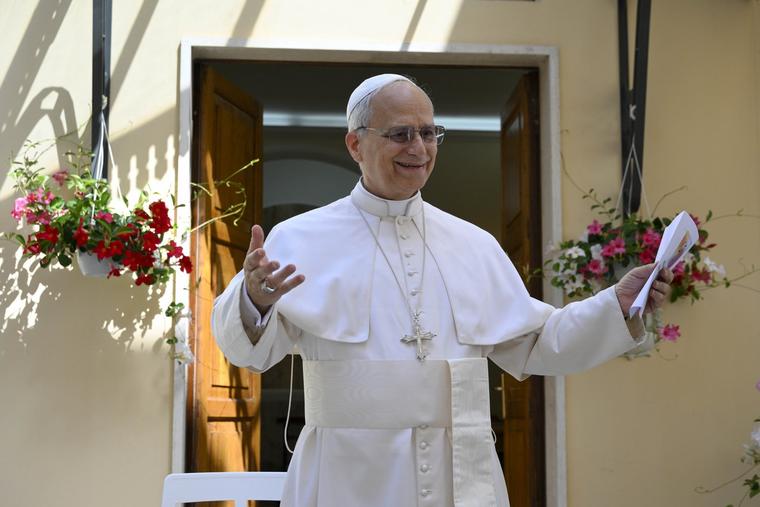
<p>Almost three months since Pope Leo’s election, he has appeared about as rarely in the news as a new pope can.</p>
</p></div>
<div>
<p>ROME — The moment it was announced from the loggia of St. Peter’s Basilica that the College of Cardinals had chosen their Chicago-born confrere Robert Prevost as pope, I shared the widespread excitement of my fellow journalists, Catholic and otherwise, especially among Americans. </p>
<p>The result was even more newsworthy than if the cardinals had picked an African or Asian, as thrilling as those outcomes would have been. From a purely journalistic point of view, the election of a U.S.-born pope — something that conventional wisdom had said was impossible right up to the moment we learned it had happened — seemed like the discovery of a gold mine. </p>
<p>Americans would, for the first time, hear the leader of the Catholic Church speak English as his native tongue, and his every utterance would be parsed, justifiably or not, as commentary on the actions of President Donald Trump, himself a one-man jobs program for reporters. The two men would appear almost constantly on a figurative, and at times literal, split screen. Rome would become a media capital to rival Washington and New York. </p>
<p>Or so many of us thought. </p>
<p>Today, almost three months since the election of Pope Leo XIV, the media reality defies those expectations. Apart from Catholic outlets such as the National Catholic Register, which have naturally covered him with the intensity and enthusiasm demanded by their mission and audience, Leo has appeared about as rarely in the news as a new pope can. </p>
<p>How this has happened is easier to explain than why, but one can speculate about both. </p>
<p>In retrospect, we should have realized that practically no successor to Pope Francis would match the Argentinian Pontiff as what reporters call good copy. With his maverick style, delight in surprise and taste for ambiguity, Francis constantly stirred controversy and interest — from his untraditional name choice at the start of his pontificate to a spontaneous appearance without clerical garb in St. Peter’s shortly before its end. His tendency to go off script at official events and his informal way of speaking in press conferences yielded an abundance of quotable statements, of which “Who am I to judge?” was only the most famous. </p>
<p>Leo, by contrast, has carefully followed papal tradition and protocol. His language is thoughtful and measured but not stylistically distinctive. His manner is modest, even self-effacing, perhaps a legacy of his Midwestern origins. His only press interview since his election, with Italian television last month, lasted less than three minutes and broke no news. He carries out the role with manifest self-assurance — “It’s like he has been pope for a hundred years,” a Vatican official told me recently — but rather than dominate the office, he has subsumed himself into it. </p>
<p>Pope Benedict XVI attempted something similar after his own charismatic, extroverted predecessor. But Cardinal Joseph Ratzinger had already spent two decades as a polarizing international figure, both inside and outside the Church. Cardinal Prevost was not widely known before his election. </p>
<p>The current Pope has also downplayed the very American identity that ensures his place in the history books. When he stepped out onto the loggia to address the world for the first time, Pope Leo switched from Italian into Spanish to send a special greeting to his former Diocese of Chiclayo, Peru, but did not speak in English or mention his hometown of Chicago. He has used English sparingly since then, perhaps because speaking the world’s <i>lingua franca</i> would magnify not only the reach but also the scrutiny of his words, especially on divisive issues. </p>
<p>Leo’s responses to such events as the U.S. bombing of Iran and the Israeli strike that caused three deaths at a Catholic church in Gaza have been notably restrained compared to what we came to expect from Francis, who provocatively likened Israel’s campaign in the Palestinian enclave to terrorism and suggested that it might qualify as genocide. The Pope has honored migrants and refugees as “messengers of hope,” but he hasn’t issued anything as forceful or far-reaching as Francis’ open letter to U.S. bishops last February, denouncing the Trump administration’s deportation policies. </p>
<p>Many of us who make a living watching the Vatican were certain that the new pope, whoever he turned out to be, would stir fierce controversy if he reversed any of the departures from tradition that helped define Francis’ pontificate in the public eye. But Leo’s decisions along those lines — from wearing the <a href="https://www.ncregister.com/news/what-do-pope-leo-vestments-mean"><i>mozzetta</i></a><i> </i>in his first appearance to vacationing at the papal villa of Castel Gandolfo — have drawn no significant criticism, no warnings of creeping restorationism, from progressive admirers of his predecessor. </p>
<p>Most Catholics, of course, are content to let the Pope lead as he will. Vocal minorities on both the left and right still hope to claim him and, for now, are content to assume he aligns with their views, giving them little reason to complain. </p>
<p>During the run-up to the last conclave, there was much talk, among cardinals and ordinary Catholics, about the polarization in the Church that had grown under Francis, with debates over whom to blame for that polarization only adding to the discord. Leo has signaled that Church unity, a value he mentioned half a dozen times in the homily at his inaugural Mass, will be a priority of his reign. For now, his remarkably low profile helps keep the peace. </p>
<p>“He plays his cards close to his chest,” a longtime acquaintance of Leo told me shortly after his election, and others who have worked closely with him concur. But sooner or later, he will reveal them, whether through clear statements on Church controversies or by what he chooses not to say. Then the Pope will be back in the news, whether he likes it or not. </p>
</p></div>
<p><br />
<br /><a href="https://www.ncregister.com/news/francis-rocca-pope-leo-xiv-the-quiet-american">Source link </a></p>
<p><!-- END THEIA POST SLIDER --></p>

The Quiet American| National Catholic Register