


Gerrit van Honthorst’s Adoration of the Shepherds has hung in the Albl family’s Bavarian workshop for decades.
“What I personally like about the painting is that the light is coming from the center, from Jesus,” Johannes Albl told the Register about the artwork’s subject, which has inspired a whole lineage of Albls.
For the Albls and generations of other woodcarvers in the village of Oberammergau, the Nativity has never merely been a seasonal decoration. It has been a theological statement rendered in wood: Christ as the source of light, order and meaning, quietly drawing the world toward himself.

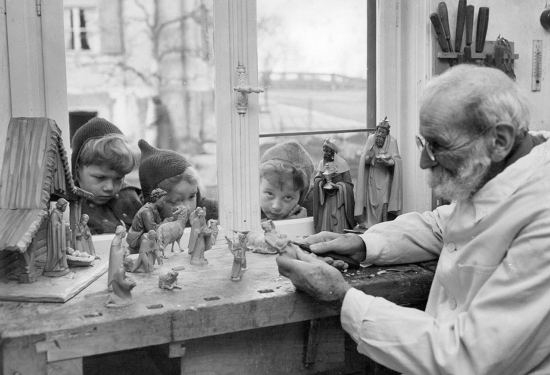
According to a document preserved in a nearby monastery, it was recorded in the year 1111 that the carvers of Oberammergau were so skilled that they were able to carve the entire scene of the Birth of Christ “into a walnut shell.” Much of the early records were lost in a 16th-century archive fire, but the family tradition continued unbroken.
Johannes and Markus Albl, who own ALBL Oberammergau, represent the 14th generation of their family associated with Oberammergau’s carving presence, a tradition that situates the studio within the village’s long history of sacred art. For the Albl family, that inheritance carries weight beyond professional pride. In a place where creating art has always been an expression of communal faith, carving has never been merely decorative.
“We have generations looking down from heaven and watching what you’re doing,” Johannes Albl said. “The most important part is not to be impressed by it, but to be respectful about the responsibility.”
Albl sees that responsibility as inseparable from faith. On the spiritual side of the craft, he often thinks of his late grandfather, who was known in Oberammergau for carving crucifixes. Whenever his grandfather worked by himself in the studio, he never felt alone. He would plan a cut one way, then sense that it should move in another as if Christ himself were present, guiding the hand. “That’s how I always feel,” Albl noted. “We’re not alone — not just in sculpting, but in everything.”
A Craft Handed Down, Not Replaced
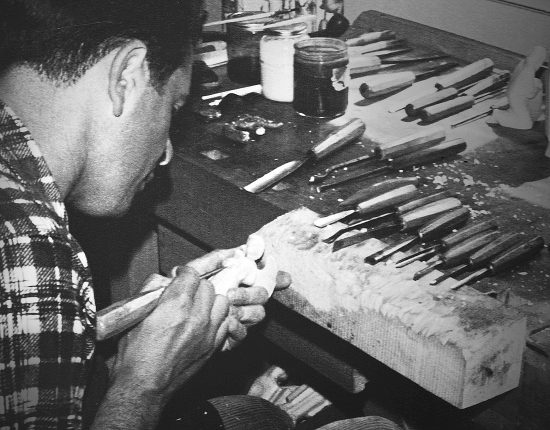
The enduring nature of the craft is clear in how little the fundamentals have changed. While ALBL Oberammergau relies on modern technology for communication, design collaboration, and logistics, the act of carving itself remains rooted in tradition. “Some of the tools we have are still from my great-grandfather and grandfather,” Albl said. “The carving knives are still perfect — you just have to sharpen them.”
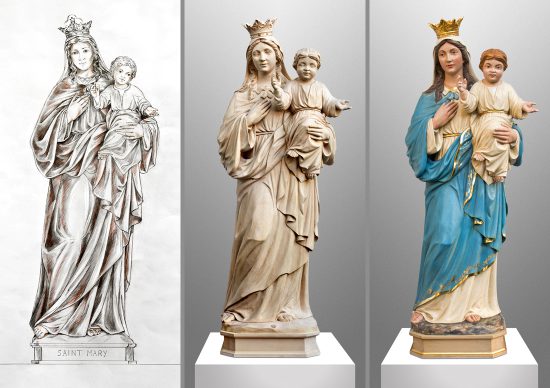
Each figure begins with a detailed sketch, followed by the preparation of linden wood, a favored material in Bavarian sacred art for its strength and fine grain. Rather than carving from a single tree trunk with an axe — a practice abandoned more than a century ago due to the possibility of cracking from the core of the trunk — the studio laminates four-inch slabs of wood together. The rough form is then shaped with chainsaws before every detail is slowly refined by hand using chisels and knives.

The painting process is equally meticulous. Depending on the commission, figures may be finished using modern methods or through a 400-year-old Baroque polychrome technique that layers gesso (a type of white primer), natural pigments, and real gold leaf.
“Our goal is always to make a Nativity set, a statue, a crucifix or a Stations of the Cross to look like it has always been in the church,” Albl said. “We do not want to create something that can bother or distract from the liturgy. Even if we just delivered the piece, it should give the impression that it has always belonged. It should lift your heart and help you practice the faith on a daily basis.”
While woodcarving remains central to the studio’s work, ALBL Oberammergau also creates integrated liturgical furnishings and, as commissions require, works in other crafts such as mosaics and bronze statues for churches and chapels worldwide.
Intimacy in the Incarnation
While the Nativity scenes inspired by Adoration of the Shepherds draw the eye inward toward Christ, Johannes Albl is equally attentive to what surrounds the Infant Jesus — particularly the “sheltering gesture of Mary.”
In van Honthorst’s work, Mary is not rendered as distant or idealized, but as present and protective, her posture conveying a love that shelters. For Albl, the gesture has always carried a significance beyond artistic composition.“It makes me think of my own mom growing up,” he explained. “She was always there, and she’s still there, even now, as I am a 41-year-old man. Whenever I need her, she’s just there. And I think this is a good representation of everything we see in the Holy Family and in Jesus, where everything began. That’s why this image has been close to the heart of our family for so many years.”

This intimacy of the Incarnation helps explain why the Nativity scene has endured as a devotional practice over the centuries, ever since St. Francis of Assisi made the first crèche on Christmas Eve in 1223.
A Vision Takes Root Abroad
Johannes Albl’s experience in the United States also prepared him to bring the family’s sacred art abroad. During a 2007 internship in Chicago, he lived with Franciscan friars and visited churches such as St. Michael’s in Wheaton, Illinois, where his father had carved a 7-and-a-half-foot corpus. Seeing the church full for Mass and watching parishioners enthusiastically engage with the art made a deep impression. “All the dots connected that day,” he said. “It felt like something guided by the Holy Spirit and a sign that this work could reach beyond Germany.”
That experience shaped Johannes Albl’s deeper involvement in the business’ approach to entering a more widespread market, blending centuries-old tradition with an understanding of how sacred art can inspire communities abroad.

At Prince of Peace Catholic Church in Taylors, South Carolina, that legacy took form in a large-scale Nativity. “When I arrived at Prince of Peace, I thought, ‘Many people in South Carolina go to Biltmore [in Asheville, North Carolina] at Christmas because of the beauty and decorations,’” said Father Christopher Smith, the parish’s pastor. “With the holiday being our patronal feast, Prince of Peace should be that kind of place where people come to see Christmas.”
Having encountered impressive Nativity displays during his seminary years in Rome and elsewhere in Europe, Father Smith wanted something large and theologically rich for his own church. This vision took on greater urgency during the COVID-19 pandemic, in which illness, isolation and loss weighed heavily on the parish.
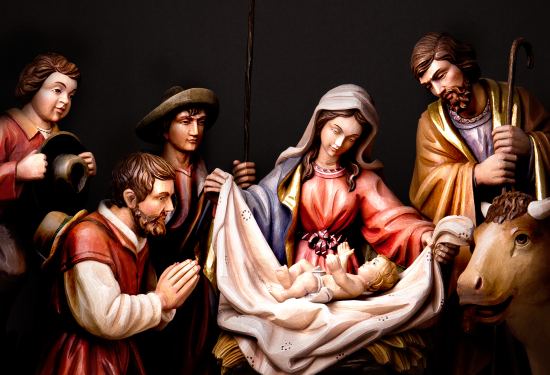
Funding such a distinctive work presented a challenge. Maria Rauch, the parish secretary at Prince of Peace, stepped forward to lead fundraising efforts. A team of parishioners contributed as well, hosting events such as a book sale to help defray the costs of the project.
When Prince of Peace commissioned ALBL Oberammergau in 2020 to create a fully life-size depiction of the Birth of Christ, it became the largest Nativity project in the studio’s history.
For Father Smith, the Nativity’s power is found in the hope it silently proclaims.
“We live in a world filled with war and violence and families being torn apart,” he told the Register. “The Nativity gives people a chance to see a family united: the Holy Family. And with the animals, plants and trees, it symbolizes creation being restored and the brokenness of the world being made whole through the humble Incarnation.”

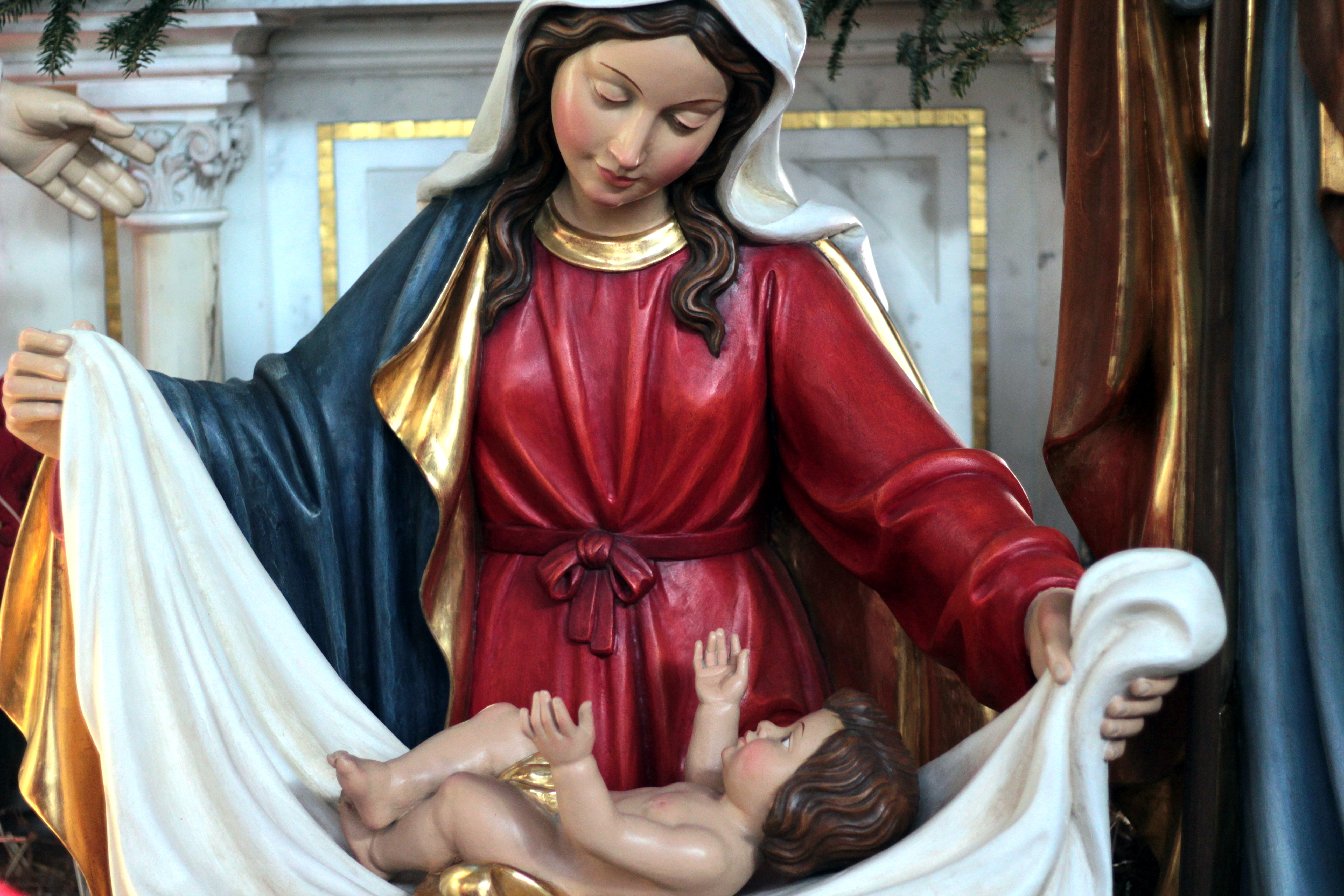
That scene, said Father Smith, serves as “a reminder” of St. Thérèse of Lisieux’s “Little Way,” or a “spiritual childhood and humility as the source of true greatness.” Rendered in carved wood and gentle expressions, this humility draws visitors into prayer.
“People going through difficult situations come to the Nativity and enter into it,” he said. “The beauty helps them imagine a different world; one made possible by the Incarnation.”
Creating Art for the ‘Glory of God’
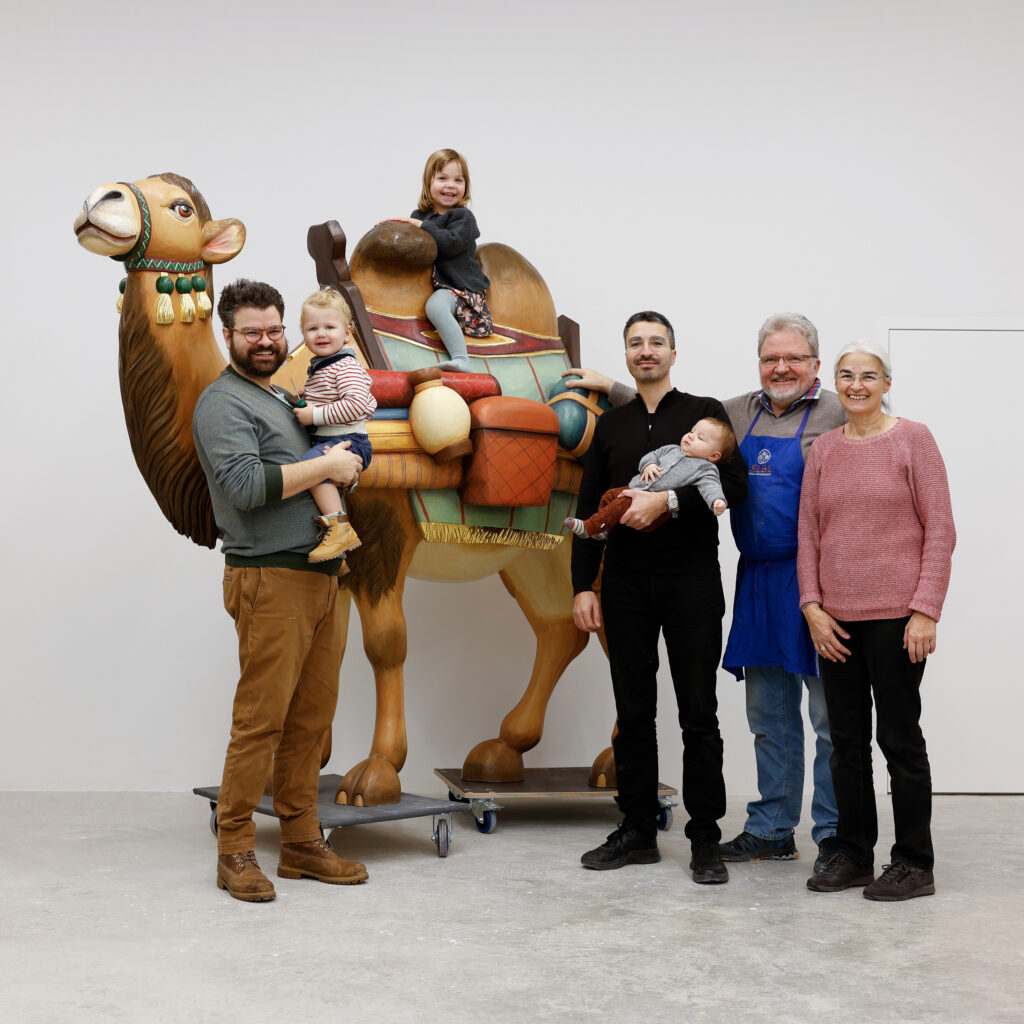
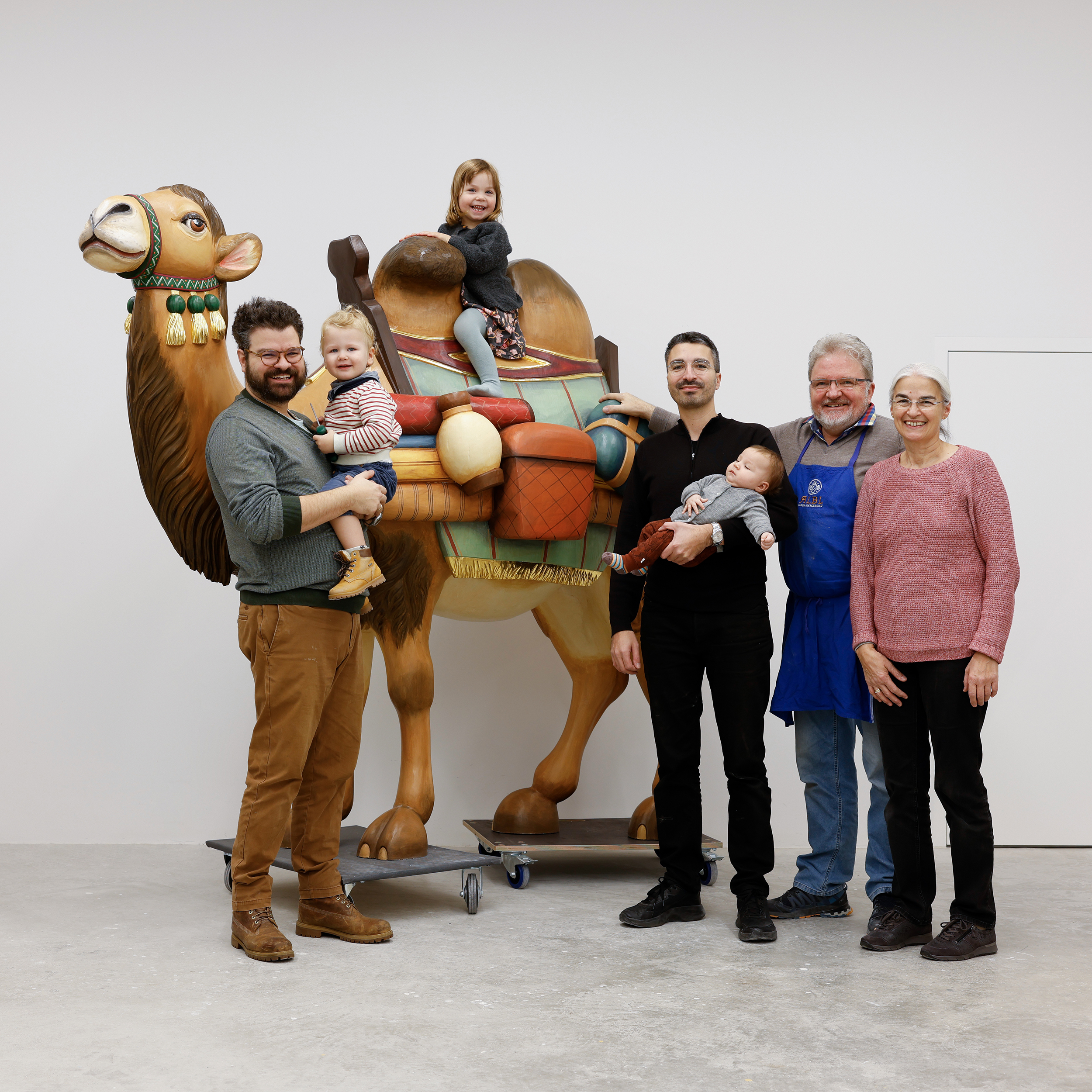
The completed Nativity includes 13 hand-carved figures made of polychrome linden wood, among them a 9-foot camel weighing 1,600 pounds. Johannes Albl credited “divine intervention” in shipping it upright to South Carolina by air freight.
“When we sent the crate dimensions to our freight forwarder,” Albl recounted, “they called and said, ‘You guys are really lucky — you’re only a couple of inches away from breaching the cargo airplane space limit.’”

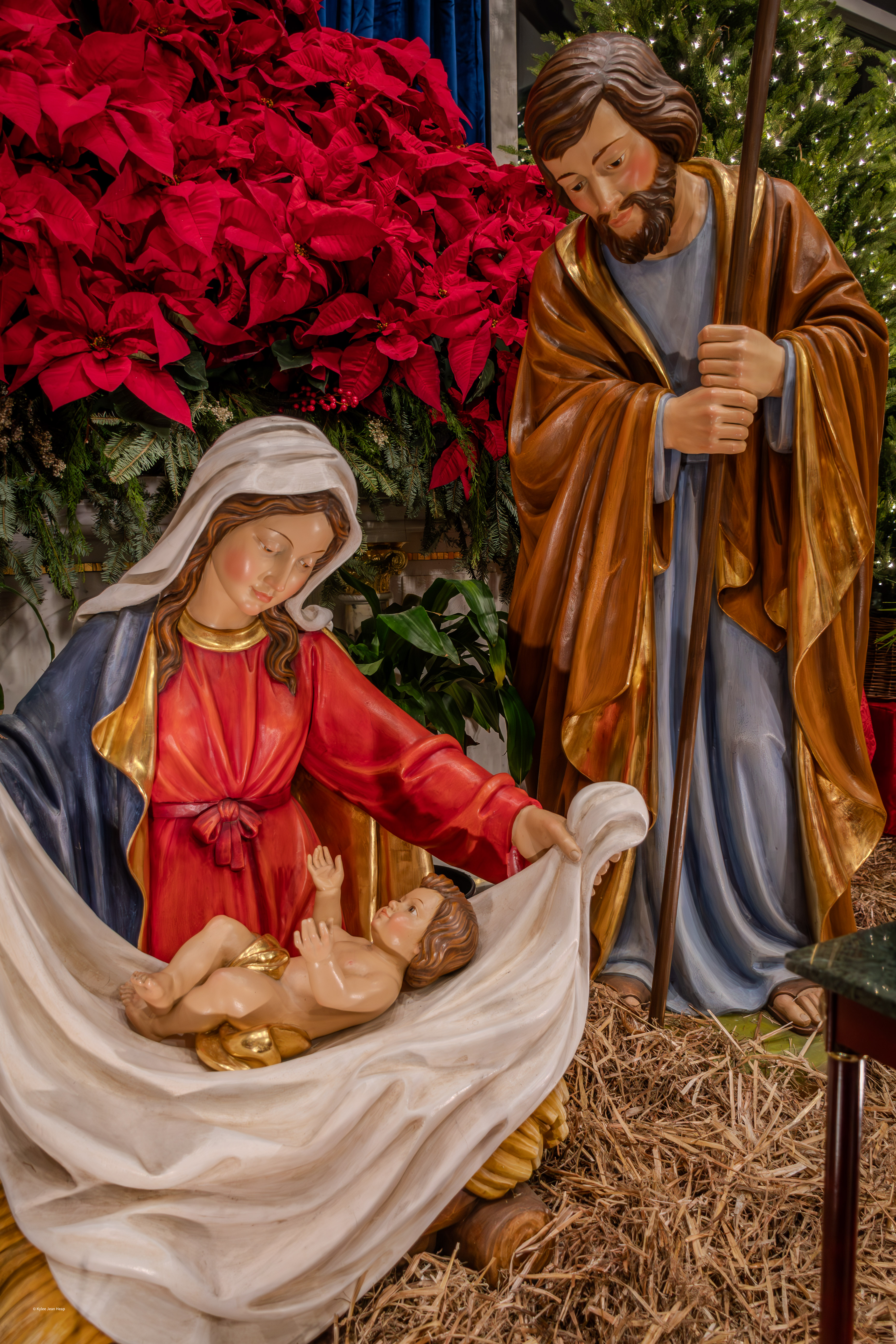
The camel, along with the other figures, draws visitors into the Nativity, encouraging them to pause, reflect and experience the story of the Holy Family in a tangible way. When the installation was unveiled in 2021 and became known locally as “The Great Nativity,” it quickly became a destination.
Today, visitors travel for hours to see it. Families take Christmas photos in front of it. One Christmas Eve, a man even proposed to his girlfriend before the figures after midnight Mass.
Choosing the right artists to fully encapsulate the Nativity scene was essential. “There’s a lot of mass-produced religious art today that lacks artistic depth, creativity and true craftsmanship,” Father Smith said. “ALBL Oberammergau has, for centuries, produced sacred art rooted in tradition while making each piece unique.”
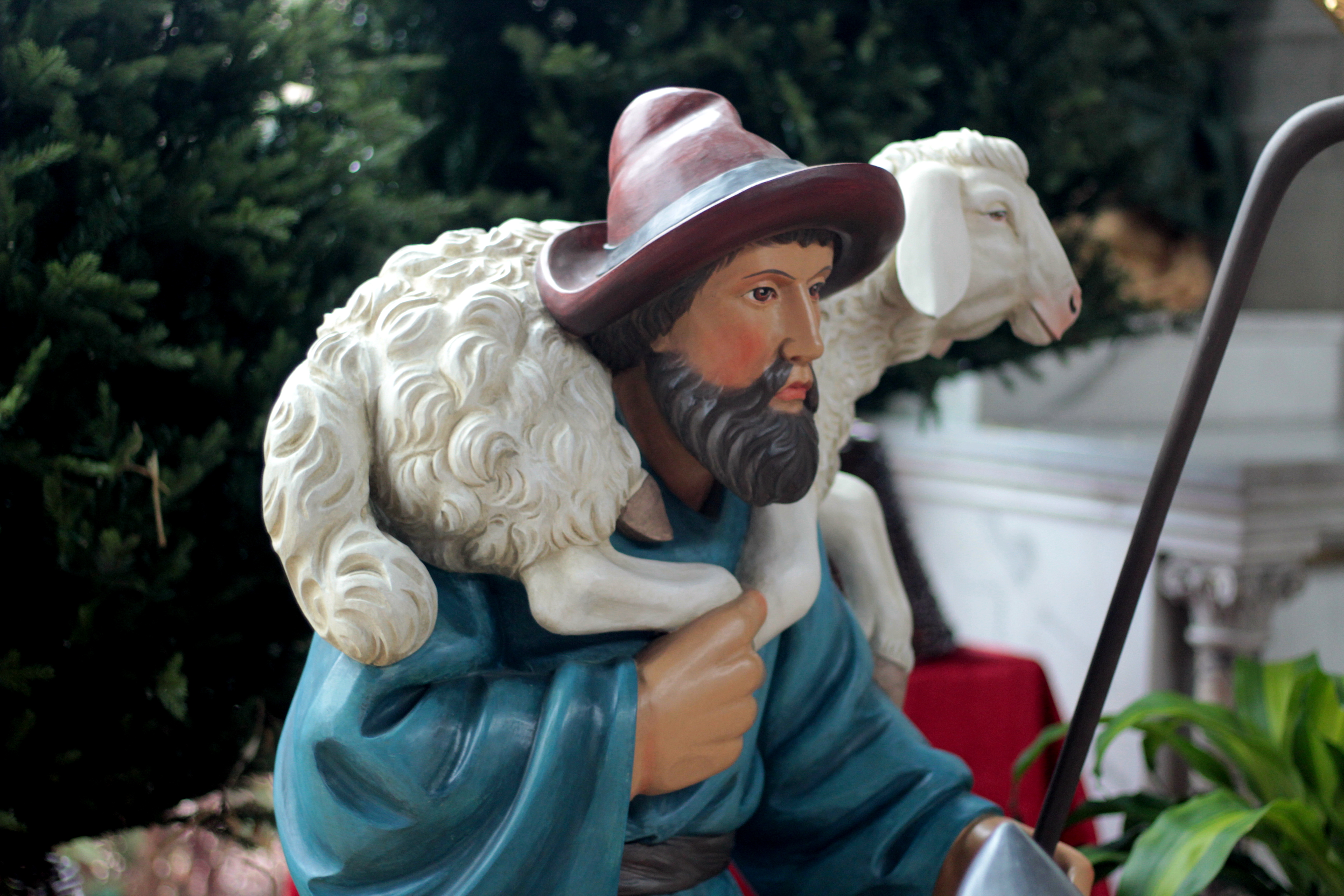
Not wanting something from a catalog, Father Smith added that the parish sought “artists who understood what they were making and did it for the glory of God.”
Answering a Calling
For Johannes Albl, seeing the Nativity come to life in a church is a daily reminder that his family’s work is more than art.
“This work gives meaning every single day throughout the entire year,” he said. “It’s the reason to get up very early and work hard. That’s the best job in the world. It doesn’t even feel like a job; it’s a calling.”
Today, ALBL Oberammergau continues to create sacred art for churches all over the globe, stretching from the United States to Europe and even Australia. Albl noted that this trend comes alongside a renewed interest in craftsmanship and tradition.
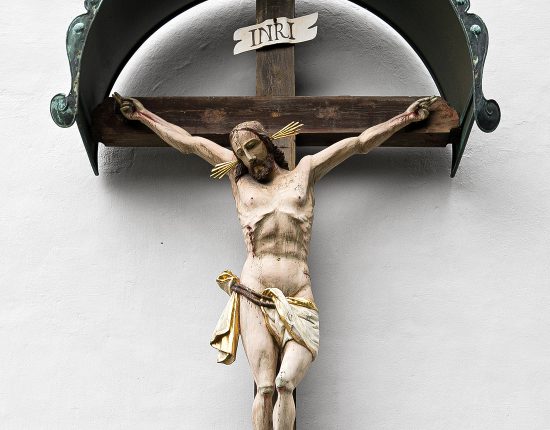
“What we are seeing now is that original sacred art is coming back,” Albl said. “It makes a church a unique space. Each community is different, and it’s worth creating something specifically for one church — not just ordering ‘number whatever’ from a catalog.”
From a Nativity once said to have been carved into a walnut shell to a life-size scene drawing pilgrims in South Carolina, the figures created by ALBL Oberammergau carry the weight of generations guided by tradition and faith. In every cut, brushstroke and detail, there is the sense that a sacred presence is always near, shaping the craft as much as the craftsman shapes the wood.
“If you’re able to create a piece of art like ‘The Great Nativity’ at Prince of Peace that works like a magnet for people, I think that’s the best description of what sacred art can do for a church,” Albl said. “That’s the purpose of what we’re doing for Christmas, and for every day.”