<p><!-- BEGIN THEIA POST SLIDER --></p>
<p> <br />
</p>
<div>
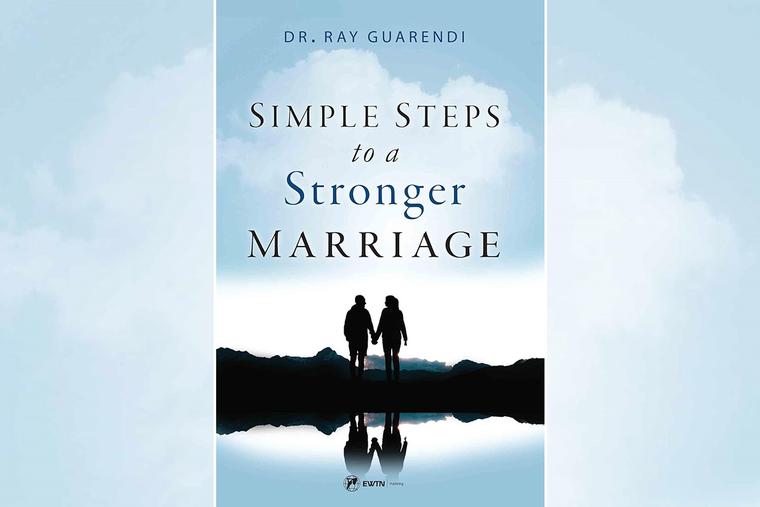
<p>An excerpt from ‘Simple Steps to a Stronger Marriage’ by Dr. Ray Guarendi</p>
</p></div>
<div>
<p>The secret of a good marriage (sounds like a pop magazine cover!) is that there are no secrets; only good sense, simple practices. How to better treat someone is not nuclear particle physics; it’s more like learning the multiplication tables. You did learn them? In marriage, the easier part is knowing what to do. The harder part is doing what you know.</p>
<p><i>Say I’m sorry.</i> So have countless parents coached countless kids for countless generations. Watching my own children push out a semi-audible “sorry” has convinced me it’s more often aimed at the floor than at any nearby human. The reluctance behind “I’m sorry” starts young.</p>
<p>“When was the last time you apologized?” I ask spouses.</p>
<p>“I think it was on our first date.”</p>
<p>“Sometime before our first son was born. He’s in college now.”</p>
<p>“When did Halley’s Comet last pass?”</p>
<p>You needn’t be a shrink to analyze that apologizing is about as appealing as a root canal. Good guidance for preschoolers is good guidance for grown-ups: Say “I’m sorry.” Without mumbling. Without talking to the floor. Without full feeling, if necessary.</p>
<p>“I don’t think I have anything to apologize for. I didn’t start the trouble.” Assuming you’re not Mother Teresa or St. Francis, you probably did a little bit wrong.</p>
<p>If so, apologize for your little bit, even if you were provoked, even if you were hurt, even if your portion of blame is under 5%, as measured by a panel of 100 objective judges and not yourself.</p>
<p>The point is not, “Do I have a reason for what I said or did?” You very well may. The point is, “Do I have anything whatsoever to apologize for?”</p>
<p><i>Personal Apology Percentage (PAP)</i><u>.</u> How wrong must you be — or think you are — before apologizing? What percentage of blame will prompt an “I’m sorry for …?”</p>
<p>For most of us, the cut-off number is 50%. If I believe I’m more than half wrong, I’ll admit it. Anything less — 32% or 21% or 3.26% — and I’ll just wait until my spouse acknowledges their percentage, which in my eyes is higher than mine.</p>
<p>A seldom-say-sorry spouse can be exasperating. Getting them to mouth the words is like pulling their teeth. Relationship Law 101: To nudge another to act better, act better yourself. Want compliments? Give them. Want to be liked? Be likable. Want to hear “sorry?” Say “sorry.”</p>
<p>Sorry to have to say this, but giving more sorrys is no guarantee of getting more. Still, you could hear more than you’re hearing now.</p>
<p><i>I’m sorry.</i> Two simple words with major benefits.</p>
</p></div>
<p><br />
<br /><a href="https://www.ncregister.com/commentaries/guarendi-steps-sorry">Source link </a></p>
<p><!-- END THEIA POST SLIDER --></p>

Want to Hear ‘Sorry?’ Say ‘Sorry’| National Catholic Register