<p><!-- BEGIN THEIA POST SLIDER --></p>
<p> <br />
</p>
<div>
<p>COMMENTARY: Cases can be made for three eras by considering their paradigmatic greats.</p>
</p></div>
<div>
<p>Amidst a presidential campaign in which many of our countrymen deplore the choices we face in November, let’s take a break, follow the counsel of Ecclesiastes 3:1 (“For everything there is a season …”), and turn our attention to a question of major — even transcendental — import: Are we in the Golden Age of baseball? Or was that the 1920s-1930s? Perhaps the 1950s-1960s? </p>
<p>Cases can be made for each by considering their paradigmatic greats. </p>
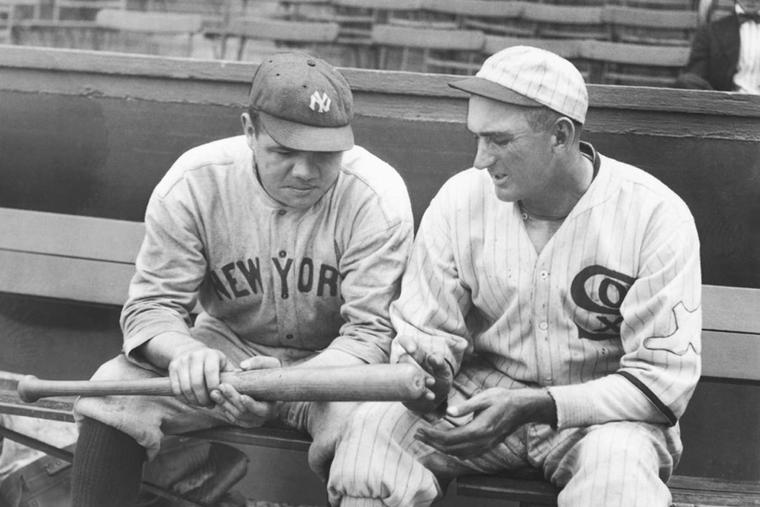
<p>The argument for a 1920s-1930s Golden Age is built around the epic career of one George Herman Ruth, my fellow ex-Baltimorean, who learned the game through the disciplinary and athletic ministrations of Xaverian Brother Matthias at St. Mary’s Industrial School. There, “Spare the rod [or bat] and spoil the child” was a given — not unreasonably, according to the pre-Dr. Spock ethos of the time, for many of the resident boys had, er, “behavioral issues.” </p>
<p>Morphed into “The Babe,” Ruth (once labeled “incorrigible”) was a home-run machine and America’s most prominent personality for decades. Asked in 1930 why he earned a higher salary than President Herbert Hoover, the Babe blithely replied, “I had a better year than he did;” America smiled (and likely agreed). </p>
<p>Ruth was not alone, of course. Immortals like Lou Gehrig, Rogers Hornsby, Walter Johnson (“He could throw a lamb chop past a starving wolf”), Ty Cobb, Jimmie Foxx, Hank Greenberg, Dizzy Dean, and Joe DiMaggio fill out the case for 1920s-1930s baseball as the nonpareil. </p>
<p>As for the 1950s-1960s, the emblematic figure was recently deceased Willie Mays, the “Say Hey Kid,” whom many consider the best all-around ballplayer ever. In a brilliant obituary column in <i>The </i><a href="https://www.wsj.com/sports/baseball/willie-mays-will-be-forever-a8853906" target="_blank" rel="noopener"><i>Wall Street Journal</i></a>, Jason Gay related two Mays stories for the ages. </p>
<p>The first involved <a href="https://www.youtube.com/watch?v=7bLt2xKaNH0" target="_blank" rel="noopener">“The Catch,”</a> in which Mays robbed Vic Wertz of a home run in the 1954 World Series. Willie, however, insisted that he’d made a better play in stealing a hit from Bobby Morgan in Brooklyn’s Ebbets Field: “He hits a … line drive over the shortstop’s head. The only way I can catch the ball is to catch it and hit the fence all in one motion. I catch the ball and knock myself out. When I came to, I saw two guys, Leo [Durocher, his manager] and Jackie [Robinson, of the archrival Dodgers]. I asked Jackie, ‘What the hell are you doing here?’ Jackie says, ‘Well, I want to see if you caught the ball.’” </p>
<p>Then there was Willie’s encounter with the great Satchel Paige. Mays, a 17-year-old playing for the Birmingham Black Barons in the Negro American League, gets a double off Satch his first time at bat. When Mays comes up again, Paige walks halfway to the plate and tells Mays that he’s going to throw three fastballs, after which “you’re going to sit down.” Mays says to himself, “I don’t think so.” </p>
<p>Satchel blows two heaters by the kid, throws the third pitch, and while the ball is in the air, starts walking to the dugout, saying, “Go sit down.” Willie’s comment: “He was just a magnificent pitcher.” </p>
<p>Willie, Mickey [Mantle], and the Duke [Snider]; Jackie Robinson; Ted Williams; Sandy Koufax; Frank and Brooks Robinson; Bob Gibson; Stan Musial; Hank Aaron; Ernie Banks; Roberto Clemente — the list goes on and on, buttressing the case that what some refer to as baseball’s “Silver Age” was really its Golden Age. </p>
<p>As for the 21st-century pastime, athleticism is at an apogee, exemplified by great shortstops like Derek Jeter and incumbent American League Rookie-of-the-Year Gunnar Henderson. Mike Trout, Miguel Cabrera, Aaron Judge, and Albert Pujols hold their own in any discussion of great hitters, while Randy Johnson, Clayton Kershaw and Stephen Strasburg belong in the pitchers’ pantheon. (Strasburg would have had more than 14 strikeouts in his first game if the home plate umpire had previously seen anything like the rookie’s ability to “paint the black” — the edges of the plate.) </p>
<p>Each era has its issues, be that the infamous “color line” before 1947, careers interrupted by military service in World War II, or the steroid plague that warped the record books. Today, the “ghost runner” at second base in the 10th inning contradicts baseball’s metaphysical and moral architecture; legalized sports gambling hangs a sword of Damocles over the integrity of the game; umpiring is reliably unreliable; the new, move-the-merchandise-driven “City Connect” uniforms are an aesthetic nightmare; “Pride Night” at the ballpark is another corporate surrender to woke pressures and political correctness. </p>
<p>Negro League stalwart and Hall of Famer Buck O’Neil said of baseball, “You can’t kill it.” <i>Oremus</i> that Buck was right, as the possibility that there are at least three Golden Ages suggests. </p>
</p></div>
<p><br />
<br /><a href="https://www.ncregister.com/commentaries/baseball-golden-age">Source link </a></p>
<p><!-- END THEIA POST SLIDER --></p>

When Was Baseball’s Golden Age?| National Catholic Register