<p><!-- BEGIN THEIA POST SLIDER --></p>
<p> <br />
</p>
<p>COMMENTARY: All catechesis should be incremental, communal, prayerful, liturgical, doctrinal and transformative.</p>
<div data-cy="articleBody">
<p>What does it take to make someone a Catholic? The waters of baptism bring new birth, yet when we look around, we find many baptized pagans in the world today. In response, it’s easy to say that it’d be different if only they were better educated. </p>
<p>In the late 1960s, catechesis collapsed by focusing more on subjective experiences than on doctrine. With the release of the new Catechism in 1992, a wave of more theologically sound textbooks was produced, yet the crisis of attrition continued apace. It’s time to recognize that something else has been missing.</p>
<p>The sociologist Christian Smith<i> </i>offered a sobering assessment of the state of Catholic formation in his co-authored book, <i>Young Catholic America: Emerging Adults In, Out of, and Gone from the Church</i>: “We cannot report that Catholic schooling and youth group participation have robust effects on emerging adult faith and practice” (232). </p>
<p>These words confirm the experience of the last half century: what we’ve been doing has not generally succeeded at handing on the faith. Smith, however, also discovered a pathway of formation that worked remarkably well in handing on the faith, with these three necessary factors listed in order of importance: </p>
<p>“First, Catholic youth who have strong relational bonds with highly religious parents, other adults, and friends are more likely to maintain or increase their religious faith. … Second, developing an internalized belief system involving a faith that is personally important … helps teens to sustain religious faith. … Finally, Catholic teenagers who live out their faith through certain religious practices, especially reading the Bible and frequently attending Sunday school, are more likely to become highly religious emerging adults” (178). </p>
<p>We could summarize this effective combination as emphasizing 1) forming personal relationships, 2) internalizing instruction, and 3) forming habits, especially of prayer. </p>
<p>What does this have to do with OCIA (the Order of Christian Initiation for Adults), the Church’s process of forming converts? Smith’s contemporary findings confirm the ancient wisdom of the Church, developed within her own distinct method of imparting the faith. In the ancient world, when prospective converts came to the Church to ask for baptism, they were accompanied by a sponsor, someone who would mentor them through the process of formation. The period of formation would last as long as was necessary to ensure that change was actually taking root in converts’ lives, often for multiple years. And before baptism, the catechumens would face scrutiny to ensure that they had formed habits consistent with the Christian life. This rigorous formation was necessary to sustain the Christian life within a hostile culture that persecuted the Church.</p>
<p>When I hear the announcement, “OCIA <i>class</i> meets Wednesday night,” I squirm in the pew, knowing that classroom experiences are not sufficient to make converts. This ancient process of formation, known as the “baptismal catechumenate,” and which provides the inspiration for OCIA, could not be reduced to a class, although it certainly included instruction. </p>
<p>Whether it was Roman citizens or today’s converts, can we reasonably expect someone to maintain the practice of the faith without learning how to pray, building community and living out what they are learning? </p>
<p>Though learning the faith is an essential part of formation, it remains only one component. Learning the doctrine of the Incarnation must be complemented by relating to Christ in prayer and daily actions that express communion with him.</p>
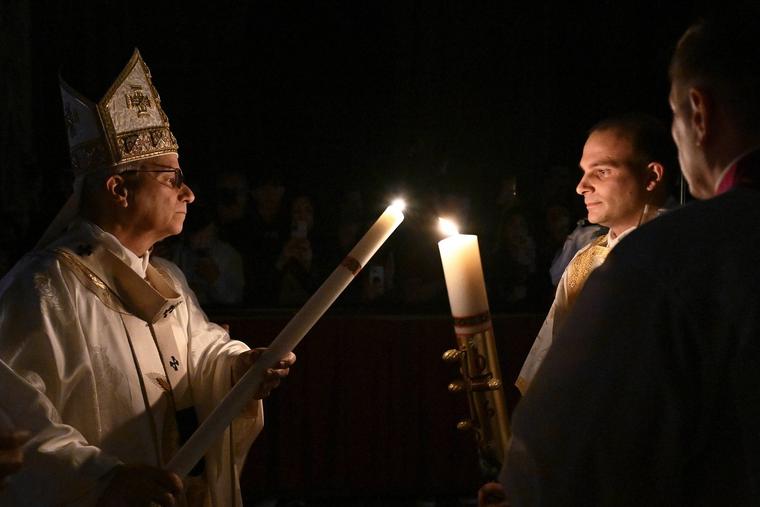
<p>OCIA is a process of formation that, when followed properly, can truly lead to lasting transformation. It is essentially communal by taking place at the parish, requiring the mentorship of a sponsor and initiating the convert into the community. It is meant to be a progressive and incremental process of formation, with multiple stages: evangelization that brings one to an initial faith, the catechumenate ordered toward deeper formation that ideally takes place over a period of two years, enlightenment and purification during Lent that offers a more intense period of preparation, and mystagogy to deepen the sacramental life received at the Easter Vigil. The entire process is designed to be deeply liturgical, scriptural, prayerful and ordered toward conversion. </p>
<p>Getting faith formation right matters at every level of Catholic formation. We cannot reduce handing on the faith to memorizing doctrine (as important as it is) because that simply will not stick. </p>
<p>As Pope Benedict XVI related, the informative must become performative (S<i>pe Salvi</i>, 2). The faith must be embraced more deeply and acted upon more radically, coming to know God personally and making that relationship the center of one’s life. Under Pope St. John Paul II, the 1997 <i>General Directory for Catechesis</i> (59) indicated that the teaching of the faith should contain the essential characteristics found in OCIA: “The model for all catechesis is the baptismal catechumenate.” All catechesis should be incremental, communal, prayerful, liturgical, doctrinal and transformative. </p>
<p>I would add that, in addition to catechesis, we could say that the catechumenate should provide the model for all Catholic education. </p>
<p>All effective formation involves mentorship and a gradual process of transformation, resulting in lasting habits that shape our lives. The baptismal catechumenate is a great treasure of the Catholic tradition, recently rediscovered and yet far from fully implemented. Just as we seek to give converts, youth and all who seek the truth good instruction, let’s make sure also to give them a full Christian formation, one that is holistic, sacramental and life-changing.</p>
</div>
<p><br />
<br /><a href="https://www.ncregister.com/commentaries/staudt-why-ocia-is-not-a-class">Source link </a></p>
<p><!-- END THEIA POST SLIDER --></p>

Why OCIA Is Not a Class — and Why That Matters for Catholic Education