<p><!-- BEGIN THEIA POST SLIDER --></p>
<p> <br />
</p>
<div>
<p><strong>A note about AI: </strong><em>On the Talkspace blog we aim to provide trustworthy coverage of all the mental health topics people might be curious about, by delivering science-backed, clinician-reviewed information. Our articles on artificial intelligence (AI) and how this emerging technology may intersect with mental health and healthcare are designed to educate and add insights to this cultural conversation. We believe that therapy, at its core, is focused around the therapeutic connection between human therapists and our members. At Talkspace we only use ethical and responsible AI tools that are developed in partnership with our human clinicians. These tools aren’t designed to replace qualified therapists, but to enhance their ability to keep delivering high-quality care.</em></p>
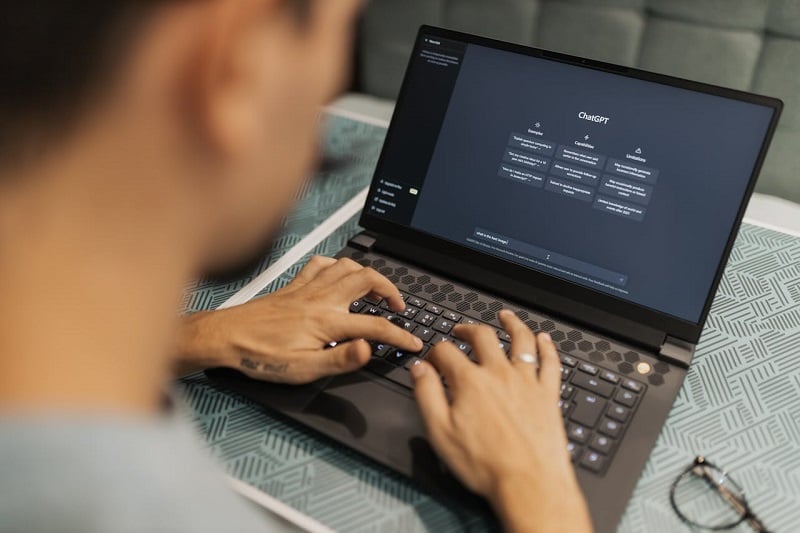
<p>If you’ve turned to ChatGPT to help you write a tricky email or brainstorm ideas, you know how helpful it can be. As artificial intelligence (AI) becomes more present in our daily lives, more people are turning to AI chatbots, like ChatGPT, for more personal problems and emotional support. This has led to many people using ChatGPT as a therapist.</p>
<p>ChatGPT has many qualities that people find attractive in a therapist. It’s easy to access, always available, and feels anonymous and non-judgmental. While it can feel comforting to use ChatGPT as a therapist, <a href="https://www.talkspace.com/blog/artificial-intelligence-therapy/" target="_blank" rel="noreferrer noopener">artificial intelligence therapy</a> isn’t a replacement for a real licensed therapist. Before you pour your heart out to ChatGPT, it’s important to understand what a ChatGPT therapist may be able to offer and where it falls short. </p>
<h2>Can ChatGPT Act as a Therapist?</h2>
<p>ChatGPT is not a licensed therapist and can’t ever fully replace one. While it might give you advice and mimic a conversation similar to one you might have with a real therapist, it’s not actually trained in therapy and lacks the clinical judgment to treat mental health issues. ChatGPT uses large language models (LLMs) to respond based on the patterns in what you share, but it can’t read your emotional cues, body language, or the deeper context behind your messages.</p>
<div class="code-block code-block-28" style="margin: 8px 0; clear: both;">
<!--


<div class="card card-colored-image colored-card-green">
 

<div class="card-bg" style="background-image:url('https://www.talkspace.com/blog/wp-content/themes/squaretype-child/images/card-images-1.png');"></div>


<div class="card-body media media-responsive-mobile">
 

<h3 class="card-title">Online Therapy</h3>


<p>Convenient and secure online therapy from the comfort of your home</p>


 <a href="https://www.talkspace.com/online-therapy/" class="track-cta btn btn-green btn-primary btn-block">Learn more</a>
 </div>


</div>


--></p>
<div class="card card-colored-cta colored-card-green">
<div class="card-body media media-responsive-mobile">
<div class="media-body">
<h3 class="card-title">Licensed Therapists Online</h3>
<p>Need convenient mental health support? Talkspace will match you with a therapist within days.</p>
</p></div>
</p></div>
</div>
</div>
<p>On the other hand, licensed therapists are trained professionals who complete years of education in mental health, take licensing exams, and go through clinical training. They’re bound by ethical standards and use research-proven techniques to assess, diagnose, and treat a variety of mental health conditions from anxiety to depression.</p>
<p>Another big difference is accountability. Therapists are held to ethical standards set and enforced by licensing boards, whereas ChatGPT is not regulated. If it gives you bad or harmful advice, there’s no system in place to protect you or hold it responsible.</p>
<h2>Is It Safe To Use ChatGPT as a Therapist?</h2>
<p>As of 2025, the US Food and Drug Administration (FDA) has <a href="https://www.apaservices.org/practice/business/technology/artificial-intelligence-chatbots-therapists" target="_blank" rel="noopener">not cleared any AI chatbots</a> as safe and effective for diagnosing or treating mental health conditions. While it can potentially offer general emotional support, coping strategies, and a space to vent, it has its limitations.</p>
<p>One of the major risks is that ChatGPT may give you advice that sounds helpful or supportive but isn’t actually based on professional guidelines or evidence-based practices. As an AI chatbot, ChatGPT doesn’t know what it doesn’t know. On the other hand, human therapists are trained to communicate uncertainty and ask questions about what they don’t know to make sure you get the care you need. </p>
<p>ChatGPT may miss warning signs that you’re having a crisis or are at risk of harm. Without a professional to recognize these warning signs, you may not get the care you need. </p>
<blockquote class="wp-block-quote">
<p>“AI can assist in identifying language patterns that may indicate distress, but it has notable limitations. It often lacks the ability to understand context, interpret tone accurately, or recognize subtle emotional cues. For these reasons, it should not be relied upon to detect or respond to mental health crises in place of trained mental health professionals.”</p>
<p><cite>– <a href="https://www.talkspace.com/mental-health/conditions/author/bisma-anwar/" target="_blank" rel="noreferrer noopener">Talkspace therapist Bisma Anwar, LPC, LMHC</a></cite></p></blockquote>
<h2>What ChatGPT Can Do for Your Mental Health</h2>
<p>Even though ChatGPT can’t replace your therapist, it can still be a helpful tool in therapy. When it’s used with clear boundaries and expectations, ChatGPT can support you alongside traditional therapy. It can’t replicate the depth of therapy with a licensed clinician, but ChatGPT may be a good jumping-off point for self-awareness and emotional support. </p>
<p>An “AI therapist” can offer you a space to explore your thoughts and feelings, whether you’re asking <a href="https://www.talkspace.com/blog/chatgpt-relationship-advice/" target="_blank" rel="noreferrer noopener">ChatGPT for relationship advice</a> or brainstorming journaling prompts. </p>
<p>Some ways that ChatGPT may help support your mental health include:</p>
<ul>
<li>Providing general information on <a target="_blank" rel="noopener" href="https://www.talkspace.com/blog/coping-skills-methods/">coping skills</a> and mental health topics</li>
<li>Encouraging self-reflection through journaling prompts</li>
<li>Offering grounding techniques and mindfulness scripts</li>
<li>Practicing communication skills with role-playing</li>
<li>Helping you express and identify your emotions</li>
<li>Helping you prepare for therapy</li>
</ul>
<blockquote class="wp-block-quote">
<p>“A few clients have mentioned using AI tools to ask questions related to mental health and coping strategies. They found some of the information helpful or informative, particularly when exploring ideas or gaining general insight. I typically acknowledge the value in using AI as a resource for information, but I also emphasize that it is not a substitute for therapy. I encourage clients to be mindful of the limitations of AI and to continue relying on professional support for personalized care and guidance.”</p>
<p><cite>– <a href="https://www.talkspace.com/mental-health/conditions/author/bisma-anwar/" target="_blank" rel="noreferrer noopener">Talkspace therapist Bisma Anwar, LPC, LMHC</a></cite></p></blockquote>
<h2>Important Considerations When Using ChatGPT for Therapy</h2>
<p>Before you begin using ChatGPT for therapy, you should be aware of some limitations to protect yourself.</p>
<h3>Understand the limits of AI</h3>
<p><a href="https://www.talkspace.com/blog/will-ai-replace-therapists/" target="_blank" rel="noreferrer noopener">Can AI replace therapists entirely</a>? While the AI technology that powers AI chatbots like ChatGPT can generate responses that sound thoughtful, caring, and empathetic, it’s important to remember that ChatGPT can’t truly understand your emotions. ChatGPT is limited to patterns in data. </p>
<p>Since ChatGPT can respond to you with a tone that conveys insight and authority, it’s easy to forget you’re talking to an AI therapist. In fact, a <a target="_blank" rel="noopener" href="https://journals.plos.org/mentalhealth/article?id=10.1371/journal.pmen.0000145">2025 study</a> found that people struggled to tell the difference between responses written by a human therapist and a ChatGPT therapist. It’s important to remember that ChatGPT isn’t aware of what it doesn’t know and can give you incorrect information in a way that makes you feel like it’s correct. </p>
<h3>Don’t use AI when you’re in a crisis</h3>
<p>If you’re feeling emotional distress, thinking about harming yourself or others, or facing a mental health emergency, ChatGPT is not an appropriate tool for you. It can’t assess your safety, offer real-time help, or get you connected to the care you need. </p>
<p>In a <a target="_blank" rel="noopener" href="https://www.talkspace.com/blog/mental-health-crisis/">mental health crisis</a>, you should contact a mental health professional, emergency services, or a crisis hotline for immediate support from people trained to give it. If you have thoughts of self-harm, you can call the National Suicide Prevention Lifeline at 1-800-273-TALK (8255). </p>
<h3>ChatGPT isn’t a substitute for a diagnosis</h3>
<p>Only trained healthcare providers or licensed mental health professionals are able to diagnose mental health problems. ChatGPT can provide you with general information about a mental health condition, but it can’t evaluate your symptoms or provide a formal diagnosis. Using ChatGPT for self-diagnosis can be misleading or harmful. If you feel you have a mental health condition, talk to a mental health specialist or healthcare provider to make sure you get the right care.</p>
<h3>There’s no accountability or oversight</h3>
<p>Licensed therapists follow strict ethical and professional guidelines set by experts and enforced by licensing boards. As an AI chatbot, ChatGPT isn’t regulated or supervised by mental health experts. If ChatGPT gives you wrong or harmful advice, there isn’t currently a system in place to review or correct it. </p>
<h3>AI may reinforce cognitive biases or negative patterns</h3>
<p>Cognitive biases and negative patterns can happen when our brains rely on shortcuts, past experiences, or emotions to interpret information in a way that isn’t always accurate or helpful. As an AI tool that learns and adapts to each user over time, ChatGPT may begin to mirror your negative patterns or ways of thinking back at you instead of challenging them.</p>
<blockquote class="wp-block-quote">
<p>“Yes, there are cognitive and emotional risks when AI is used too frequently as a substitute for human conversation. While AI can offer information and even simulate conversation, it cannot replicate the depth, empathy, and mutual understanding that comes from genuine human interaction. Human relationships offer emotional reciprocity, nonverbal cues, and a sense of connection that is essential for psychological well-being. Relying too heavily on AI for support may contribute to social withdrawal or emotional isolation, potentially reinforcing patterns of avoidance or disconnection. It’s important to view AI as a supplemental tool rather than a replacement for meaningful, human relationships.”</p>
<p><cite>– <a href="https://www.talkspace.com/mental-health/conditions/author/bisma-anwar/" target="_blank" rel="noreferrer noopener">Talkspace therapist Bisma Anwar, LPC, LMHC</a></cite></p></blockquote>
<h2>How ChatGPT Can Complement, Not Replace, Therapy</h2>
<p>While it’s important to acknowledge the limits of a ChatGPT therapist, that doesn’t mean it can’t play a supportive role in your mental health journey. When it’s used appropriately and thoughtfully, ChatGPT can help you get more out of your work with a licensed therapist. </p>
<h3>Using ChatGPT as a journaling or reflection tool</h3>
<p>Journaling can help you process your emotions, build self-awareness, and track patterns over time. ChatGPT can be a useful tool to help guide your journaling. You can try using ChatGPT in between therapy sessions to suggest journaling prompts, ask reflective questions, or help you organize your thoughts. </p>
<h3>Brainstorming questions for your therapist</h3>
<p>ChatGPT can help you make the most out of your therapy session by brainstorming questions or topics to explore in therapy, or <a target="_blank" rel="noopener" href="https://www.talkspace.com/blog/how-to-talk-to-a-therapist/">how to talk to a therapist</a> in general. Therapy can feel overwhelming if you’re not sure where to start or how to bring up a sensitive topic. You can try working with ChatGPT before your therapy appointment to help you organize your thoughts, identify issues important to you, and create a list of questions for your therapist. </p>
<h3>Practicing communication or identifying thought patterns</h3>
<p>You can use ChatGPT to help you practice putting your thoughts into words. Talking to ChatGPT can be a low-pressure way to explore self-expression, setting boundaries, or navigating <a target="_blank" rel="noopener" href="https://www.talkspace.com/blog/how-to-tell-someone-youre-not-okay/">how to tell someone you’re not okay</a>. You can try role-playing with ChatGPT to build your confidence before having real-life conversations. Over time, ChatGPT may learn from your responses and reflections to help you identify thought patterns, like self-criticism or all-or-nothing thinking. </p>
<h2>When It’s Time to Talk to a Real Therapist</h2>
<p>AI tools, like ChatGPT, can help you explore your emotions and reflect on your experiences, but they can’t replace treatment with a real therapist. If you’re feeling overwhelmed, stuck in negative thought patterns, or unsure how you should cope, it may be time to move beyond a ChatGPT therapist and speak to a clinician who can offer deeper guidance and <a target="_blank" rel="noopener" href="https://www.talkspace.com/blog/ongoing-therapy-benefits/">ongoing therapy</a>. </p>
<blockquote class="wp-block-quote">
<p>“If someone’s daily functioning is affected or if they’re experiencing symptoms like anxiety, depression, it’s important to seek support from a licensed mental health professional. Therapists can help provide tailored guidance and a safe space to explore deeper issues that self-help resources alone may not address.”</p>
<p><cite>– <a href="https://www.talkspace.com/mental-health/conditions/author/bisma-anwar/" target="_blank" rel="noreferrer noopener">Talkspace therapist Bisma Anwar, LPC, LMHC</a></cite></p></blockquote>
<p>If you’ve been relying on <a href="https://www.talkspace.com/blog/ai-mental-health/" target="_blank" rel="noreferrer noopener">AI for mental health</a> support because therapy feels out of reach due to cost, stigma, or scheduling concerns, Talkspace can help. You’ll get connected to a licensed <a data-wpil="url" href="https://www.talkspace.com/online-therapy/" target="_blank" rel="noopener">therapist online</a>, so you can receive personalized, professional care that fits your life and budget.</p>
<p><strong>Sources:</strong></p>
</div>
<p><br />
<br /><a href="https://www.talkspace.com/blog/chatgpt-therapist/">Source link </a></p>
<p><!-- END THEIA POST SLIDER --></p>

Can You Use ChatGPT as a Therapist? — Talkspace