<p><!-- BEGIN THEIA POST SLIDER --></p>
<p> <br />
</p>
<div>
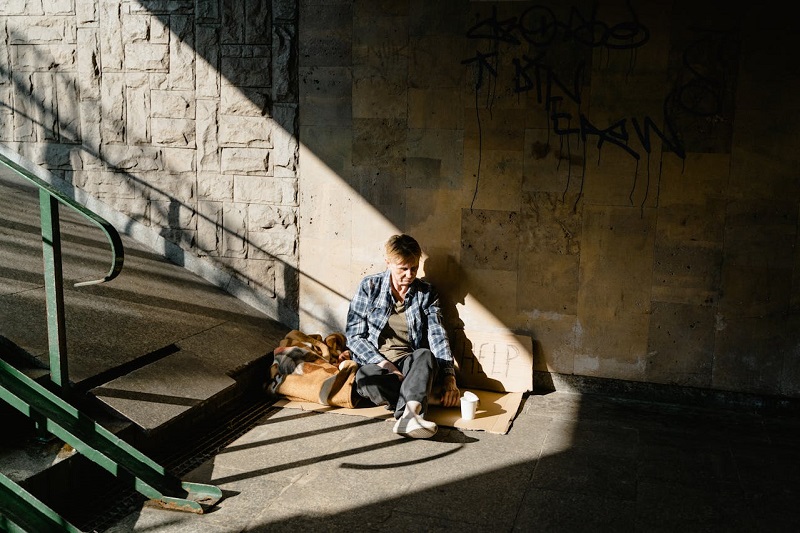
<p>Homelessness isn’t always black and white. In fact, for most unhoused people, it doesn’t look like the images we see on the evening news at all. It might mean couch-surfing with a friend after <a href="https://www.talkspace.com/blog/kicked-out-of-house/" target="_blank" rel="noreferrer noopener">getting kicked out</a> of the house or sleeping in the car after a late shift. You might have a phone and a job, but just no address to call home right now. Whatever homelessness looks like for you—or how you got there—it’s not easy, and you deserve support and encouragement, not judgment.</p>
<p>In this guide, we’ll provide tips for surviving homelessness, whether it’s your first night having nowhere to go or just the latest chapter in your quest to get back on your feet. We’ll cover how to stay safe, protect your essentials, and nurture your mental health along the way. </p>
<p>No one can promise that it will be easy, but by reaching out and refusing to give up, you’ve already taken the first step in the right direction.</p>
<blockquote class="wp-block-quote">
<p>“You are not alone, and your current situation does not define your worth or future. Help is out there, even if it feels hard to reach. You deserve support, safety, and care.”</p>
<p><cite>– <a href="https://www.talkspace.com/mental-health/conditions/author/bisma-anwar/">Talk</a><a href="https://www.talkspace.com/mental-health/conditions/author/bisma-anwar/" target="_blank" rel="noreferrer noopener">space therapist Bisma Anwar, LPC, LMHC</a></cite></p></blockquote>
<h2>1. Prioritize Safety</h2>
<p>No matter how many different things you think you need to figure out right now, dealing with homelessness starts with prioritizing your own safety first. If your environment is changing from day to day, this might mean thinking ahead, even if just a few hours at a time.</p>
<p>If you’re sleeping outside or in your car, choose a spot that’s well-lit and visible over an area that appears more isolated. Think strip malls with 24-hour businesses—like Walmart—and rest stops, or public spaces with security cameras. If you’re spending the night alone, consider checking in with someone you trust to let them know where you’ll be.</p>
<p>Trust your instincts. If you find a spot that feels convenient, but a little sketchy, avoid it. Keeping a flashlight, whistle, or pepper spray nearby can add another layer of protection and help you feel more secure. If you’re in immediate danger or feel threatened, don’t chance it. Call 911. You have every right to protect your body, peace, and space. </p>
<blockquote class="wp-block-quote">
<p>“When someone doesn’t feel safe anywhere, grounding through the senses can be a way to anchor themselves in the moment. Try focusing on your breath, noticing specific sights or sounds around you, or repeating something steadying like a positive phrase or mantra. These are simple actions that can create a moment of stability to help you move through the crisis.”</p>
<p><cite>– <a href="https://www.talkspace.com/mental-health/conditions/author/bisma-anwar/" target="_blank" rel="noreferrer noopener">Talkspace therapist Bisma Anwar, LPC, LMHC</a></cite></p></blockquote>
<h2>2. Find Shelter and Housing Resources</h2>
<p>If you’re not familiar with having to find a safe place to sleep, whether that’s one night or more long-term, it’s difficult to know where to begin. However, there are resources available to help you.</p>
<p>A good place to start is calling 211. This is a free, confidential hotline that can connect you to local shelters, crisis housing, and support programs. If you don’t have access to a phone right now, try visiting a local library for internet access and go online at <a target="_blank" rel="noopener" href="http://211.org">211.org</a>. </p>
<p>The United States Department of Housing and Urban Development also offers homelessness assistance. You can find a local representative or community member in your area by going <a target="_blank" rel="noopener" href="https://www.hudexchange.info/housing-and-homeless-assistance/homeless-help/">online here</a>. If you can’t access a shelter right away, ask about motel vouchers, safe parking programs, or day centers that offer rest, showers, and strategies for securing long-term assistance. </p>
<h2>3. Take Care of Your Basic Needs</h2>
<p>Surviving homelessness means taking extra care to ensure your basic needs—water, food, rest, and basic hygiene—are met. This is the foundation you’ll build on later.</p>
<p>Ask around about local food banks, community fridges, or church meal programs in your area. Websites like <a target="_blank" rel="noopener" href="http://feedingamerica.org">feedingamerica.org</a> can help you navigate local options. For staying hydrated, carry a reusable water bottle for quick refills at public parks and fast-food restaurants.</p>
<p>Sleep where and when you can safely, even if this means adjusting your normal routine. Many day shelters and YMCAs also offer showers and laundry. </p>
<h2>4. Practice Small Acts of Self-Care</h2>
<p>When you’re so focused on trying to make it through another night, it can be easy to let your emotional health fall by the wayside, but remember that your mental health is part of survival, too. A daily <a target="_blank" rel="noopener" href="https://www.talkspace.com/blog/self-care-routine/">self-care routine</a> doesn’t need to be fancy or expensive. Start with simple acts of self-kindness that feel meaningful for you.</p>
<p>This might mean keeping small comforts with you, like a photo of a better time or a grounding object, or <a target="_blank" rel="noopener" href="https://www.talkspace.com/blog/journaling-for-mental-health/">journaling for mental health</a> during moments of calm. Your current living situation doesn’t define you. </p>
<p>If feasible, try moving your body a little each day, even if it’s just a short walk to a park. Physical movement and time spent in nature are <a target="_blank" rel="noopener" href="https://www.heart.org/en/healthy-living/healthy-lifestyle/stress-management/spend-time-in-nature-to-reduce-stress-and-anxiety">proven strategies</a> for reducing stress and keeping your mind at ease.</p>
<h2>5. Protect Your Belongings and Identity</h2>
<p>Keeping your essential items safe is a key part of surviving homelessness. Start with what’s most important: your ID, passport, birth certificate, and social security card. You will need these to maintain access to shelters, healthcare, jobs, and housing programs. </p>
<p>Store them close by—on your person if possible—in a sealed, waterproof bag. It’s also a good idea to make virtual copies of these and save them to a secure email account or cloud storage. </p>
<p>If you don’t have an ID, make that a priority. A shelter or outreach worker may be able to advise you on what you need to do and where you can receive mail that’s addressed to you.</p>
<h2>6. Use Public Resources &; Community Services</h2>
<p>Thankfully, there are community services and public resources that you can turn to. Public libraries are a great starting point. There, you can access free Wi-Fi, computers, and a quiet place to apply to jobs or seek housing resources.</p>
<p>If you need medical care, look for community health clinics or Federally Qualified Health Centers. If you’re uninsured, you may still be able to receive care at a discounted rate. Find a community health care center near you by searching <a target="_blank" rel="noopener" href="https://www.healthcare.gov/community-health-centers/">here</a>.</p>
<h2>7. Stay Connected to Others</h2>
<p>Unfortunately, in our society, the burden of homelessness often comes with the additional weight of stigma or shame. That can tempt you into wanting to disappear or avoid friends and family, but it’s important to fight that urge.</p>
<p>Isolation might feel like another form of self-protection, but connection is the real lifeline. <a target="_blank" rel="noopener" href="https://journals.plos.org/plosmedicine/article?id=10.1371/journal.pmed.1000316#:~:text=Across%20148%20studies,0.99%20to%201.44).">One study</a> showed that people with stronger social relationships had a whopping 50% greater likelihood of long-term survival. </p>
<p>You don’t need to be on social media to stay connected, though if you are, that can help, too. Call a trusted friend once in a while when you need someone to talk to, or chat for a few minutes with the librarian who remembers your name. </p>
<blockquote class="wp-block-quote">
<p>“Isolation can cause feelings of hopelessness, anxiety, and depression for people experiencing homelessness. Without connection or support, it becomes more difficult to cope with daily challenges, seek help, or feel seen. Over time, this lack of social contact can negatively impact emotional well-being and make recovery more difficult.”</p>
<p><cite>– <a href="https://www.talkspace.com/mental-health/conditions/author/bisma-anwar/" target="_blank" rel="noreferrer noopener">Talkspace therapist Bisma Anwar, LPC, LMHC</a></cite></p></blockquote>
<h2>8. Make a Long-Term Plan When You Can</h2>
<p>Sometimes, your biggest concern while homeless is finding the next warm meal or place to sleep. However, when you find yourself with a few extra moments of breathing room, begin to forge a long-term plan. It doesn’t have to be solid. The idea is just to give yourself a framework and goals to move toward.</p>
<p>If you need to replace essential documents, start there. Figure out what you need to do to acquire those items, and tackle each step one at a time. Your local shelter or social services office might be able to help cover fees or provide mailing addresses.</p>
<p>Next, set small yet realistic goals like:</p>
<ul>
<li>Applying for food assistance</li>
<li>Checking in with your caseworker</li>
<li>Applying to one or two jobs per week</li>
<li>Getting on a housing waitlist</li>
</ul>
<p>Don’t try to do it all at once, but make a list of what you want to achieve and start with the most important things first. </p>
<h2>9. Know Your Rights While Homeless</h2>
<p>Housed or unhoused, you still have legal rights. These can vary by state and city, but there are basic protections everyone should know. For example, you have the right to emergency care, to vote, and to access public services, like libraries and transit.</p>
<p>Some cities enforce urban camping laws that make sleeping in public places illegal. Knowing local ordinances can help you avoid fines or confiscation of your belongings. Talk to a trusted community member if you need clarity about laws, regulations, or enforcement.</p>
<p>If you feel targeted or mistreated because of your housing status, document everything, including names, dates, and what was said or done. A legal aid organization may be able to provide more guidance.</p>
<h2>You Are Not Alone: Help Is Out There</h2>
<p>Losing your housing doesn’t mean you’ve lost your worth, your future, or your right to ask for help when you need it. There are people, programs, and communities that want to support people experiencing homelessness. Reaching out is an act of strength, not weakness.</p>
<p>The emotional toll of homelessness can be overwhelming. In moments like these, caring for your mental health is just as important as meeting basic needs. Oftentimes, there are free resources available within your local community. Whether you seek <a target="_blank" rel="noopener" data-wpil="url" href="https://www.talkspace.com/online-therapy/">online therapy</a> or practice self-care, there are things you can do to take care of yourself today.</p>
</div>
<p><br />
<br /><a href="https://www.talkspace.com/blog/how-to-survive-homelessness/">Source link </a></p>
<p><!-- END THEIA POST SLIDER --></p>

How to Survive Homelessness — Talkspace