<p><!-- BEGIN THEIA POST SLIDER --></p>
<p> <br />
</p>
<div>
<p>When I turned forty a couple of years ago, one of the things I did for that milestone was to go through all the journals I’ve kept from childhood through adulthood. It was a way to do a retrospective inventory at the midpoint of life.</p>
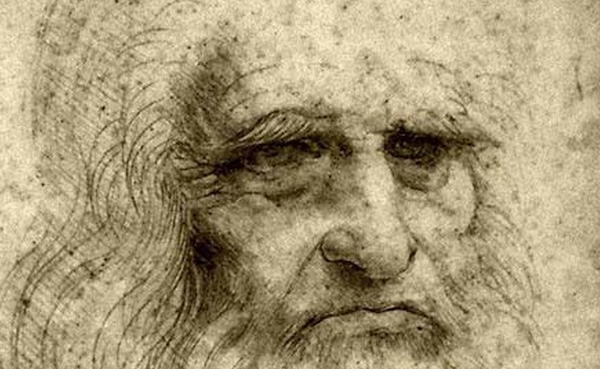
<p>In one of my journals from high school, I had pages of notes from a book I had completely forgotten about but which had a big impact on me during those formative years: <em><a href="https://amzn.to/4kBjys9">How to Think Like Leonardo da Vinci: Seven Steps to Genius Every Day</a></em> by Michael J. Gelb.</p>
<p>The book uses the life of Leonardo da Vinci as inspiration for habits that can enhance your thinking, unlock creativity, and create a flourishing life.</p>
<p>I picked up a copy to re-read it as a middle-aged man, curious whether the book would still inspire and motivate me the way it had when I was a teenager. And to my pleasant surprise, it did!</p>
<p><em>How to Think Like Leonardo da Vinci</em> is a really fun read that mixes history and self-improvement and combines philosophical ideas with concrete practices that can be incorporated into your life.</p>
<p>Below, I highlight the “Seven Da Vincian Principles” Gelb lays out in the book, along with some corresponding exercises that both 17- and 42-year-old Brett found useful.</p>
<h2 id="h.8llbqgm21hex"><span style="text-decoration: underline;">The 7 Da Vincian Principles and Practices to Cultivate Them</span></h2>
<h2 id="h.y74kozjcjvis">1. <em>Curiosità</em> – Cultivating Curiosity</h2>
<p>Leonardo never stopped asking questions throughout his life.</p>
<p>Unfortunately, as we get older, we tend to get less curious. We often accept what we know as sufficient and stop exploring the unknown.</p>
<p>To cultivate the principle of <em>Curiosità</em>, Gelb recommends that you:</p>
<p><strong><a href="https://www.artofmanliness.com/lifestyle/gear/the-manly-tradition-of-the-pocket-notebook/">Keep a notebook.</a></strong> As I discussed with Roland Allen on the <a href="https://www.artofmanliness.com/living/reading/podcast-1057-the-power-of-the-notebook-the-history-and-practice-of-thinking-on-paper/">AoM podcast episode about the power of thinking on paper</a>, Leonardo always kept a notebook with him. He filled thousands of pages with observations, sketches, and questions. Do likewise. Write about anything that catches your attention in your notebook. Doodle in it. Capture ideas. Write down questions. <em>How to Think Like Leonardo da Vinci</em> inspired me to keep a pocket notebook on me at all times throughout high school and into my adult life.</p>
<p><strong>Make a list of 100 questions.</strong> Write out 100 questions. They can be about anything and everything — whatever you wonder about. Make the list in one sitting. Write quickly, and don’t overthink. This exercise reveals themes or topics that are important to you.</p>
<p>I did this exercise in my teenage journal; here are a few of the questions I wrote down:</p>
<ul>
<li>What will I be like in 10 years?</li>
<li>Where will I live when I’m older?</li>
<li>What is the measure of a man?</li>
<li>Am I reaching that measure?</li>
<li>Is technology the downfall of society?</li>
</ul>
<p>17-year-old Brett was deep, man.</p>
<h2 id="h.re43ony0z0c">2. Dimostrazione – Testing Knowledge Through Experience</h2>
<p>Leonardo sometimes referred to himself as a <em>discepolo della esperienza</em> — a “disciple of experience.” He didn’t just take other people’s word for things; he experimented, tested, and observed for himself.</p>
<p>To develop <em>Dimostrazione</em>, Gelb recommends that you:</p>
<p><strong>Inventory the origin of your beliefs.</strong> Make a list of three beliefs and mental models that guide your navigation of life. After you’ve made your list, examine each belief and consider the degree to which the following sources have influenced them: media, other people, and your own experience.</p>
<p>If you realize that the first two sources, rather than direct experience, have primarily shaped your beliefs, Gelb recommends looking for ways you can validate those beliefs through direct experience.</p>
<h2 id="h.56jguypjp7z1">3. <em>Sensazione</em> – Sharpening Your Senses</h2>
<p>What made Leonardo such an amazing artist was his keen observation skills and ability to fully immerse himself in the sensory details of the world around him.</p>
<p>Here are a few Leonardo-inspired sense-sharpening practices:</p>
<p><strong>Describe a sunset.</strong> Find a quiet place outside at dusk to observe the sunset. Write down a detailed description of the experience.</p>
<p><strong>Learn to draw.</strong> For Leonardo, drawing was a foundational skill for understanding the world. His notebooks are filled with sketches. You don’t have to be an expert artist like Leonardo, but learning how to draw can be a powerful tool for acquiring knowledge. It can help make abstract ideas concrete. After my conversation with Roland Allen about Leonardo’s notebooks, I was inspired to learn how to sketch. Progress is slow, but I’m improving!</p>
<h2 id="h.oknhruu55666">4. <em>Sfumato</em> – Embracing Uncertainty</h2>
<p>One of Leonardo’s greatest strengths was his ability to be comfortable with ambiguity. The <em>Mona Lisa</em> is a perfect example of this. The word <em>sfumato</em> (which means “smoky” in Italian) describes Leonardo’s painting technique of blending edges, but for Gelb it also reflects his ability to navigate uncertainty and the tension inherent therein.</p>
<p>To develop the principle of <em>Sfumato</em>, Gelb recommends that you:</p>
<p><strong>Cultivate “confusion endurance.”</strong> Contemplate paradoxes in life such as:</p>
<ul>
<li>Joy and Sorrow — Think of the saddest moments of your life. Which moments were most joyful? What is the relationship between these states?</li>
<li>Strength and Weakness — List your strengths and weaknesses. How are these qualities related?</li>
</ul>
<h2 id="h.lkukxseqy57a">5. <em>Arte/Scienza</em> – Balancing Art and Science</h2>
<p>Leonardo seamlessly blended science and art. His anatomical drawings are both scientifically accurate and aesthetically stunning. He saw no divide between logic and creativity.</p>
<p>To cultivate <em>arte/scienza</em>, Gelb recommends you:</p>
<p><strong><a href="https://www.lifehack.org/articles/work/how-to-mind-map-in-three-small-steps.html">Practice mind mapping</a></strong>. Inspired by Leonardo’s habit of nonlinear note-taking, mind maps use images and words to connect ideas organically. In your notebook, mind map questions like:</p>
<ul>
<li>What do I want to accomplish in the next 5 years</li>
<li>What should my next article/podcast/project be about?</li>
<li>What do I know (or need to know) about [topic]?</li>
<li>What steps do I need to take to reach this goal?</li>
<li>What should I include in my trip/event plan?</li>
<li>What areas of my life need more attention right now?</li>
<li>What are the root causes of this issue?</li>
<li>What are possible solutions to this problem?</li>
<li>What are the pros and cons of my two options for this decision?</li>
<li>What criteria should I use to make this decision?</li>
<li>What are the short- and long-term consequences of each choice?</li>
</ul>
<h2 id="h.i3j8itxsa7js">6. <em>Corporalità</em> – Physical Fitness and Poise</h2>
<p>Leonardo didn’t just exercise his mind — he took care of his body, too. He was known for his strength, endurance, and grace. According to sources, Leonardo was able to bend a horseshoe with his bare hands. He combined <a href="https://www.artofmanliness.com/character/knowledge-of-men/the-whole-man-25-men-who-culivated-both-mind-and-body/">brains and brawn</a>!</p>
<p>To cultivate <em>Corporalità </em>yourself, you can practice the many habits that promote physical health and poise, like <a href="https://www.artofmanliness.com/health-fitness/fitness/health-benefits-of-walking/">taking a morning walk</a>, strength training, eating a balanced diet, and <a href="https://www.artofmanliness.com/health-fitness/health/the-ultimate-guide-to-posture/">improving your posture</a>.</p>
<p>Gelb also recommends two quirkier practices:</p>
<p><strong><a href="https://www.artofmanliness.com/living/games-tricks/cool-uncle-tricks-how-to-juggle/">Juggle</a></strong><strong>. </strong>According to biographer Antonina Valentin, Leonardo was a juggler. Gelb thinks juggling can help your mental and physical acuity.</p>
<p><strong>C</strong><strong>ultivate ambidexterity</strong>. Gelb notes that Leonardo was naturally left-handed but also developed his ability to work with his right hand. He recommends we follow the master’s example and become ambidextrous ourselves. Spend the day doing your usual tasks like writing and brushing your teeth with your non-dominant hand. Gelb also recommends writing and drawing with your left and right hand at the same time.</p>
<h2 id="h.l9rf0zqp6gg">7. <em>Connessione</em> – Seeing Interconnectedness</h2>
<p>One of the keys to Leonardo’s creative genius was his ability to combine and connect disparate ideas to form new concepts. A famous connection that Leonardo made was between water and hair. He noted that they moved in similar ways, and seeing that connection allowed him to draw both of those things better.</p>
<p>To cultivate <em>Connessione</em>, Gelb recommends that you:</p>
<p><strong>Find connections.</strong> Get your notebook and write down three connections between the following:</p>
<ul>
<li>An oak leaf and a human hand</li>
<li>A laugh and a knot</li>
<li>Gershwin’s “Rhapsody in Blue” and rain</li>
</ul>
<p>I enjoyed re-visiting <em>How to Think Like Leonardo da Vinci</em>. It’s inspired me to renew some practices from the book that I did as a high schooler. I’m feeling a bit more creative already. It’s also just been fun.</p>
<p>If you want to cultivate a more curious, creative, and well-rounded mind and become a real Renaissance man, try some of the exercises above and get writing, thinking, asking, drawing, and juggling yourself.</p>
</div>
<p><br />
<br /><a href="https://www.artofmanliness.com/character/advice/think-like-da-vinci/">Source link </a></p>
<p><!-- END THEIA POST SLIDER --></p>

How to Think Like Leonardo da Vinci