<p><!-- BEGIN THEIA POST SLIDER --></p>
<p> <br />
</p>
<div>
<h2><strong>Men’s Health Deserves Focus, Funding, and a Future</strong></h2>
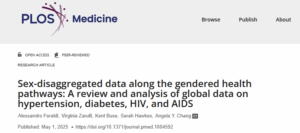
<h4 class="cvGsUA direction-ltr align-center para-style-body"><span class="OYPEnA font-feature-liga-off font-feature-clig-off font-feature-calt-off text-decoration-none text-strikethrough-none">MHN Response to New study: PLOS Medicine, </span><a class="OYPEnA font-feature-liga-off font-feature-clig-off font-feature-calt-off text-decoration-underline text-strikethrough-none" draggable="false" href="https://journals.plos.org/plosmedicine/article?id=10.1371/journal.pmed.1004592" target="_blank" rel="noopener">“Sex-disaggregated data along the gendered health pathways,”</a></h4>
<p>At Men’s Health Network, we’ve long championed the idea that men’s health needs more attention—not at the expense of anyone else’s care, but because targeted support saves lives. A powerful new study in <em>PLOS Medicine</em>, <a href="https://journals.plos.org/plosmedicine/article?id=10.1371/journal.pmed.1004592">“Sex-disaggregated data along the gendered health pathways”</a>, adds weight to that mission. By analyzing global data across hypertension, diabetes, HIV, and AIDS…</p>
<h4>This study provides critical insights into how—and why—health outcomes differ between men and women.</h4>
<p>The researchers reviewed data from more than 200 countries, tracking risk factors, diagnosis, treatment, and outcomes. They found a consistent pattern: men are more likely to die from these major health issues, and they’re less likely to receive timely or effective care. These outcomes are not just unfortunate—they are preventable. When men’s health is prioritized, when care is tailored to men’s needs, outcomes improve.</p>
<p><strong>The Lifespan Gender Gap doesn’t widen—it shrinks.</strong></p>
<h3><strong>The Gendered Health Pathway: Why It Matters</strong></h3>
<p>The study authors mapped out what they call the “gendered health pathway,” which follows individuals from risk exposure all the way to health outcomes. They discovered that at nearly every stage—prevalence, diagnosis, treatment, and mortality—men often face worse results.</p>
<ul>
<li>
<h4><strong>Hypertension</strong>: Men had higher death rates in 53% of countries.</h4>
</li>
<li>
<h4><strong>Diabetes</strong>: Male mortality was higher in 49% of countries.</h4>
</li>
<li>
<h4><strong>HIV/AIDS</strong>: Men experienced higher death rates in 64% of countries.</h4>
</li>
</ul>
<p>These numbers tell a story that many health systems haven’t yet acted on:</p>
<h4>Men are at greater risk of poor outcomes, and interventions must reflect that reality.</h4>
<p>The authors emphasize that collecting and analyzing sex-disaggregated data is key to understanding these trends.</p>
<p>As they write, “<a href="https://journals.plos.org/plosmedicine/article?id=10.1371/journal.pmed.1004592">Sex-disaggregated data are essential to identify inequities and improve population health.</a>” Without it, we’re left with blind spots—ones that cost lives.</p>
<h3>Better Health for Men Strengthens Families and Communities</h3>
<p>Improving men’s health doesn’t mean taking resources away from women’s health. In fact, the opposite is true:</p>
<h4>Healthy men support healthy families, workplaces, and communities.</h4>
<p>The goal is not to compete for attention, but to make all equal.</p>
<p>Historically, much of global health funding has focused—rightly—on maternal and child health. But this has often left men on the sidelines, especially when it comes to prevention and early intervention. The result is delayed diagnoses, missed opportunities for treatment, and ultimately, higher rates of serious illness and death.</p>
<h4>We believe there’s room—and urgent need—for both.</h4>
<p>Funding male-specific care, designing interventions that meet men where they are, and creating safe spaces for men to talk about their health are all essential steps forward.</p>
<h3><strong>What the Data Tells Us About Risk and Care</strong></h3>
<p>The <a href="https://journals.plos.org/plosmedicine/article?id=10.1371/journal.pmed.1004592"><em>PLOS Medicine</em> study</a> looked not just at outcomes, but at where things start to go wrong. One critical finding: risk factors and patterns of care look different between the sexes.</p>
<p>For example, men tend to have higher rates of smoking in 86% of countries, and are more likely to die from preventable causes such as unmanaged hypertension or complications from untreated diabetes. In many cases, they’re less likely to have been diagnosed in the first place.</p>
<p>This isn’t about blaming men for avoiding care—it’s about building systems that recognize and respond to how men experience health. As the study shows, “health services are often not designed in a way that considers men’s preferences or needs.” This includes everything from clinic hours and outreach strategies to communication styles and how services are marketed.</p>
<h4>When systems don’t engage men effectively, the result isn’t just low participation—it’s higher mortality.</h4>
<h3><strong>Closing the Lifespan Gender Gap Is Possible</strong></h3>
<p>Between 1979 and 2010, the Lifespan Gender Gap shrank by three years. That didn’t happen by accident—it happened because targeted interventions, better data, and focused investments made a difference.</p>
<p>Since then, however, progress has stalled. Today, the gap between male and female life expectancy sits at roughly six years. The good news is: we know what works. Focused care, early screening, sex-specific outreach, and funding for male-centered health programs all move the needle in the right direction.</p>
<p><a href="https://journals.plos.org/plosmedicine/article?id=10.1371/journal.pmed.1004592">The authors of the study agree. They write:</a></p>
<h4>“The pathway from exposure to risk to death is shaped by both biological and social factors, and those require health systems to respond with tailored interventions.” That means building a system that recognizes the full spectrum of health experiences—not just those most visible or politically supported.</h4>
<h3><strong>What We Can Do</strong></h3>
<p>This research offers a roadmap, but it’s up to all of us—health professionals, policymakers, community leaders, and advocates—to act on it.</p>
<h4>Here’s how:</h4>
<ol>
<li><strong>Champion Sex-Disaggregated Data</strong>: We can’t fix what we don’t measure. Researchers and public health agencies must be required to break out data by sex at every stage of the health pathway.</li>
<li><strong>Fund Male-Focused Interventions</strong>: Programs that address men’s health specifically—from prostate cancer awareness to cardiovascular screenings to mental health initiatives—need support and resources equal to their proven value.</li>
<li><strong>Engage Men Early and Often</strong>: Community health models that reach men where they live, work, play, and pray are vital. These programs should be normalized, visible, and stigma-free.</li>
<li><strong>Rethink Public Messaging</strong>: Men aren’t disengaged—they’ve been underserved. Let’s shift the narrative from “Why aren’t men showing up?” to “How can we show up better for men?”</li>
<li><strong>Ensure Policy Representation</strong>: Men’s health issues must be included in national health strategies and global health priorities. This includes establishing dedicated offices and caucuses, like the Congressional Men’s Health Caucus, to address these issues head-on.</li>
</ol>
<h3><strong>The Next Step: Read and Share</strong></h3>
<p>We strongly encourage everyone—especially those in public health, medicine, and research—to read the full article: <a href="https://journals.plos.org/plosmedicine/article?id=10.1371/journal.pmed.1004592">“Sex-disaggregated data along the gendered health pathways”</a>.</p>
<p><img decoding="async" class="alignleft size-medium wp-image-16204" src="https://tamh.menshealthnetwork.org/wp-content/uploads/2025/05/PLOS-Med-300x133.png" alt="" width="300" height="133" srcset="https://tamh.menshealthnetwork.org/wp-content/uploads/2025/05/PLOS-Med-300x133.png 300w, https://tamh.menshealthnetwork.org/wp-content/uploads/2025/05/PLOS-Med-768x341.png 768w, https://tamh.menshealthnetwork.org/wp-content/uploads/2025/05/PLOS-Med.png 808w" sizes="(max-width: 300px) 100vw, 300px"/></p>
<p> </p>
<p> </p>
<p> </p>
<p> </p>
<p>It’s a vital contribution to the men’s health conversation and affirms something we’ve said all along:</p>
<h4>Men’s health outcomes will improve when we prioritize men’s health intentionally.</h4>
<h4>Let’s be clear: This is not about blame, and it’s not about competition.</h4>
<p>This is about closing a preventable gap in care, creating a system that works for everyone, and ensuring that men get the attention, funding, and support they’ve too often been denied.</p>
<p>The data exists. The need is urgent. The solutions are in front of us.</p>
<h3>Let’s act.</h3>
</p></div>
<p><br />
<br /><a href="https://tamh.menshealthnetwork.org/global-data-confirms-it/">Source link </a></p>
<p><!-- END THEIA POST SLIDER --></p>

Men’s Health Deserves Focus, Funding, and a Future – Talking About Men’s Health