<p><!-- BEGIN THEIA POST SLIDER --></p>
<p> <br />
</p>
<div>
<p><em>An important part of manhood has always been about having the competence to be effective in the world — having the breadth of skills, the <a href="https://www.artofmanliness.com/character/manly-lessons/develop-savoir-faire-james-bond/">savoir-faire</a>, to handle any situation you find yourself in. With that in mind, each Sunday we’ll be republishing one of the illustrated guides from our archives, so you can hone your manly know-how week by week.</em></p>
<p>If you’re physically active, you’ve likely rolled an ankle now and again. Ankle sprains come in two types: an eversion, in which the ankle rolls outwards, and an inversion (by far the most common type), where your ankle rolls inwards. Either kind of sprain results in the painful stretching or tearing of ligaments. When you sprain an ankle, you should immediately ice it, compress it, and elevate it to reduce swelling and inflammation.</p>
<p>But when can you start walking or even running again after you’ve sprained an ankle? The answer varies depending on who you ask. Many physical therapists and sports doctors recommend that you don’t resume physical activity until your ankle no longer hurts when you take a step. Depending on the severity of the sprain, that could take weeks.</p>
<p>Other physical therapists and sports doctors suggest that movement may in fact speed the healing process, and that walking and even running can resume less than 24 hours after a sprain so long as the ankle is given support through proper taping. Taping limits the range of motion of your ankle, which reduces the chances of it spraining again, which allows you to continue to engage in physical activity while it heals. Taping also compresses the injured area, which helps reduce swelling and inflammation.</p>
<p>Sprains are rated as mild, moderate, or severe. With a mild sprain, the ligament has just been stretched. Your ankle feels stable when you put weight on it and just feels a little sore and stiff. With a moderate sprain, the ligament has torn a bit. Your ankle doesn’t feel entirely stable when you put weight on it, you can’t move it very much, and it’s swollen. With a severe sprain, the ligament has been completely torn. You can’t put any weight on it, can’t move it, and it hurts a ton. <strong>Taping an ankle to resume physical activity immediately after a sprain should only be reserved for mild to moderate sprains. </strong>For severe sprains, you need to stay off your ankle for a few weeks so that the torn ligament can heal. </p>
<div>
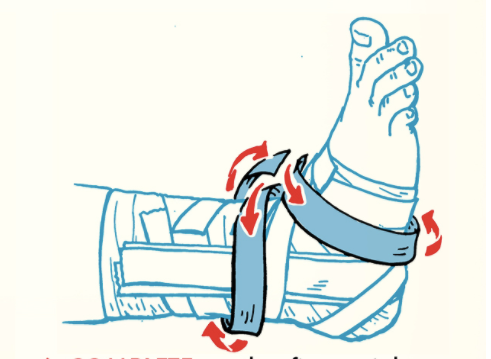
<p>While you can buy an ankle brace, using medical tape is the better option for folks engaging in physical activity. The biggest benefit tape provides is that it isn’t as bulky as an ankle brace which makes getting your shoes on a whole lot easier. When done correctly — as demonstrated above — tape can provide the same amount of support as a brace.</p>
<p><a href="https://Storytellersworkshop.com/"><em>Illustrated by Ted Slampyak</em></a></p>
</div>
</div>
<p><br />
<br /><a href="https://www.artofmanliness.com/health-fitness/health/how-to-tape-an-ankle/">Source link </a></p>
<p><!-- END THEIA POST SLIDER --></p>

Skill of the Week: Tape a Sprained Ankle