<p><!-- BEGIN THEIA POST SLIDER --></p>
<p> <br />
</p>
<div>
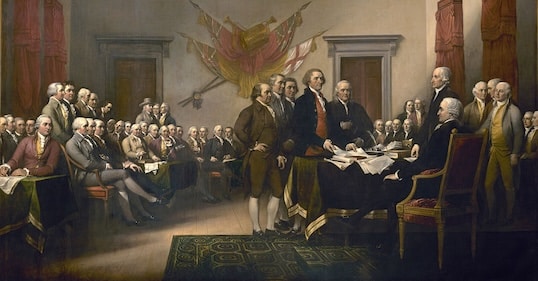
<p class="isSelectedEnd">America’s Founding Fathers have become larger-than-life figures. Their faces stare out from currency, their words are quoted in political speeches, and their accomplishments have been polished into legend. It’s easy to think of them as marble statues instead of flesh-and-blood men.</p>
<p class="isSelectedEnd">But the more closely you examine their lives, the more interesting they become. They wrestled with self-doubt, rivalries, failures, and moral shortcomings. They changed their minds, made costly mistakes, and faced problems for which there were no obvious answers. Yet they also possessed an uncommon sense of duty, ambition, curiosity, and conviction that enabled them to accomplish something extraordinary: creating and sustaining a new republic against long odds.</p>
<p>Over the years, we’ve had the privilege of speaking with some of the country’s leading historians and biographers about the Founding generation and the Revolutionary era. Below are the six best of these conversations to enjoy as America turns 250. They explore everything from the Founders’ philosophy of virtue to why they chose to become revolutionaries to the lessons their lives still offer today. Whether you’re just beginning to explore this period of history or are already a devoted student of the founding, these <a href="http://artofmanliness.com/podcast">Art of Manliness podcast</a> episodes will deepen your understanding of the remarkable men who shaped the American experiment.</p>
<h3 class="post-title entry-title"><a href="https://www.artofmanliness.com/character/self-improvement/podcast-1003-books-routines-and-habits-the-founders-guide-to-self-improvement/">Books, Routines, and Habits — The Founders’ Guide to Self-Improvement</a></h3>
<p><iframe style="width: 100%; height: 200px; border: 0 none;" src="https://art19.com/shows/the-art-of-manliness/episodes/db3ffde2-3839-4ecb-90ba-5bc2000d6c55/embed?theme=dark-blue" scrolling="no" sandbox="allow-scripts allow-popups allow-popups-to-escape-sandbox allow-same-origin"></iframe></p>
<p>The Founding Fathers believed that happiness wasn’t about feeling good but about becoming good. <span class="hover:entity-accent entity-underline inline cursor-pointer align-baseline"><span class="whitespace-normal">Jeffrey Rosen</span></span> explains how they came to equate happiness with virtue and self-mastery, and why they believed personal self-government — a.k.a. self-improvement — was the foundation of political self-government. He explores the books that shaped the Founders’ thinking, along with the routines, self-examination practices, and habits they used to cultivate character. It’s a fascinating look at the moral philosophy that guided some of America’s most influential statesmen.</p>
<h3 class="post-title entry-title"><a href="https://www.artofmanliness.com/culture/history/podcast-719-the-surprising-pessimism-of-americas-founding-fathers/">The Surprising Pessimism of America’s Founding Fathers</a></h3>
<p><iframe style="width: 100%; height: 200px; border: 0 none;" src="https://art19.com/shows/the-art-of-manliness/episodes/3513df2e-5722-4439-9cc6-877ce99e9dc8/embed?theme=dark-blue" scrolling="no" sandbox="allow-scripts allow-popups allow-popups-to-escape-sandbox allow-same-origin"></iframe></p>
<p>We often imagine the Founding Fathers as unwaveringly confident in the republic they created. But <span class="hover:entity-accent entity-underline inline cursor-pointer align-baseline"><span class="whitespace-normal">Dennis C. Rasmussen</span></span> argues that many of them grew deeply anxious about whether the American experiment would survive. He explores why <span class="hover:entity-accent entity-underline inline cursor-pointer align-baseline"><span class="whitespace-normal">George Washington</span></span>, <span class="hover:entity-accent entity-underline inline cursor-pointer align-baseline"><span class="whitespace-normal">Alexander Hamilton</span></span>, <span class="hover:entity-accent entity-underline inline cursor-pointer align-baseline"><span class="whitespace-normal">John Adams</span></span>, and <span class="hover:entity-accent entity-underline inline cursor-pointer align-baseline"><span class="whitespace-normal">Thomas Jefferson</span></span> feared the nation’s future (while <span class="hover:entity-accent entity-underline inline cursor-pointer align-baseline"><span class="whitespace-normal">James Madison</span></span> remained hopeful). Their concerns ranged from growing partisanship to a decline in civic virtue among the American people. The conversation offers a surprisingly timely perspective on the challenges of preserving a free republic.</p>
<h3 class="post-title entry-title"><a href="https://www.artofmanliness.com/culture/history/podcast-908-would-you-have-been-a-patriot-or-a-loyalist/">Would You Have Been a Patriot or a Loyalist?</a></h3>
<p><iframe style="width: 100%; height: 200px; border: 0 none;" src="https://art19.com/shows/the-art-of-manliness/episodes/767ebf31-3eb9-4849-abc1-4a1e8e9bf500/embed?theme=dark-blue" scrolling="no" sandbox="allow-scripts allow-popups allow-popups-to-escape-sandbox allow-same-origin" data-mce-fragment="1"></iframe></p>
<p>Looking back, the American Revolution can seem inevitable. But for many colonists — including several of the Founding Fathers — the decision to side with the Patriots or remain loyal to Britain was anything but clear-cut. <span class="hover:entity-accent entity-underline inline cursor-pointer align-baseline"><span class="whitespace-normal">H. W. Brands</span></span> explores the personal ambitions, relationships, and principles that shaped these choices. He explains why <span class="hover:entity-accent entity-underline inline cursor-pointer align-baseline"><span class="whitespace-normal">George Washington</span></span> and <span class="hover:entity-accent entity-underline inline cursor-pointer align-baseline"><span class="whitespace-normal">Benjamin Franklin</span></span> were unlikely revolutionaries, why Franklin’s son remained a Loyalist, and what led <span class="hover:entity-accent entity-underline inline cursor-pointer align-baseline"><span class="whitespace-normal">Benedict Arnold</span></span> to switch sides. The episode offers a nuanced look at the complicated human decisions behind America’s founding.</p>
<h3><a href="https://www.artofmanliness.com/culture/history/podcast-813-the-fascinating-life-of-americas-forgotten-founding-father/">The Fascinating Life of America’s Forgotten Founding Father</a></h3>
<p><iframe style="width: 100%; height: 200px; border: 0 none;" src="https://art19.com/shows/the-art-of-manliness/episodes/ab808fa5-efc0-40c1-8885-f15c48069482/embed" scrolling="no" sandbox="allow-scripts allow-popups allow-popups-to-escape-sandbox"></iframe></p>
<p>Benjamin Rush signed the Declaration of Independence, helped shape American medicine, and counted nearly every major Founder among his closest friends — yet today he’s largely forgotten. Stephen Fried explains why Rush’s remarkable legacy faded and traces his extraordinary life, from his role in the Revolution to his efforts to reconcile Thomas Jefferson and John Adams. Along the way, he reveals how Rush’s journals and correspondence preserved an intimate portrait of the nation’s founders that remained hidden for generations. It’s a fascinating introduction to one of the most influential and overlooked figures of the American founding.</p>
<h3 class="post-title entry-title"><a href="https://www.artofmanliness.com/character/manhood/podcast-419-american-honor-creating-the-nations-ideals-during-the-revolution/">American Honor — Creating the Nation’s Ideals During the Revolution</a></h3>
<p><iframe style="width: 100%; height: 200px; border: 0 none;" src="https://art19.com/shows/the-art-of-manliness/episodes/d8e70185-f34e-47e2-9963-00f01b1943b4/embed?theme=dark-blue" scrolling="no" sandbox="allow-scripts allow-popups allow-popups-to-escape-sandbox allow-same-origin"></iframe></p>
<p>We often think the American Revolution was driven primarily by taxes (“No taxation without representation!”) and political philosophy. But <span class="hover:entity-accent entity-underline inline cursor-pointer align-baseline"><span class="whitespace-normal">Craig Bruce Smith</span></span> argues that honor was the deeper force motivating the Founding generation. He explains how changing ideas about personal and collective honor shaped the push for independence, influenced the choices of the Founding Fathers, and even played a role in <span class="hover:entity-accent entity-underline inline cursor-pointer align-baseline"><span class="whitespace-normal">Benedict Arnold</span></span>‘s treason. The conversation also explores how America’s understanding of honor continued to evolve after the Revolution. It’s a fresh perspective on the ideals that helped forge a nation.</p>
<h3 class="post-title entry-title"><a href="https://www.artofmanliness.com/culture/history/podcast-223-george-washington-benedict-arnold-and-valiant-ambition/">George Washington, Benedict Arnold, and Valiant Ambition</a></h3>
<p><iframe style="width: 100%; height: 200px; border: 0 none;" src="https://art19.com/shows/the-art-of-manliness/episodes/3ae5ae21-5f77-4594-aeda-6f8594cb3e07/embed?theme=dark-blue" scrolling="no" sandbox="allow-scripts allow-popups allow-popups-to-escape-sandbox allow-same-origin"></iframe></p>
<p>Today, <span class="hover:entity-accent entity-underline inline cursor-pointer align-baseline"><span class="whitespace-normal">George Washington</span></span> is remembered as the hero of the American Revolution, while <span class="hover:entity-accent entity-underline inline cursor-pointer align-baseline"><span class="whitespace-normal">Benedict Arnold</span></span> is synonymous with treason. But early in the war, their reputations were almost the opposite. <span class="hover:entity-accent entity-underline inline cursor-pointer align-baseline"><span class="whitespace-normal">Nathaniel Philbrick</span></span> explains how Washington grew into an exceptional military and political leader while Arnold’s extraordinary talent was undone by pride, resentment, and ambition. Their intertwined stories reveal that character — not just ability — ultimately determines a person’s legacy. It’s one of the most compelling studies of leadership to emerge from the Revolutionary era.</p>
</div>
<p><br />
<br /><a href="https://www.artofmanliness.com/culture/history/founding-fathers-podcasts/">Source link </a></p>
<p><!-- END THEIA POST SLIDER --></p>

The 6 Best AoM Podcast Episodes on America’s Founding Fathers