<p><!-- BEGIN THEIA POST SLIDER --></p>
<p> <br />
</p>
<div>
<p>Over on Dying Breed, we’ve been doing <a href="https://www.dyingbreed.net/s/book-club">a book club where we’re reading </a><em><a href="https://www.dyingbreed.net/s/book-club">Lonesome Dove.</a></em></p>
<p>If you haven’t read <em>Lonesome Dove, </em>the basic plot is that two former Texas Rangers — Woodrow Call and Augustus McCrae — lead a cattle drive from the Rio Grande all the way up to Montana. Actually, it’s Call who does the leading. Gus mostly drinks whisky and hangs out with Lorie, a young prostitute with a heart of gold.</p>
<p>Call got the idea for the cattle drive after another former Ranger partner rode into their ranch and mentioned that the grass in Montana was great for cattle, and a guy could get rich settling up there. Call, bored with life on the border, decided on a lark to round up a crew and drive cattle thousands of miles north.</p>
<p>But when the cattle drive gets going, you get the impression that Call really doesn’t want to go, or at least he doesn’t know why he’s taking on such a big venture. His compatriots are equally indifferent. Gus doesn’t want to go, but he accompanies his old friend because he has nothing better to do. Newt, the orphan boy who lives with Gus and Call, goes because he’s a kid and nobody asks him what he wants. The cowboys who join sign on because it’s a job.</p>
<p>Individually, there doesn’t seem to be much buy-in, but everyone goes along with the trip anyway.</p>
<p>You’ve probably experienced something like this. Your family decides to take a big vacation because everybody assumes it’s what everybody else wants, and it later turns out nobody really wanted to go. Your church rolls out some new program, and in the meeting, everyone acts like they’re on board, but when you talk to people one-on-one afterward in the parking lot, every single one of them thinks it’s a bad idea. Somebody at work greenlights a project that drags on for months, and it eventually comes out that none of the people working on it thought it made sense in the first place.</p>
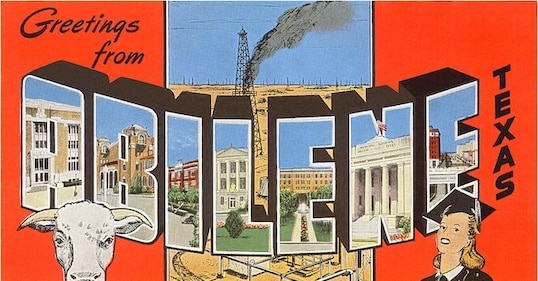
<p>This mismatch between individual preference and group action happens enough that there’s a name for it. It’s called the “Abilene paradox,” and today I want to talk about what it is, why it happens, and how to keep yourself from being caught up in its force.</p>
<h3 id="h.cn0vn2lujr1a">Why Don’t We Go to Abilene?</h3>
<p>The idea of the Abilene paradox comes from a management professor named Jerry Harvey, who introduced it in a 1974 article. He named it after a trip his own family took one summer. Here’s the story:</p>
<p>Harvey was visiting his in-laws in Coleman, Texas. It was a Sunday afternoon in July, 104 degrees, and he was sitting on the back porch playing dominoes in front of a fan and drinking lemonade. It was a fine way to spend the day. Then his father-in-law said, “Let’s drive to Abilene and eat at the cafeteria.” Abilene was 53 miles away. The car was a 1958 Buick with no air conditioning. Harvey didn’t want to go at all, but before he could open his mouth, his wife said it sounded great. So Harvey figured he was the only one who didn’t want to go, and he didn’t want to be the party-pooper, so he said it sounded fine to him, too. His mother-in-law said she was in as well.</p>
<p>So they drove 53 miles there in the heat and dust, ate an overpriced mediocre meal, and drove 53 miles back in the heat and dust. By the time they got home, they were hot, worn out, and covered in grit. They sat around the porch a while, not saying much. Then Harvey’s mother-in-law said she’d rather have stayed home and only went because everybody else seemed to want to. Harvey admitted he hadn’t wanted to go, and his wife said she’d only agreed to keep everyone happy. And then the father-in-law — the man who suggested the trip in the first place — said he actually hadn’t wanted to go, either. He’d only brought it up because he thought everyone looked bored and figured he should come up with something for them to do.</p>
<p>Nobody wanted to make the trip. Not even the guy who suggested it.</p>
<p>Yet, though every person in the family thought the trip was a bad idea, they all went along with it because each assumed he or she was the only one who felt that way.</p>
<p>Thanks to their collective unwillingness to speak up, they took a dumb trip.</p>
<p>This is the Abilene paradox: a group collectively decides on a course of action that goes against the true preferences of each individual member.</p>
<h3 id="h.mfyens9xrhkn">Why the Abilene Paradox Happens</h3>
<p>When we think about what goes wrong in groups, we usually think about conflict — people butting heads and nobody able to agree. Harvey thought a bigger problem was agreement. A group can talk itself into doing something not one person in it actually wants to do, and nobody says a word against it.</p>
<p>There are a few reasons this happens.</p>
<p>For one, we want to belong, and we don’t want to be the one who comes off as difficult or negative or not a team player. We don’t want to make waves. So when an idea comes up we don’t like, we sit on our opinion and tell ourselves, “Everybody else seems on board, so I guess I’ll go along so I’m not the disagreeable wet blanket.”</p>
<p>We’re also not very good at reading the other people in the room. When an idea comes up that you think is dumb and you see nobody’s objecting, you figure everybody’s for it, so you continue to keep your mouth shut. But a lot of the time, the other folks are keeping quiet for the same reason we are. They’ve got the same doubts, but they don’t want to speak up because they don’t see anyone else objecting. They assume everyone agrees, so they stay quiet lest they rock the boat.</p>
<p>That’s how you end up on a dumb trip to Abilene or a cattle drive to Montana or executing a work project that was doomed to failure.</p>
<p>And once you start on a dumb trip to Abilene, the action of actually going on the trip looks like proof everyone wanted it, which just reinforces the idea that this must be a good idea because if it wasn’t, we wouldn’t be doing it. Sunk cost fallacy starts to kick in. Everyone starts thinking, “Well, we’ve gone this far, it’d be a waste if we turned back. Might as well keep going to Abilene.”</p>
<h3 id="h.qodp15a3vum">How to Avoid Trips to Abilene</h3>
<p>So, how do you keep a group — whether a team at work or your own family — from going on those dumb figurative trips to Abilene?</p>
<p>First, if you’re the leader in a group, <strong>don’t </strong>say what you want first. The second you say, “I’m thinking we do the lake again this year,” you’ve tipped the scale, and everybody else is reacting to your idea instead of coming up with their own. Leaders tend to kickstart Abilene trips because people in groups are often afraid to disagree with the leader. Instead, ask everyone else what they think before you throw your ideas out there.</p>
<p>Second, explicitly make disagreement part of the group decision-making process. Before you commit to anything, go around the room and have everybody name one reason it might <em>not </em>work and why the group shouldn’t take this action.</p>
<p>If you’re not the leader in a group and don’t have control over shaping the group discussion, if you think something is a bad idea, say so in the meeting. There’s a good chance you’re not the only one who feels that way, and once you say it out loud, you make it possible for everybody else to raise objections. It’s possible to do this tactfully and gracefully. You don’t have to say, “This is a really dumb idea.” Rather you can say something like, “I’m wondering if _____ could be an issue. What am I missing that might help resolve that concern?” Maybe there’s a legitimate counter to your doubt, but more importantly, the question opens the door for other people to raise their concerns as well.</p>
<h3 id="h.pr77mndgd7dj">Speak Up Before the Bus Pulls Out</h3>
<p>You’re going to end up on plenty of trips to Abilene in your life. You’ll go along with stuff you don’t want to do, because you assume everybody else is on board. And because you don’t want to be the guy who makes things awkward, you keep your mouth shut. But a lot of the time, nobody else is sold either. The whole group is just sitting there waiting for somebody to say, “Hey, this might not be a good idea.”</p>
<p>So be that somebody. Next time your group starts rolling toward something that doesn’t sit right with you, say so. You’ll be surprised how often the rest of the room was hoping somebody would, so they could avoid that trip to Abilene.</p>
<p>And no offense in all this to our readers in Abilene, of course. I’ve never been there, but I’m sure it’s a great town, and its dining options have improved appreciably.</p>
</div>
<p><br />
<br /><a href="https://www.artofmanliness.com/character/leadership/the-abilene-paradox/">Source link </a></p>
<p><!-- END THEIA POST SLIDER --></p>

The Abilene Paradox: Why Groups End Up Doing Things Nobody Wants to Do