<p><!-- BEGIN THEIA POST SLIDER --></p>
<p> <br />
</p>
<div style="position:relative" data-narration-container="true">
<p><span style="font-weight:400">SpaceX’s massive Starship rocket reached orbit for the first time on Monday, clearing a major milestone for Elon Musk’s company despite an engine shutting down unexpectedly during the unmanned test flight.</span></p>
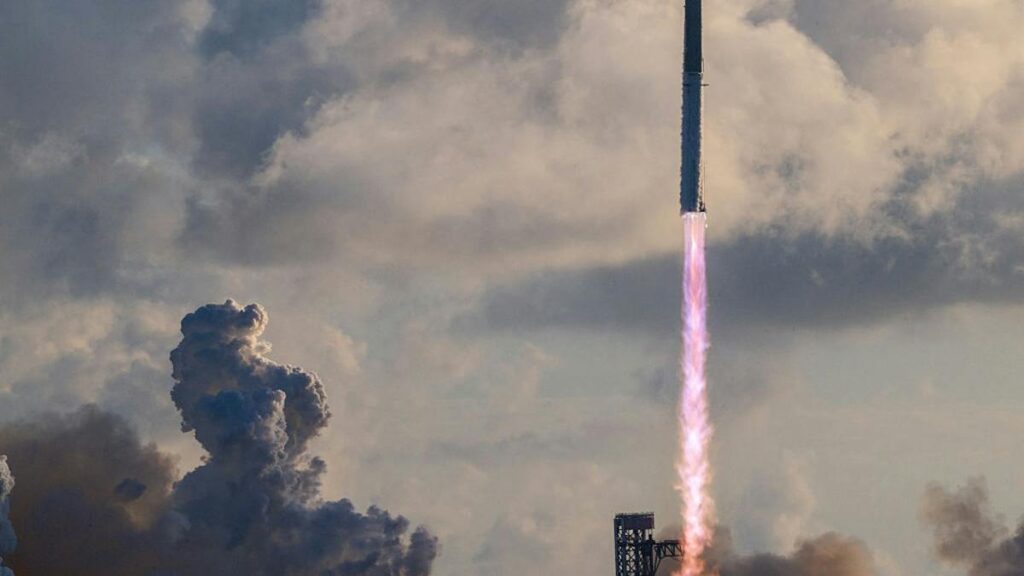
<p><span style="font-weight:400">The 14th Starship test flight lifted off from SpaceX’s Starbase facility in South Texas Monday morning, with the rocket reaching orbit roughly 26 minutes after launch. SpaceX also successfully deployed all 26 of the new Starlink V3 satellites carried aboard the spacecraft.</span></p>
<p><span style="font-weight:400">“Starship is orbital,” Mission Control announced as SpaceX employees cheered the achievement.</span></p>
<p><span style="font-weight:400">The milestone came after a tense moment early in the flight. One of Starship’s six engines shut down unexpectedly during its ascent, prompting flight controllers to review whether the spacecraft could safely continue with its planned orbital insertion burn.</span></p>
<p><span style="font-weight:400">Engineers determined that the remaining engines were healthy and that the affected engine was not required for the remainder of the mission. The team gave the spacecraft a “go” to continue. Starship subsequently completed its orbital burn using a single Raptor engine, successfully placing the spacecraft into orbit.</span></p>
<p><span style="font-weight:400">The achievement marks a significant change from Starship’s previous 13 test flights, which were flown on suborbital trajectories rather than attempting to place the spacecraft into orbit.</span></p>
<p><span style="font-weight:400">The spacecraft was initially scheduled to remain in space for roughly 10 hours and complete six orbits before a controlled splashdown in the Pacific Ocean west of Chile. SpaceX later said the spacecraft would return earlier than originally planned, reducing the number of orbits it would complete.</span></p>
<p><span style="font-weight:400">The 26 Starlink V3 satellites were successfully deployed during the mission. The satellites represent the first operational Starlink payload launched aboard Starship and are designed to provide substantially greater capacity than previous generations.</span></p>
<p><span style="font-weight:400">SpaceX has </span><a href="https://www.cnbc.com/2026/09/28/spacex-prepares-to-send-starship-rocket-to-orbit-for-first-time.html" target="_blank" rel="noopener"><span style="font-weight:400">said</span></a><span style="font-weight:400"> a single Starship could eventually carry as many as 60 Starlink V3 satellites, compared with the roughly 20-times-smaller capacity of a Falcon 9 launch.</span></p>
<p><span style="font-weight:400">The achievement is particularly important for SpaceX’s broader Starlink ambitions. The company operates thousands of satellites in orbit and is developing Starship as a much larger and more capable platform for expanding the constellation.</span></p>
<p><span style="font-weight:400">Starship is designed as a fully reusable two-stage rocket, with SpaceX aiming to eventually use the vehicle to carry large amounts of cargo and people into space at lower costs than previous launch systems.</span></p>
<p><span style="font-weight:400">The company also has much bigger plans for the vehicle. NASA is preparing to use a future version of Starship as a lunar lander for its Artemis program, while SpaceX ultimately envisions using the spacecraft for human missions to Mars. SpaceX Chief Operating Officer Gwynne Shotwell has also said the company plans to use Starship for space-based computing, including launching artificial-intelligence computing satellites.</span></p>
<p><span style="font-weight:400">For now, Monday’s flight represents a major step toward those ambitions.</span></p>
<p><span style="font-weight:400">The next challenge is proving that the massive spacecraft can repeatedly perform the feat — and eventually return safely enough to be reused in future missions.</span></p>
</div>
<p><br />
<br /><a href="https://www.dailywire.com/news/elon-musks-monster-rocket-just-took-its-biggest-leap-yet">Source link </a></p>
<p><!-- END THEIA POST SLIDER --></p>

Elon Musk’s Monster Rocket Just Took Its Biggest Leap Yet