<p><!-- BEGIN THEIA POST SLIDER --></p>
<p> <br />
</p>
<div style="position:relative" data-narration-container="true">
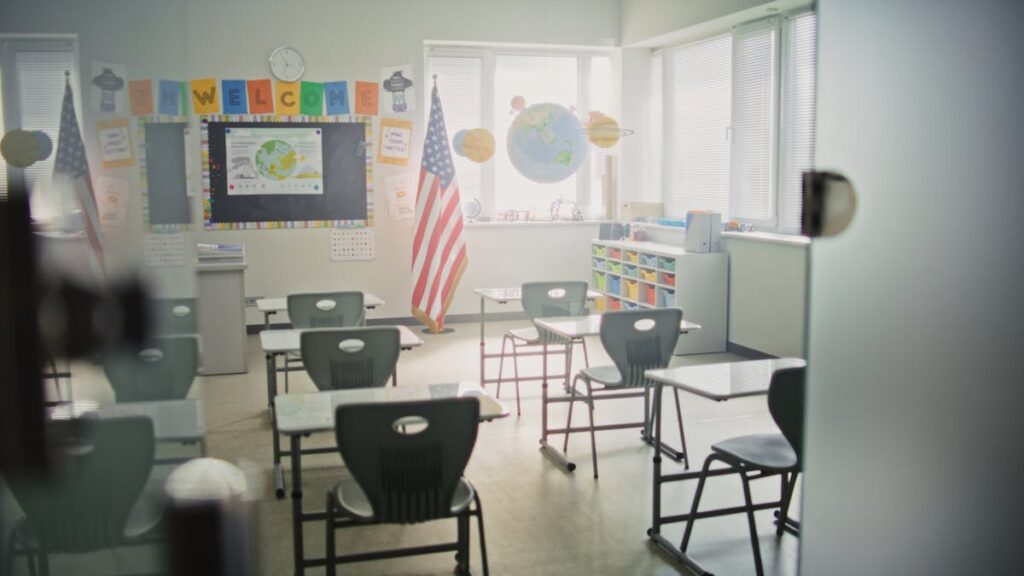
<p class="p1">New York City operates the nation’s most expensive public schools, and they are empty.</p>
<p class="p1">The city’s proposed Department of Education <a href="https://council.nyc.gov/budget/wp-content/uploads/sites/54/2026/03/Department-of-Education.pdf" target="_blank" rel="noopener"><span class="s1">budget</span></a> is $38 billion, an 8% increase from last year. At the same time, enrollment continues to decline. Last year alone, New York City <a href="https://x.com/dany_egorov/status/2052395204510994473?s=20" target="_blank" rel="noopener"><span class="s1">lost</span></a> 3,500 pre-K and kindergarten students. This is not an anomaly. The School Construction Authority <a href="https://dnnhh5cc1.blob.core.windows.net/portals/0/Capital_Plan/Demographic_projection_Reports/Volume%202-2026.pdf?sv=2017-04-17&;sr=b&;si=DNNFileManagerPolicy&;sig=pl1f%2BywRLsn%2BsVXvRXNIEbkxmnewwAydpZBsa%2F8kIm4%3D" target="_blank" rel="noopener"><span class="s2">projects</span></a> that enrollment will decrease by another 153,000 students over the next decade. This decline is mostly due to demographic changes — since 2000, the <a href="https://manhattan.institute/article/an-education-agenda-for-new-york-citys-next-mayor" target="_blank" rel="noopener"><span class="s1">number</span></a> of children born in the city has decreased by more than 20%. But also, New York families are increasingly <a href="https://cbcny.org/research/competitive-nyc" target="_blank" rel="noopener"><span class="s2">choosing</span></a> charter schools and homeschooling.</p>
<p class="p1">Currently, 380 schools — nearly 25% of all city schools — already <a href="https://cbcny.org/sites/default/files/media/files/CBCTESTIMONY_DOE-Prelim-Budget_03232026_1.pdf" target="_blank" rel="noopener"><span class="s2">operate</span></a> below 60% capacity.</p>
<p class="p1">Maintaining a sprawling system of underenrolled schools is fiscally irresponsible and educationally unsustainable. Even left-leaning publications such as the Atlantic have <a href="https://www.theatlantic.com/ideas/2026/04/new-york-city-schools-budget/686971/" target="_blank" rel="noopener"><span class="s1">acknowledged</span></a> the growing crisis facing NYC school districts with shrinking student populations.</p>
<p class="p1">New York City’s political leaders can no longer avoid reality. The mayor and chancellor should create a strategic plan to merge and close underenrolled schools, ensuring a better allocation of the education budget and improving academic outcomes.</p>
<p class="p1">My new report for the Manhattan Institute, <a href="https://manhattan.institute/article/what-to-do-about-nycs-empty-schools" target="_blank" rel="noopener"><span class="s1">“What to do about NYC’s empty schools,”</span></a> analyzes the city’s enrollment declines and offers recommendations for rightsizing the district, particularly by addressing underperforming and underenrolled schools.</p>
<p class="p1">The underenrollment problem is getting worse. Last year, 112 city schools had fewer than 150 students; this year, that number has risen to 134. One <a href="https://www.nycenet.edu/offices/d_chanc_oper/budget/DBOR/galaxy/galaxybudgetsummaryto/default.aspx" target="_blank" rel="noopener"><span class="s1">school</span></a> currently employs 21 staff members for just 28 <a href="https://apps.schools.nyc/dsbpo/sbag/default.aspx?DDBSSS_INPUT=K319&;fy=2026" target="_blank" rel="noopener"><span class="s1">students</span></a>.</p>
<p class="p1">Charter schools, by contrast, face much stronger accountability pressures. Because they are funded on a per-pupil basis, shrinking enrollment forces them to adapt or close. Nationwide, charter schools represent only 7.5% of total student enrollment but accounted for nearly 12% of all school closures in 2021.</p>
<p class="p1">District schools face no comparable pressure. The NYC DOE continues to fund underenrolled schools as though they were operating at full capacity, <a href="https://www.chalkbeat.org/newyork/2026/03/23/nyc-school-budgets-zohran-mamdani-hold-harmless-enrollment-decline/" target="_blank" rel="noopener"><span class="s1">costing</span></a> taxpayers nearly $388 million annually.</p>
<p class="p1">Unfortunately, city leadership has repeatedly shown an unwillingness to address this problem. Last March, New York City Schools Chancellor Kamar Samuels canceled a plan to <a href="https://nypost.com/2026/03/03/us-news/nyc-scraps-plan-to-close-school-at-center-of-hunter-college-professors-racist-hot-mic-scandal/" target="_blank" rel="noopener"><span class="s1">close</span></a> Community Action School after a parent made a racist comment on a Zoom meeting. The school remained open so students and their families could “process and recover from” the scandal. The comment was despicable, but it should not have prevented closing a failing school. Community Action School went from 229 students in 2020 to 141 in 2024. Its students’ academic performance is below the district’s average.</p>
<p class="p1">More recently, Chancellor Samuels pulled back a plan to close and relocate three schools. One <a href="https://nypost.com/2026/05/11/opinion/mamdani-keeps-bankrolling-failure-in-nycs-schools/" target="_blank" rel="noopener"><span class="s1">proposed</span></a> for closure lost 240 students over five years and had only 54% of its eighth graders reading at grade level. This decision to throw good money at failing schools lowers educational standards across the board. By keeping bad schools afloat, we leave less money on the table for successful schools to open and expand.</p>
<p class="p1">New York City students desperately need high-quality education. Despite record spending, only about half of New York students are proficient in reading (53%) and math (57%), <span style="box-sizing:border-box;margin:0px;padding:0px"><a href="https://nypost.com/2025/12/05/us-news/nearly-half-of-students-across-ny-state-fail-to-make-the-grade-on-math-english-tests-data/" target="_blank" rel="noopener">according</a> to</span> the results of 2024–25 New York State assessments</p>
<p class="p1">The decision to close and merge schools is a serious one and should be carefully considered. It creates disruption for students and staff — and it can have a small negative <a href="https://fordhaminstitute.org/national/commentary/short-and-long-term-impacts-school-closure-student-outcomes" target="_blank" rel="noopener"><span class="s1">impact</span></a> on students’ outcomes. But refusing to act is even more damaging for students and taxpayers alike.</p>
<p class="p1">The Mamdani administration will inevitably have to address this reality, given the continuous decline in student enrollment and the <a href="https://nypost.com/2026/05/12/opinion/zohran-mamdanis-unbelievably-dishonest-budget/" target="_blank" rel="noopener"><span class="s1">budget</span></a> gaps the city faces. The city cannot continue operating a school system designed for a much larger student population that no longer exists.</p>
<p class="p1">Other major cities — including <a href="https://www.wgbh.org/news/local/2025-11-20/bps-proposes-closure-of-three-more-schools-by-2027-amid-sharp-enrollment-decline" target="_blank" rel="noopener"><span class="s1">Boston</span></a>, <a href="https://whyy.org/articles/philadelphia-school-board-closure-vote/" target="_blank" rel="noopener"><span class="s1">Philadelphia</span></a>, <a href="https://spectrumlocalnews.com/tx/south-texas-el-paso/news/2026/02/27/hisd-approves-plan-to-close-12-schools" target="_blank" rel="noopener"><span class="s1">Houston</span></a>, and <a href="https://www.ideastream.org/education/2025-12-09/cleveland-school-board-approves-sweeping-consolidation-plan" target="_blank" rel="noopener"><span class="s1">Cleveland</span></a> — are already dealing with this problem and have approved plans to close schools. It is time for New York City to follow suit. Every year the city delays action, it wastes hundreds of millions of taxpayer dollars maintaining half-empty buildings instead of directing resources toward effective classrooms and student achievement. Students deserve a school system focused on quality, accountability, and academic success — not one committed to preserving empty seats and bureaucratic inertia.</p>
<p class="p1">***</p>
<p class="p1"><i>Danyela Souza Egorov</i><i> is a fellow at the Manhattan Institute.</i><i/></p>
</div>
<p><br />
<br /><a href="https://www.dailywire.com/news/the-ghost-classrooms-haunting-americas-education-system">Source link </a></p>
<p><!-- END THEIA POST SLIDER --></p>

The Ghost Classrooms Haunting America’s Education System