<p><!-- BEGIN THEIA POST SLIDER --></p>
<p> <br />
</p>
<div>
<p>COMMENTARY: What Scripture and the saints have taught for centuries, modern science is increasingly confirming: The habits that draw us closer to God can also make us happier and healthier.</p>
</p></div>
<div>
<p>What if the path to a happier, healthier and holier life has been hiding in plain sight for 2,000 years?</p>
<p>That question became deeply personal for me after an arsonist destroyed our family home in 2020. Overnight, my family lost virtually everything we owned. While the fire consumed our possessions, I found myself asking God a much deeper question: How do I move forward without allowing this tragedy to define my life? How do I keep my heart fixed on Christ? How do I create new habits for happiness and not get stuck in habits for unhappiness? </p>
<p>As I prayed, I sensed the Lord impressing upon my heart one simple word: <b>Blessed</b>.</p>
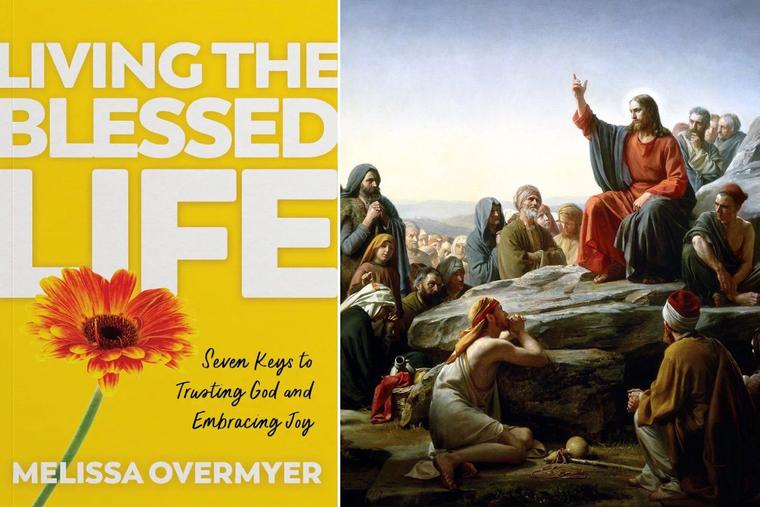
<p>In the New Testament, the Greek word <i>makarios </i>— the word Jesus uses in the Beatitudes — is often translated “blessed,” but it can also be translated as “happy.” That discovery launched a journey that eventually became <a href="https://ascensionpress.com/products/living-the-blessed-life-seven-keys-to-trusting-god-and-embracing-joy"><i>Living the Blessed Life</i></a>. As a Scripture scholar, I immerse myself daily in the Bible, the writings of the Church Fathers, and the teachings and lives of the saints. What I discovered was remarkable. All of what I felt God impressing upon me lined up perfectly with these. Even more remarkable was finding that the latest modern scientific research on happiness confirms these ancient truths.</p>
<p>The result is seven daily habits for happiness, remembered by the acronym <b>BLESSED</b>: Beauty, Laughter, Encounter, Song, Silence, Engage and Distinct.</p>
<p>These are not simply positive thinking techniques or self-help strategies. They are deeply Catholic practices that help us grow in faith and in friendship with Christ while also strengthening our emotional, physical and spiritual well-being.</p>
<p>The first habit is <b>Beauty</b>. Scripture tells us, “The heavens declare the glory of God” (Psalm 19:1), and St. Basil the Great taught that every flower, tree, bird and stream should lift our hearts toward the Creator. Modern research demonstrates that just a 20-minute walk outdoors can significantly reduce cortisol — the body’s primary stress hormone — while improving overall health and well-being. Something as simple as noticing God’s fingerprints in creation, embracing the micro-joy of beauty and giving thanks, becomes both an act of prayer and a gift to our bodies.</p>
<p>The second habit is <b>Laughter</b>. Proverbs reminds us that “a cheerful heart is good medicine,” and research agrees. Laughter releases endorphins, stimulates dopamine, improves immune function and reduces stress hormones. Even anticipating laughter has been shown to lower cortisol levels. Let a smile be your new “resting face” — it tricks your brain into thinking you are happy. And guess what — it works! Joy is not a luxury for Christians; it is one of the fruits of the Holy Spirit and a powerful witness to the world. </p>
<p>Next is <b>Encounter </b>— our daily relationship with God. Throughout the book, I share practical Catholic ways to remain connected to Christ, including Scripture meditation, the sacraments, Eucharistic Adoration and simple prayers that can be woven throughout the day. Brain imaging studies now show that regular prayer activates areas of the brain associated with peace and emotional regulation while reducing anxiety and depression. St. Teresa of Ávila beautifully said, “Prayer is nothing else than being on terms of friendship with God.” Pray to go deeper with him.</p>
<p>The fourth habit, and the heart of the book is about worship, which can be experienced through <b>Song </b>and music<b>. </b>Scripture repeatedly calls us to sing God’s praises, because God is worthy of our praise. But there is also good scientific reasoning for it, too — studies show you just feel better. Whether singing hymns at Mass, praying through the Psalms, or listening to praise music, worship changes our hearts, our mindset, and our bodies because God himself inhabits our praises.</p>
<p>Our fifth habit is <b>Silence</b>, which encompasses fasting and detachment, things that have become increasingly more difficult in our noisy, materialistic world. Yet silence, fasting and detachment have always been treasured within the Catholic spiritual tradition. The Desert Fathers and countless saints understood that God’s first language is silence. <i>Asceticism</i> means “training or exercise.”<i> </i>Think of these acts as a gymnasium for your soul — by God’s grace, get fit.</p>
<p>The sixth habit is <b>Engage</b>. One of the strongest findings in happiness research is that close relationships are the greatest predictor of long-term well-being. The Harvard Study of Adult Development concluded that loving relationships are the single strongest contributor to happiness and healthy aging. That should not surprise us. Christianity has always been about communion — with God and with one another. I encourage readers to intentionally invest in family, friendships, parish life and acts of service because love is where joy grows. Studies even suggest that regular volunteering is associated with lower rates of depression, better health and greater longevity.</p>
<p>The final habit is <b>Distinct</b>. Our world constantly pressures us to define ourselves by achievement, appearance or popularity. Scripture calls us to something much greater: to discover our identity as beloved sons and daughters of God. Research consistently shows that people with a strong sense of purpose and identity experience greater resilience, lower rates of depression, better cardiovascular health and longer lives. St. Catherine of Siena captured this when she wrote, “Become who God created you to be, and you will set the world on fire.”</p>
<p>One of my greatest hopes in writing <a href="https://ascensionpress.com/products/living-the-blessed-life-seven-keys-to-trusting-god-and-embracing-joy"><i>Living the Blessed Life </i></a>was to show that our Catholic faith is not only beautiful and true — it is profoundly practical. God’s commandments are not arbitrary rules. They are loving invitations to flourish. As I researched the latest findings in psychology, neuroscience and medicine, I found myself smiling again and again because science was simply catching up with what Scripture and the saints have proclaimed for centuries.</p>
<p>In other words, God’s design for the human person is not only spiritually true — it is biologically brilliant.</p>
<p>I did not write this book because I have all the answers. I wrote it because I needed these habits myself. They helped me rebuild my life after profound loss, and they continue to help me to choose the micro-joys of each day — not because life is easy, but because Christ is always faithful.</p>
<p>My prayer is that readers will discover that happiness is not found in perfect circumstances but in daily walking with the Lord. The seven habits of the blessed life are simple, practical and available to every one of us for free.</p>
<p>The saints have always known that holiness and happiness belong together. Today, modern science is simply confirming what our faith has proclaimed all along: the closer we live to God’s design, the more fully alive we become. And that is truly what it means to live the Blessed Life.</p>
</p></div>
<p><br />
<br /><a href="https://www.ncregister.com/commentaries/overmyer-catholic-wisdom-meets-happiness-science">Source link </a></p>
<p><!-- END THEIA POST SLIDER --></p>

7 Catholic Habits for a Happy and Holy Life| National Catholic Register