


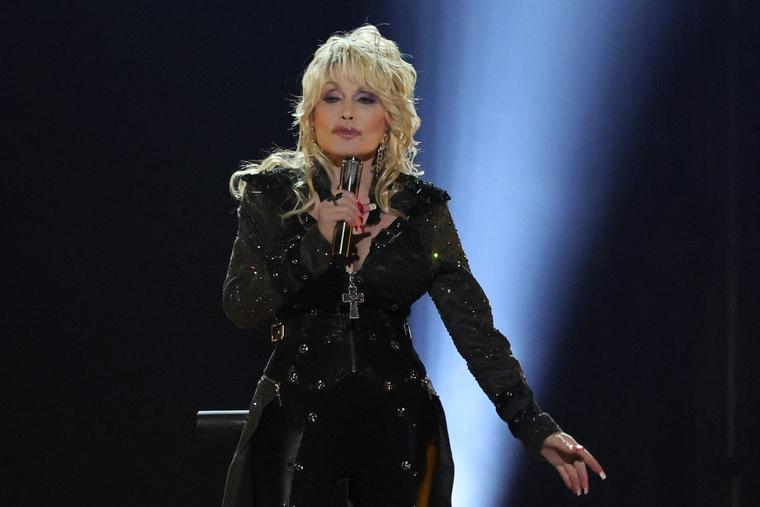
Dolly Parton gave one last gift to her many fans and admirers upon her death this week at age 80. In a time of corrosive political polarization, she was mourned by those who otherwise delight in disagreeing disagreeably.
In 2019, The New York Times headlined a story on Dolly’s appeal: “Is There Anything We Can All Agree On? Yes: Dolly Parton.” This week, it updated its reporting with polling data: “Dolly Parton Was Someone We Could All Agree On. Even in Polls.”
Why was Dolly so beloved? Over the course of a six-decade career, she was principally a songwriter — her publishing catalog contains more than 3,000 songs. She told stories in her songs, stories of faith and friendship in the face of adversity, told with a certain femininity, both delicate and determined. And she decided to stay out of politics, both for commercial reasons — customers have diverging politics — and because politics ought not be primary in a healthy culture, and songwriters care for the culture.
She called herself a “songteller,” the title of Dolly’s 2020 book, Songteller, relating her “life in lyrics.”
“I know that there are many songwriters in this world who are much greater than I am,” writes Dolly. “But I know for a fact that no writer in this world enjoys it more than me.”
Dolly wrote constantly, with whatever was at hand. She wrote one of the great Christian country music songs, Coat of Many Colors, on the back of a dry-cleaning receipt.
Growing up dirt poor in the East Tennessee hollers, her first dresses were made from flour sacks. One winter, needing a coat, Dolly’s mother sewed her one from a box of rags that the family had been given.
There were rags of many colors
Every piece was small
And I didn’t have a coat
And it was way down in the fall
Mama sewed the rags together
Sewin’ every piece with love
She made my coat of many colors
That I was so proud of
As she sewed, she told a story
From the Bible, she had read
About a coat of many colors
Joseph wore and then she said
Perhaps this coat will bring you
Good luck and happiness
And I just couldn’t wait to wear it
And mama blessed it with a kiss.
Dolly’s schoolmates ridiculed her for wearing a coat made from rags. Dolly already knew that she was poor, but she also knew what her classmates didn’t, that her family and her mother’s faith made her rich, because of the love “mama sewed in every stitch.” Young Dolly told her tormentors about the Bible story, too, “how my coat of many colors was worth more than all their clothes.”
Dolly’s ease in sharing her faith made her especially popular with Christian audiences, even though some issues, like her advocacy for same-sex civil marriage, put her at odds with many of her fans.
Dolly led, though, with what united, not what divided. A recurring theme is that suffering is more easily borne with the solidarity of others, within the bonds of family and friends. Indeed, her two major movies, 9 to 5 and Steel Magnolias, were about strong female friendships in the face of discrimination and hardship.
Her most successful song, I Will Always Love You — three times No. 1 on the charts, the third time with Whitney Houston’s monster hit version — was not about a romantic relationship. She wrote it about the end of her professional friendship with Porter Wagoner, her Nashville mentor, host of the most popular country music TV show in the 1970s. He had chosen Dolly to sing regularly on his show — her big break. Eventually, Dolly decided to go solo, and wrote a song to explain her decision. The song is full of gratitude for a friendship and good wishes for the friend.
“I hope life treats you kind,” Dolly wrote. “And I hope you have all you’ve dreamed of / And I wish you joy and happiness / But above all this, I wish you love.”
Dolly got up as early as 3 a.m., working in the “wee hours of wisdom” on her songs and her business, as she became one of the leading women entrepreneurs of her generation.
“I just go into my ‘God space,’” Dolly explained. “Most songwriters have a zone that they go into. I call it my spiritual zone. I feel like I am closest to God when I write. … A great line will come to me, and I’ll go, ‘Hey, thank you, Lord. I know that I didn’t think of that.’”
Another word for the “God space” is “inspiration,” an easy concept for Christians. Yet others, too, sensed something more in Dolly.
“In Dallas for the premiere of 9 to 5, I had an uncanny experience,” wrote famed movie critic Roger Ebert in his memoirs. “On the plane home to Chicago I confessed it to Gene Siskel,” a fellow film critic and co-host of their television show, At the Movies.
“I had been granted a private half hour with Dolly Parton, and as we spoke I was filled with a strange ethereal grace. This was not spiritual, nor was it sexual. It was healing and comforting. Gene listened and said, ‘Roger, I felt the exact same thing during my interview with her.’ We looked at each other. What did this mean? Neither one of us ever felt that feeling again. From time to time we would refer to it in wonder.”
Siskel and Ebert had met countless stars, but they sensed in Dolly something singular. Singular but widely shared, for legions of Dolly’s fans felt something, too.
In part it was her kindness, transparent in her songs, her stage presence, and her remarkable philanthropy.
When she opened Dollywood 40 years ago, she set up a program to cover all tuition for any employees who wished to go to college.
More innovative was her promotion of childhood reading.
Growing up one of 12 children of a hardworking but illiterate father, Dolly started the Imagination Library 30 years ago, sending free books to families in Sevier County — one book a month from birth to 5 years old. The Imagination Library, now operating through partnerships across the United States and abroad, has sent more than 322 million books to young children. Little songtellers first need to read stories before they can write their own.
Dolly died 16 months after her husband, Carl Dean, whom she met at the Wishy Washy laundromat shortly after moving to Nashville in 1964. Married in 1966, they had been married 59 years when Dean died last year. Dean was keenly supportive of Dolly’s music, but stayed entirely out of the limelight — so much so that some speculated he didn’t exist. Perhaps Dolly had made him up to avoid aggressive suitors.
The truth was even more unusual, namely that Dean simply did not seek celebrity, and was content to remain far in the background. Dolly offered her fans her stories and songs, not personal drama.
Songteller to the end, Dolly recorded a song about Dean, to be released just days after his death in 2025.
“I wouldn’t be here / If you hadn’t been there,” she wrote. “If you hadn’t been you / Well who would I be?”
“Pushing me on when I was scared,” Dolly sang. “I thank God and you for your loving care / And for giving me love / With more to spare.”
Dolly had love to spare, and to share. And one more song. Her final song, already recorded, will be released on her 100th birthday in 2046 — a future comfort amid present sadness for those who loved her most.
“But sadness lies with us, not with Dolly,” said Bryan Seaver, Dolly’s nephew, in the family announcement of her death. “Dolly has lived in the light and is in the arms of Jesus, surely met by Carl, her parents, and countless others who have watched her and longed for her to meet them in the heavens.”
Requiescat in pace.