


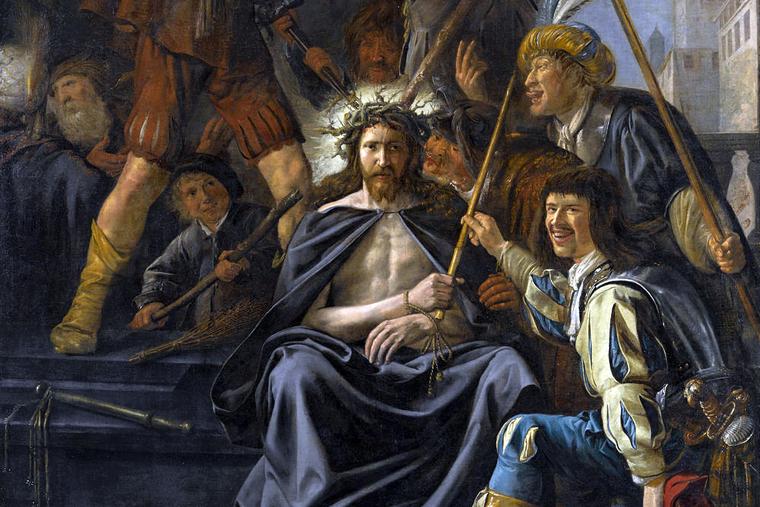
COMMENTARY: On the eve of battle, Shakespeare’s Henry V feels the weight of the crown. In Gethsemane, Christ embraces a far greater burden — choosing the Cross and bearing the sins of the world.
The king walks through the camp in disguise to get a sense of the thoughts and feelings of his soldiers. Over the course of the war, their numbers have dwindled. The men are tired and discouraged, and they know that they will be facing a large and well-prepared army the next day. What he hears is not encouraging. The men wonder why they have to fight a war that they do not understand so far from home. Why should they risk their lives on behalf of the king’s foreign affairs, they wonder.
As he walks away from these discussions, we hear the thoughts of King Henry V, imagined by William Shakespeare, as he reflects on the responsibilities that weigh on him as a king — burdens other men do not have to endure. It is a sobering reflection on the weight of the crown and the heaviness of the head that wears it. He takes seriously his responsibility as king, and he understands that the fate of his country and the welfare of his citizens ultimately rest on him.
Upon the king! let us our lives, our souls,
Our debts, our careful wives,
Our children and our sins lay on the king!
We must bear all.
So the king, instead of being able to eat his bread and enjoy his sleep, must bear the weight of his nation and decide his course of action.
Another great king, on the eve of a historically decisive battle — in fact, it was the most important battle — was with his small band of followers who dealt with their own form of weariness: they could not stay awake with their leader. This king, also, wrestled with his fate and the events that would come to pass on the next day. We are allowed to hear his final word at prayer: “Father, Thy will, not mine, be done.”
King Henry said that he felt as if the sins of his nation were laid on him; Jesus really does bear the sins of the world. Not only is Jesus the King, he is God. His responsibility goes even further than Henry’s. Literally, the fate of heaven and earth and the whole human race rests on Jesus. He, too, cannot sleep, but what a different sort of battle he plans to fight.
On the following morning, as King Henry’s troops are again complaining about the size of their remaining army and wishing for more people from home, the king emerges and gives one of the greatest motivational speeches in history. He says that he is glad there are not more soldiers because they would diminish his share of honor. The men in England will consider themselves accursed that they were not there.
We few, we happy few, we band of brothers,
For he to-day that sheds his blood with me
Shall be my brother.
This battle, he says, will be remembered every year on that day, St. Crispin’s Day, until the end of the world, and the names of those who fought will be “in their flowing cups freshly remember’d.” Good men will teach their children the story of that day and the victory that was won. In this speech, we see Henry embracing his kingly duty and moving boldly forward to inspire his men.
Jesus, also, on the following morning, went forth to a decisive battle. His numbers were even fewer than the night before most of his followers, having abandoned him, and he too, spoke an eloquent word, the most eloquent word ever spoken, the word of the Cross (1 Corinthians 1:18). This word and the battle are one, and this battle is “freshly remember’d” in flowing cups every day, and the cups flow with the blood of the victoriously defeated king who triumphed over death by means of his own death. We are invited to be his brothers by sharing in his strange surrender by taking up the sign of victory, an instrument of death, our own Cross.
(To read the points made in this article in the form of two first-person meditations, see my book Thus Spake the Christ.)