<p><!-- BEGIN THEIA POST SLIDER --></p>
<p> <br />
</p>
<div>
<p>In God’s providence, the Gospels complement each other and have different emphases — but not everyone seems to realize that</p>
</p></div>
<div>
<p>An atheist and former Christian, very active online, decided to savage St. Matthew’s Christmas story when he was looking for something to do in December 2018. Our friend wrote that Matthew “says nothing whatever about the night Jesus was born. No stable, no shepherds, no angels.” But where did he get the notion that Matthew <i>had</i> to do that? In other words, I question the false <i>premise</i>. Where is it written that every Gospel account <i>must</i> include <i>details</i> of Jesus’ birth? Christians believe that, in God’s providence, the Gospels complement each other and have different emphases. </p>
<p>What in the world is <i>wrong</i> with that? Luke was the one with the details of the birth and the Annunciation nine months prior. Matthew just offers a few bare facts (“Jesus was born in Bethlehem of Judea in the days of Herod the king”: 2:1), Mark offers none (he starts with John the Baptist and Jesus at age 30, at the start of his public ministry), and John has no “birth facts” (he begins with theological words about the Blessed Trinity, the incarnation, and the divinity of Christ; again, a different <i>emphasis</i>). But these are the sorts of altogether expected differences that atheists are quick to stupidly chalk up to supposed “contradiction” or inexplicably differing ways of telling stories and recounting historical facts.</p>
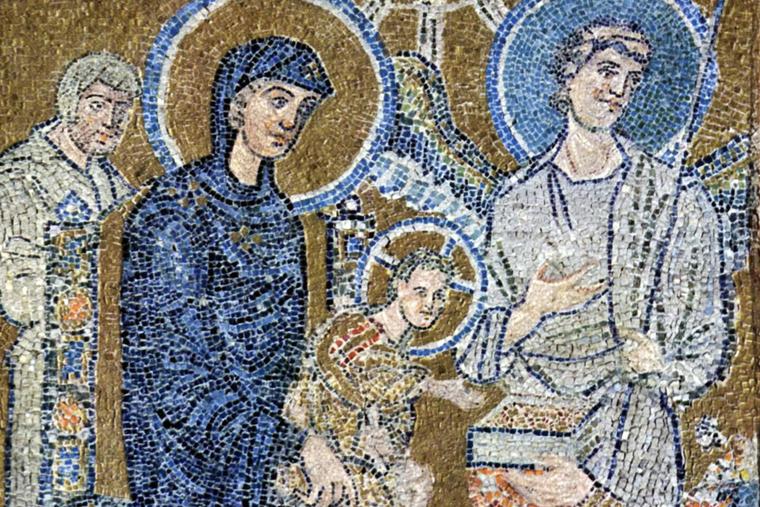
<p>The wise men visited Jesus in a house (not a stable) one or two years after Christmas, with Jesus described as the Greek equivalent of a “toddler” (<i>paidion</i>). My atheist friend noted all this, yet it wasn’t sufficient to overcome his “problem” with the biblical texts. For Christians and objective readers, obviously two different accounts at different times are in play. So why is it an issue? It was the <i>Bible scholars</i> in the first place who told us that the wise men actually visited one or two years later and <i>not</i> on Christmas night. The <i>time</i> of the visit of the wise men is not nearly as important as the fact that they visited Jesus <i>at all</i>. The time isn’t the<i> essence</i> of it.</p>
<p>My friend then went after the astronomical/astrological aspects of the story of the wise men, and taunted, “How can Christians be comfortable with the embrace of astrology anyway? Do Christians really want to go there?”</p>
<p>We <i>don’t</i> embrace astrology, nor does the Bible. It simply recounts the story of people who believed in astrology finding out about a very significant birth, as a result of stargazing and using the belief systems of that time. One could make the correct conclusion based on false premises, or based on partial truth mixed with error. Many great scientists (even those lionized by atheists) like <a href="https://www.patheos.com/blogs/davearmstrong/2019/04/16th-17th-century-astronomers-loved-astrology-part-two.html" target="_blank" rel="noopener">Copernicus, Galileo, and Kepler were enamored of astrology</a> (and Newton with <a href="https://www.discovermagazine.com/the-sciences/isaac-newton-worlds-most-famous-alchemist" target="_blank" rel="noopener">alchemy</a> and the <a href="https://en.wikipedia.org/wiki/Isaac_Newton%27s_occult_studies" target="_blank" rel="noopener">occult</a>), while folks like <a href="https://www.patheos.com/blogs/davearmstrong/2015/09/st-augustine-astrology-is-absurd.html" target="_blank" rel="noopener">Augustine</a> and <a href="https://www.patheos.com/blogs/davearmstrong/2006/05/did-st-thomas-aquinas-accept-astrology.html" target="_blank" rel="noopener">Aquinas</a> (lowly theologian types) were not at all. St. Augustine brilliantly refuted horoscopes by studying the life of twins.</p>
<p>The atheist then sneered at Matthew’s report of the holy family fleeing Herod and residing for a time in Egypt (Matthew 2:13-15). But there is nothing inherently implausible about such an event. They probably went to Egypt because Herod had no jurisdiction there. It was a populated place relatively close, away from Roman Judea. Our atheist skeptic simply assumed without proof that Matthew “made it up” to dishonestly fulfill an Old Testament prophecy. How odd for a man who has a doctorate in biblical studies. It depends on <i>what</i> one studies and whether one is operating with <i>false premises</i>. Haplessly flailing away at Matthew’s alleged profound lack of truth-telling, our atheist opined that “the even bigger question is why Matthew thought it was a good idea to graft the virgin birth onto the Jesus story.”</p>
<p>Maybe because &#8230; it was actually <i>true</i>? We can’t <i>prove</i> to him that it was true (i.e., we can’t examine the actual conception — be there before it took place — to see if it was miraculous). But neither can our beloved atheist prove that it did <i>not</i> happen. They simply <i>assume</i> it didn’t, because their overall belief that miracles are either impossible or cannot and have not been sufficiently proven and documented, <i>precludes</i> them from accepting the virgin birth even before they ever examine the question (including Matthew’s, or Mary’s, report of it).</p>
<p>He then claimed that the virgin birth is a “minority opinion in the New Testament” because it’s mentioned very few times. Christians believe in the inspiration of Scripture (for many good <i>reasons</i>, but ultimately as an article of faith and belief). If all of the Bible is <i>inspired </i>(which means literally “God-breathed” and God’s revelation of himself), the virgin birth need not be noted or recorded in every book. Even <i>once</i> is quite enough to suffice. That’s the outlook of Christian faith. Bible skeptics who “reason” like this are not even thinking <i>logically</i>: even before we get to questions of faith. Atheists ridicule all miracles as fictional “magic” or whatnot. Free inquiry is precluded by false presuppositions. No one has ever “proven” that no miracle could ever possibly occur, or that an omnipotent God could not bring one about.</p>
<p>Lastly, our atheist wondered “how the author knew the content of the dreams” of the wise men and Joseph. I can think of at least two scenarios right off the bat:</p>
<ul>
<li>Since biblical writing is divinely inspired, God could have directly revealed this fact to Matthew, just as he revealed things to Abraham and Moses, the prophets, and many other people.</li>
<li>The disciples knew Mary the mother of Jesus (see, e.g., Acts 1:13-14). Joseph could have told Mary about the dream he had. Later Mary told Matthew, or told someone else, from whom he heard the story. It’s “earwitness” testimony of a second person, in relation to the person who experienced it.</li>
</ul>
<p>Why is it, then, that this atheist (typically) didn’t seem to be able to even imagine or <i>comprehend</i> such a scenario?</p>
</p></div>
<p><br />
<br /><a href="https://www.ncregister.com/blog/dave-armstrong-atheism-and-matthew-nativity">Source link </a></p>
<p><!-- END THEIA POST SLIDER --></p>

What an Atheist Gets Wrong About St. Matthew’s Christmas| National Catholic Register