<p><!-- BEGIN THEIA POST SLIDER --></p>
<p> <br />
</p>
<div>
<p>People have different styles when they cook.</p>
<p>Some people are neat and tidy. After taking out and using an ingredient they don’t need anymore, they return it to the fridge or cabinet. After chopping up vegetables, they clean up the scraps left behind. When a dish has been dirtied, they put it in the sink.</p>
<p>Others cook amidst chaos. All ingredients, food detritus, and spills are left on the counter. Open containers and dirty dishes are scattered throughout the kitchen, to be cleaned up in one fell swoop after the meal has been eaten.</p>
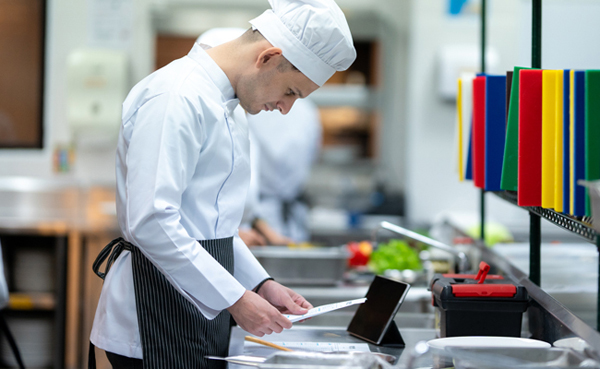
<p>Most of the world’s best professional chefs, finding that the second approach creates unnecessary stress and breeds errors that can mar the results of their cooking, operate with the first. They cook with <em>mise en place</em>.</p>
<p><em>Mise en place</em> (pronounced meez-awn plahs) is a system of organizing and working used by chefs that allows them to turn out hundreds of perfectly timed and expertly crafted dishes during the busiest of dinnertime rushes, all while keeping the kitchen clean and orderly.</p>
<p>The principles of <em>mise en place </em>can be applied by the home chef to make their cooking more efficient. But as I learned from <a href="https://www.artofmanliness.com/character/advice/mise-en-place-how-chefs-organize/">Dan Charnas in our podcast interview</a>, it’s also a philosophy that can be implemented beyond the kitchen to make our personal and work lives more organized and productive.</p>
<h2 id="h.duw8f7h171tg"><span style="text-decoration: underline;"><strong>What Is Mise en Place?</strong></span></h2>
<p><em>Mis en place </em>is a French phrase that means “put in place.” As I said, it’s a foundational principle for chefs around the world. <em>The Professional Chef</em>, the textbook of professional chefs, defines <em>mise en place</em> as “the preparation and assembly of ingredients, pans, utensils, and plates or serving pieces needed for a particular dish or service period.”</p>
<p>But as practically implemented, <em>mise en place</em> is more than just prepping ingredients and laying out utensils before you start cooking. It’s about doing everything in the kitchen as efficiently as possible. When you’re trying to get food out to hundreds of hungry people quickly, you don’t have room for wasted movements. You can’t have chaos. Everything needs to run like a finely tuned machine. <em>Mise en place</em> is about creating and maintaining smooth order.</p>
<p>To that end, chefs implement <em>mise en place</em> in everything from the sequence of their cooking to how they communicate in the kitchen to concrete tasks like <a href="https://www.artofmanliness.com/living/finally-learn-to-properly-dice-an-onion/">chopping an onion</a>. And as we’ll see, cleaning plays a big role in <em>mise en place</em>, too<em>.</em></p>
<p>Dan Charnas notes that, over time, <em>mise en place</em> begins to reveal itself as a way of life. It not only changes how chefs think and approach their work in the kitchen, but in other aspects of their lives as well.</p>
<h2><span style="text-decoration: underline;"><strong>The 3 Principles of </strong><strong>Mise en Place</strong></span></h2>
<p>After interviewing and watching over 100 chefs, Charnas thinks <em>mise en place </em>can be broken down into three overarching principles that you can use both in the kitchen and in other aspects of life too:</p>
<h2 id="h.cje4m8h3epzp"><strong>1. Preparation</strong></h2>
<p>For a chef, cooking comes second — preparation comes first. Everything starts with the groundwork. Chefs and their staff will arrive at work in the morning and spend the day chopping vegetables, prepping meat, and portioning ingredients before the dinner rush. They’ll sharpen their utensils and lay everything out so it’s accessible.</p>
<p>You can’t make the sauce until you’ve made stock; you can’t make stock until you’ve roasted the bones; you can’t roast the bones until the oven is hot. That’s why planning is essential to the prepping part of <em>mise en place</em>. Chefs create a well-thought-out schedule for the day so that everything is ready when it needs to be utilized. Chefs don’t wing it.</p>
<p>Charnas recommends that we take a lesson on prepping from chefs by performing a “Daily Meeze” in our personal/work lives.</p>
<p>The Daily Meeze consists of four parts. The first three are done at the start of the day:</p>
<p><strong>1.​ Clean your digital/physical station (approximately 15 minutes). </strong>This is all about clearing out all your inputs in the various parts of your life and putting them in proper places so you can work more efficiently. At the office, clean off your desk and empty your physical inbox. Transfer important items to a digital inbox as a task <a href="https://www.artofmanliness.com/character/behavior/todoist-productivity-tips/">on something like Todoist</a> so that you can take action on them. At home, clean up from breakfast and tidy up things left over from the night before. Walk through the house, decluttering rooms. Empty the dishwasher and dish drying rack. </p>
<p>After you’ve cleaned your physical space, clean your digital space. Go through your email and delete junk. Tag emails for action and put them on your to-do list. Go through your text messages and do the same.</p>
<p>After you’ve moved things to your digital to-do list, take a few minutes to organize everything. Ensure you have all the supplies you need for the day’s work. Tidy your computer screen, closing down apps and browser tabs you don’t need to work and opening up those you do.</p>
<p><strong>2.​ Sharpen your tools (approximately 5 minutes). </strong>Sharpening your tools is all about tying up loose ends from the day before. Review your calendar and task list to see what didn’t get done the day before. Decide what needs to be done today. Delete action items that are no longer relevant.</p>
<p><strong>3.​ Plan your day (approximately 10 minutes). </strong>Charnas says this step is about “squaring your to-do list with your calendar.” Review your task list and schedule it on the calendar. Remember, chefs don’t just have a list of what needs to be done — they meticulously plan when each task will happen. The home chef who’s cooking a multi-course meal may also want to write out a schedule for when each dish needs to be prepped/put in the oven. Likewise, a schedule is valuable for the work/personal tasks of your daily life.</p>
<p><strong>4.​ Gather your resources. </strong>This part of the Daily Meeze is done at the end of the day. This is about doing some prep work so you’re ready for the next day. Do an end-of-the-day tidying session at your office. When you’re home, put things back where they belong (<a href="https://www.artofmanliness.com/character/advice/a-place-for-everything-and-everything-in-its-place/">have a place for everything and keep everything in its place!</a>). Pack your lunch for the next day. Lay out your clothes.</p>
<h2 id="h.ezcxofn2l25s"><strong>2. Process</strong></h2>
<p><em>Mise en place</em> isn’t just about getting organized once — it’s about following consistent processes that maintain that organization. Professional kitchens rely heavily on checklists and standard procedures, recognizing that good processes enable excellence. Excellence arises from constantly refining these processes, asking: “How can I do this better, easier, or with less waste?”</p>
<p>As you go through your day, ask yourself how you can do things better. If you see any recurring friction points, see if you can find a way to eliminate them.</p>
<p>Here’s an example from my own life: I used to have just one Macbook dongle to plug in devices like scanners or my podcast setup. I noticed that on podcast days, I always scrambled five minutes before an interview to find the lone dongle. It caused a lot of stress and made me late for interviews a couple of times. So, I bought a second dongle that stays permanently in my podcast studio/closet. Looking for a dongle hasn’t been a problem since.</p>
<p>A vital part of the process of <em>mise en place </em>is “working clean.” For chefs, keeping their work area clean while they work is important for health reasons. But working clean also prevents mistakes, even as the literal and metaphorical heat gets turned up during rushes. As one chef told Charnas: “If you can’t clean, you can’t cook. You cook the way you look.”</p>
<p>Working clean in the kitchen means:</p>
<ul>
<li>Cleaning as you go, never waiting to clean up later</li>
<li>Keeping tools, ingredients, and materials in their designated places</li>
<li>Immediately wiping down workspaces after use</li>
<li>Maintaining order even during the busiest periods</li>
</ul>
<p>Outside of the kitchen, working clean could involve the following:</p>
<ul>
<li>Shutting down browser tabs that you no longer need for a work task. You don’t need 50 tabs open!</li>
<li>Deleting and archiving emails you no longer need in your inbox</li>
<li>Returning tools to their proper place once you’re done with them</li>
<li>Tidying your workspace and home throughout the day</li>
</ul>
<h3 id="h.e3p0fqyqdn7d"><strong>3. Presence</strong></h3>
<p>In the frantic environment of a kitchen, a chef can’t space out. Leading a kitchen requires constant situational awareness and engagement with your work. As one chef puts it, you need “eyes and ears open” at all times. The goal is to get into a state of relaxed alertness (<a href="https://www.artofmanliness.com/character/behavior/managing-stress-arousal-for-optimal-performance-a-guide-to-the-warrior-color-code/">or condition yellow, as we’ve written about before</a>) so that you can respond to challenges instead of reacting.</p>
<p>Chefs do this by constantly scanning their environment and communicating with the cooks with a call and callback system (“Yes, chef!”) so everyone is on the same page.</p>
<p>To maintain presence in life outside of the kitchen, eliminate distractions. When you’re working, put your phone on “Do not disturb.” If you need to, use apps that will block certain apps or websites so you’re not distracted. Don’t multitask.</p>
<p>Create clear boundaries and transitions throughout your day so you can focus on one thing at a time. <a href="https://www.artofmanliness.com/character/behavior/microtransitions-third-space/">Make sure to listen to our podcast with Dr. Adam Fraser about the power of microtransitions.</a></p>
<p>Develop communication systems so everyone is on the same page, but minimize the back and forth you typically see in most workplaces and offices. Create a shared dashboard of tasks where everyone can see who’s doing what and what’s been done. Your family could use a shared Todoist list to accomplish this.</p>
<h2 id="h.coze9d9mba7h"><span style="text-decoration: underline;"><strong>Mise en Place</strong><strong> as a Way of Life</strong></span></h2>
<p>The beauty of <em>mise en place</em> is that while it originated in professional kitchens, its principles can be adapted to any type of work. The key is making a daily commitment to the practice.</p>
<p>Start with the Daily Meeze. Take 30 minutes each day to clean your workspace, plan your tasks, and ensure everything you need is in place. Over time, you can build out more sophisticated systems based on these principles.</p>
<p>The biggest principle of <em>mise en place</em> that I try to practice daily is “working clean.” I try to tidy and clean throughout the day to work more efficiently.</p>
<p>With consistent practice of <em>mise en place</em>, you’ll find that everything you cook up, from a mean <span style="font-weight: 400;">soufflé</span> to a tight report, will be created with less stress and produce a more delicious result.</p>
<p><strong><em><span data-preserver-spaces="true">For more on what you can learn from chefs to organize your life, <a href="https://www.artofmanliness.com/character/advice/mise-en-place-how-chefs-organize/">listen to our podcast with Dan Charnas:</a></span></em></strong></p>
<p><iframe src="https://player.simplecast.com/5f88c6e4-6296-4f06-852c-d01992b8f49a?dark=true" width="100%" height="200px" frameborder="no" scrolling="no" seamless=""></iframe></p>
</div>
<p><br />
<br /><a href="https://www.artofmanliness.com/character/advice/mis-en-place/">Source link </a></p>
<p><!-- END THEIA POST SLIDER --></p>

Mise en Place: The Chef’s Secret to a More Productive and Organized Life