<p><!-- BEGIN THEIA POST SLIDER --></p>
<p> <br />
</p>
<div>
<p><span style="font-weight:400">After he graduated from Vanderbilt, a man named Nathan Halberstadt began working at the Boston Consulting Group. This is a familiar path for students who attend schools that are highly ranked. Often they’re hired by one of the “Big Three” consulting companies, which on paper, means that they’ll provide useful advice for large businesses and the government.</span></p>
<p><span style="font-weight:400">Very quickly, though, Nathan realized what the job actually entailed. In his words, working for a big consulting group meant that you had to promote, “the bureaucratic optimization of opioid sales, mass migration, off-shoring, and DEI.” You had to churn out bogus </span><a href="https://www.youtube.com/watch?v=imLMG7C6oF4" target="_blank" rel="noopener"><span style="font-weight:400">statistics</span></a><span style="font-weight:400"> to advance anti-American agenda items — like that fake McKinsey study a few years back, which claimed that “diversity” somehow makes companies more profitable. That’s what “consulting” actually means, in practice.</span></p>
<p><span style="font-weight:400">New graduates from Vanderbilt aren’t really walking into companies like Boeing and Apple and blowing their minds with their unique insights. Instead, in many cases, they’re simply giving executives a pretext to do exactly what they wanted to do all along.</span></p>
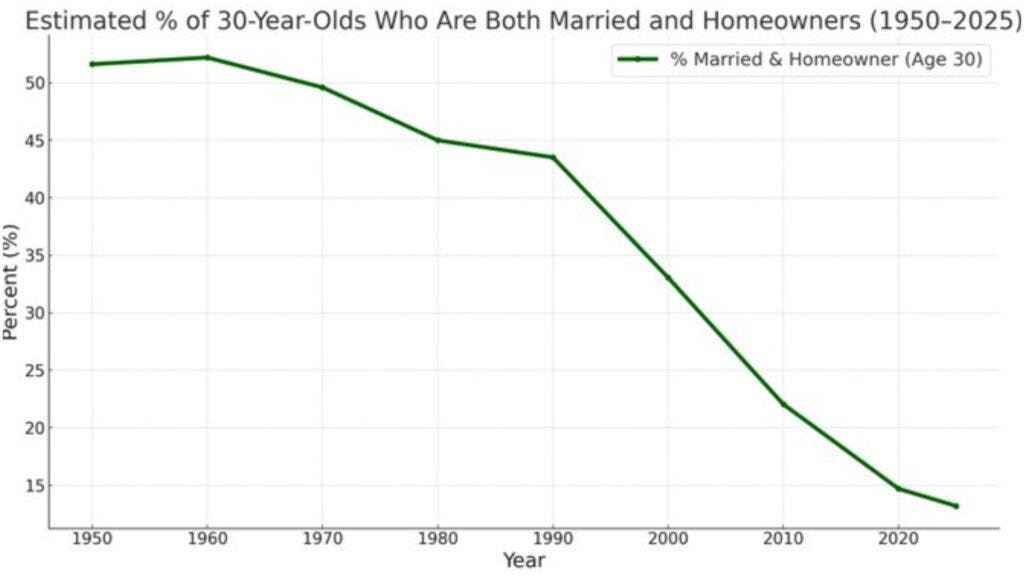
<p><span style="font-weight:400">Seeing all this, Nathan decided to quit. Instead of manipulating data to promote the destruction of the United States, he decided to spend his time identifying statistics that actually matter. He would look through government data and try to find important connections that no one else has made before. And the other day, as you may have seen, Nathan accomplished that goal. He published this remarkable chart, which has already been cited by several members of Congress and seen by millions of people. Here it is:</span></p>
<div id="attachment_958477" style="width:1034px" class="wp-caption aligncenter"><img loading="lazy" decoding="async" aria-describedby="caption-attachment-958477" class="wp-image-958477 size-large" src="https://dw-wp-production.imgix.net/2025/08/MixCollage-07-Aug-2025-05-32-PM-8972-1024x576.jpg" alt="Credit: Nathan Halberstadt" width="1024" height="576" srcset="https://dw-wp-production.imgix.net/2025/08/MixCollage-07-Aug-2025-05-32-PM-8972-1024x576.jpg 1024w, https://dw-wp-production.imgix.net/2025/08/MixCollage-07-Aug-2025-05-32-PM-8972-300x169.jpg 300w, https://dw-wp-production.imgix.net/2025/08/MixCollage-07-Aug-2025-05-32-PM-8972-768x432.jpg 768w, https://dw-wp-production.imgix.net/2025/08/MixCollage-07-Aug-2025-05-32-PM-8972-1536x864.jpg 1536w, https://dw-wp-production.imgix.net/2025/08/MixCollage-07-Aug-2025-05-32-PM-8972-2048x1152.jpg 2048w" sizes="auto, (max-width: 1024px) 100vw, 1024px"/></p>
<p id="caption-attachment-958477" class="wp-caption-text">Credit: Nathan Halberstadt</p>
</div>
<p><span style="font-weight:400">It’s a graph that shows the estimated percentage of 30-year-olds who are both married and own a home. The data runs from 1950 all the way through 2025. In the 1950s, the number was more than 50%. In other words, in 1950, well over half of the 30-year-olds in this country were both married and living in a home that they owned.</span></p>
<p><span style="font-weight:400">But as you can see, the percentage has been steadily dropping since then, until it fell off a cliff in the 1990s. And now, in 2025, the percentage is well below 20%. In fact, according to this estimate, only around 15% of 30-year-olds are married and own a home. Something that was once commonplace in this country is now rare. 50% to 15%.</span></p>
<h3><strong><a href="https://www.dailywire.com/episode/mws-ep-1637-member-exclusive?elementPosition=3&;row=2&;rowHeadline=Latest+Episodes&;rowType=Horizontal+Show+Episodes+Carousel" target="_blank" rel="noopener">WATCH: The Matt Walsh Show</a></strong></h3>
<p><span style="font-weight:400">Right off the bat, it’s impossible to look at an estimate like this without immediately asking: Why haven’t we heard these numbers before? For all of the very granular information we have about gross domestic product and unemployment numbers and per capita manufacturing output, it took a random Vanderbilt graduate to produce this particular chart. To be sure, we all knew that these numbers were bad. It was very evident that fewer young people were getting married or owning homes. But the scale, and the timing of the decline, weren’t remotely clear. Frankly, this is a lot worse than anyone realized, which is why the chart has attracted so much attention.</span></p>
<p><span style="font-weight:400">But the numbers were always available to anyone who wanted to look for them. All you have to do is look up the marriage data from the U.S. Census Bureau, which tabulates the “median age of first marriage” — along with Pew surveys on the percentage of people who are married at 30 — and then factor in home ownership data from the Census. It’s not a perfect calculation; some estimation is involved. We recently covered the problems with Census data and how unreliable it can be. But the overall story is pretty clear, and it’s corroborated by other sources.</span></p>
<p><span style="font-weight:400">In Ohio, for example, researchers at Bowling Green State University have </span><a href="https://www.bgsu.edu/ncfmr/resources/data/family-profiles/FP-25-10.html" target="_blank" rel="noopener"><span style="font-weight:400">compiled</span></a><span style="font-weight:400"> similar estimates.</span></p>
<p><span style="font-weight:400">Amazingly, though, very few of our political leaders are talking about this. It’s not a topic of mainstream conversation at all. Making sure that Americans are getting married and acquiring homes by the age of 30 should be the urgent priority of every politician in the country. It’s hard to think of many other things that could possibly be more important. But it’s not getting anywhere near the attention it should.</span></p>
<p><span style="font-weight:400">To the extent that some action is being taken in Washington, it raises some unanswered questions. For example, this week a very unusual alliance </span><a href="https://www.wsaz.com/2025/08/02/sen-kennedy-warrens-new-bill-aims-build-more-affordable-housing/" target="_blank" rel="noopener"><span style="font-weight:400">formed</span></a><span style="font-weight:400"> in Washington between Elizabeth Warren — the socialist from Massachusetts — and John Kennedy, the Republican from Louisiana. The two senators have introduced legislation called the “Build Now Act,” which would withhold taxpayer funds from states that don’t build enough housing, while sending taxpayer money to states that build more housing. Unlike most proposed legislation that you hear about, this particular bill actually has a good chance of passing, because it was just unanimously approved by a Senate committee. Here’s Kennedy’s explanation of the plan:</span></p>
<blockquote class="twitter-tweet">
<p dir="ltr" lang="en">It is stunning that the median age of a first-time home buyer in America today is 38.</p>
<p>We’ve got a problem.</p>
<p>By incentivizing cities to slash red tape and start building homes again, my Build Now Act would help open the door to homeownership. <a href="https://t.co/LfCV7k3Y1T" target="_blank" rel="noopener">pic.twitter.com/LfCV7k3Y1T</a></p>
<p>— John Kennedy (@SenJohnKennedy) <a href="https://twitter.com/SenJohnKennedy/status/1950234826381918263?ref_src=twsrc%5Etfw" target="_blank" rel="noopener">July 29, 2025</a></p>
</blockquote>
<p>Credit: @SenJohnKennedy/X</p>
<p><span style="font-weight:400">As a general rule, whenever Democrats and Republicans — and in this case, a conservative like John Kennedy and a socialist like Elizabeth Warren — team up to promote legislation, it’s usually a good idea to be skeptical. The only ideas that have bipartisan support in Washington are bad ones, generally speaking. And as we all know, socialists are well-known for making housing even less affordable, by introducing high-minded plans to manipulate markets (as New York City is about to discover the hard way).</span></p>
<p><span style="font-weight:400">That said, more housing is obviously a good idea. Increasing the supply of housing usually means that prices will go down. That’s basic economics. And although it’s reasonable to be concerned about the federal government throwing taxpayer money around, this is one of those rare times where it makes sense. Certainly, the federal government helped many homeowners in the 1950s, with the GI bill and so on.</span></p>
<p><span style="font-weight:400">At the same time, it’s reasonable to ask whether this kind of legislation will simply provide incentives for the creation of, say, more dilapidated housing for the homeless to use as drug dens, or more rental units for neighborhoods that are already flooded with them. This is a problem that’s becoming increasingly apparent, as you may have noticed. Large institutions are buying up homes in suburbs and renting them, instead of putting them up for sale. Watch:</span></p>
<p><amp-youtube layout="responsive" width="1170" height="658" data-videoid="5lW0ruPVNbg" title="Priced out: More Americans renting rather than buying"><a placeholder href="https://www.youtube.com/watch?v=5lW0ruPVNbg"><img src="https://i.ytimg.com/vi/5lW0ruPVNbg/hqdefault.jpg" layout="fill" object-fit="cover" alt="Priced out: More Americans renting rather than buying"></a></amp-youtube></p>
<p>Credit: NBC News/YouTube.com</p>
<p><span style="font-weight:400">Constructing new housing doesn’t necessarily address this particular problem, if the houses are being purchased by institutions and rented out as apartments. A lot depends on why the homes are being constructed, and where they’re located. Kennedy’s bill does have provisions that provide incentives for new construction in high-demand areas, but again, you still might wind up with apartment complexes where you actually want single-family homes.</span></p>
<p><span style="font-weight:400">That’s not to disparage this particular bill, or to declare that it can’t possibly help matters. But it’s safe to say that this legislation won’t come close to solving the underlying problem, which again, is that young people aren’t getting married and can’t afford homes. Those are problems with a lot of different causes — probably too many to list. Compared to the 1950s, we have tens of millions more illegal aliens living inside our borders. We’ve devalued the dollar to an almost unprecedented degree. We’ve opened up our job market to the entire world, driving down employment. And on and on. There are also many cultural factors that have — in many cases deliberately, by design — make marriage and family life seem less appealing to younger generations.</span></p>
<p><span style="font-weight:400">But there is one aspect of this new data that’s worth homing in on, because it does suggest one practical way forward. In the 1950s, roughly 90% of 30-year-olds were married, and more than 50% were homeowners. By contrast, right now, only around 50% of 30-year-olds are married, and roughly 30% are home-owners. So both numbers dropped by huge margins. But the marriage decline has been drastically more significant than the drop in home ownership. More than any other time in this country’s history, men and women are choosing not to get married. And there’s reason to believe that this broader cultural trend is what’s convincing a lot of young adults to forgo home ownership, as well.</span></p>
<p><span style="font-weight:400">After all, if you’re single, the prospect of paying most of your savings to a bank in the form of a down payment for a house isn’t exactly appealing. You don’t need all of that space for yourself and your dog. Before I was married, I never even considered trying to buy a home. As soon as I got married, I felt a sudden and very strong pull to buy a home and have a piece of land that we could call our own. Within about three years of getting married, we bought our first home. But for single people the financial sacrifice seems irrational and unnecessary, so if they have any extra money to throw around, they’re more likely to put it into Bitcoin or something else instead. On the other hand, if you’re intent on starting a family, then the cost of a mortgage makes a lot more sense. People can make it work, in many cases. I’ve said before that home ownership is attainable for almost anyone with a full-time job and decent credit. It’s often a matter of priorities. And as we look at the plummeting numbers of homeowners who are young and married, it’s a fact that needs to be restated. In this case, as in many other cases, decline is actually a choice.</span></p>
<p><span style="font-weight:400">And make no mistake — this is decline. Millions of young adults (who aren’t even that young at 30) have no skin in the game, no real stake in the country or its future. Getting married, starting a family, and owning property are the basic fundamental pillars of the American dream. They’re the starting point for a fulfilling and productive life, and a well-ordered society. As this new data reveals, most young people were able to achieve those milestones in the 1950s. But they’re not achieving them anymore. And those numbers are only getting worse by the year. Things are trending in the wrong direction, and quickly. If we want the kind of country we had in the 1950s — which is to say a country that has the potential to survive for another century — then one way or another, that needs to change.</span></p>
</div>
<p><script async src="https://platform.twitter.com/widgets.js" charset="utf-8"></script><br />
<br /><br />
<br /><a href="https://www.dailywire.com/news/this-one-shocking-stat-proves-that-the-american-dream-is-dying">Source link </a></p>
<p><!-- END THEIA POST SLIDER --></p>

This One Shocking Stat Proves That The American Dream Is Dying