<p><!-- BEGIN THEIA POST SLIDER --></p>
<p> <br />
</p>
<div>
<p>As Adam Schwartz recounts in <i>The Third Spring, </i>when modernist author Virginia Woolf heard of the conversion of her literary fellow traveler T.S. Eliot to Christianity, she wrote him off, considering it unbelievable that someone could sit by the fireplace in the 20th century and believe in God. </p>
<p>Like many modernists (one thinks especially of the Irish novelist James Joyce), Woolf had a tremendous interest in psychology, perception and consciousness, discourses which foregrounded the immanent presence of the human being and his material circumstances, rendering God if not an afterthought, a simple irrelevance to human beings in a modern world. </p>
<p>Such indifference to God and man’s spiritual, religious nature permeates our culture today — as Catholic philosopher Charles Taylor has put it in his book of that title, ours is purportedly “a secular age,” even as religious differences play a central role in conflict at home and abroad.</p>
<p>Many Catholics today, knowing the secular beliefs of literary modernists or perhaps simply being put off by their occasionally experimental prose, eschew such authors as Joyce or Woolf, preferring older authors such as Dante, Shakespeare or Austen. </p>
<p>Some Register readers, adapting a question first put by the Church Father Tertullian about the relationship of philosophy and the Church, might ask, “What hath Rome to do with Bloomsbury?” </p>
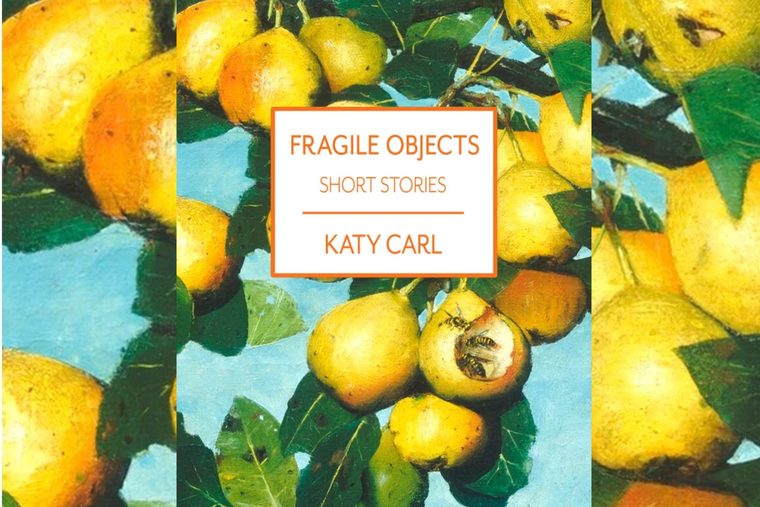
<p>A recent collection of short stories by Katy Carl, <i>Fragile Objects </i>(Wiseblood Books, 2023), should be taken as a response to that question. Carl is a member of what has been termed a “<a href="https://www.ncregister.com/blog/benedict-xvi-institute-texas-sized-catholic-renaissance">Texas-sized Catholic Renaissance</a>,” the editor of Catholic literary and arts quarterly <a href="https://www.dappledthings.org/"><i>Dappled Things</i></a>, a student in the MFA program at the University of St. Thomas in Houston, and a signatory to <a href="https://benedictinstitute.org/manifesto/">a manifesto</a> written by the co-founder of that program, Joshua Hren, entitled “Contemplative Realism.” She writes at her substack, “<a href="https://katycarl.substack.com/">Depth Perception</a>,” seeking to elaborate the contemplative realist way of not simply reading, but seeing the world, including through the craft of fiction.</p>
<p>The connection of Carl’s short-story collection to Woolf’s work can be seen not only in the subtle likeness of <a href="https://www.wisebloodbooks.com/uploads/1/9/4/6/19466635/s695712450413155821_p136_i1_w1657.jpeg?width=640">the cover art of <i>Fragile Objects</i></a> to t<a href="https://img.thriftbooks.com/api/images/i/m/DEB0F80FC747253F88195B55DE75CCD8D0F1D0F3.jpg">hat of a recent edition of Woolf’s short stories</a> (a careful choice of wasps eating a pear with its Augustinian connotations marks Wiseblood Books’s aesthetic symbolism), but also, more importantly, between the covers of the work. Carl begins her collection with an epigraph from Woolf’s story “Solid Objects,” which, one can surmise, also provides the source of the collection’s title. That story turns readers’ gaze towards a young man named John, for whom everyday beauty — “the ecstasy of the ordinary,” in a term G.K. Chesterton devised speaking of Charles Dickens — has raptured away from a potential political career. Woolf and other artists such as the Irish poet William Butler Yeats correctly saw beauty spurring contemplation and, in line with the Christian tradition and ancient philosophy, understood the activity of political life to be in tension with it. This is true of artistic or natural beauty. Yeats famously asked in a poem titled <i>Politics</i>, “How can I, that girl standing there, / My attention fix / On Roman or on Russian / Or on Spanish politics?” </p>
<p>The first story in Carl’s volume, the title story, provides a moving reflection, through the eyes of a young boy, on the relationship between the collection of beautiful objects and familial duty, between the value of hard-won independence and the dependence that comes naturally with age, of the values of the old South and their apparent betrayal by the New, responding to similar themes in Woolf’s own story.</p>
<p>Among the volume’s other 11 stories, Carl carefully appropriates fictional methods from Woolf while supplying that method with a more complete vision of reality, following in the wake of 20th-century writers such as Flannery O’Connor and Evelyn Waugh, who borrowed modernist techniques but grounded those techniques in a Catholic metaphysical vision. Woolf’s solid objects are simply objects and in their beauty distract human subjects from their duties in the world — one thinks of the temptations of the “one ring” in J.R.R. Tolkien’s <i>The</i> <i>Lord of the Rings</i>, which tempts the noblest souls with power to achieve their vision of the good, such as a strong Gondor for Boromir or a beautiful garden for Samwise, but which tempts Gollum, who loves seeing the roots of things, to turn to the caves under the mountain. One remembers the modernist credo “art for art’s sake” in Woolf’s portrayal of beautiful things. </p>
<p>But Carl’s fiction reveals that while the Catholic artist <i>must</i> be an artist — the true faith is no excuse for substandard writing — art must be for the sake of life, not the bare, bestial human life commended by contemporary vitalists and their forefather, the German philosopher Friedrich Nietzsche, but for that life everlasting, which, by grace, can dwell in us even in this age.</p>
<p>Carl’s objects then, are not merely objects, formed by the social pressures of their time, but are subjective men and women, fragile due to the fissure between their natures and selves that we call theologically original sin. Her fiction reveals a theology of the body akin to that offered by Pope St. John Paul II, where men and women are free within the limits of their flesh with a freedom that is always challenged by vice and sin. </p>
<p>Just as Woolf and Yeats were not afraid to consider little things like broken tea cups in order to reach what Yeats called in another poem the “rag-and-bone shop of the heart,” so does Carl dare, not only to examine slender beauties, but also to consider abyssal moments, such as a priest’s sinful addiction to child pornography, the collapse of a marriage in two perspectives, and a wife’s accidental suicide arising from her desire to feed her children.</p>
<p>In an already-difficult world, why should we turn to read about such horrors in fiction? Why should we not prefer to simply read inspiring stories of the saints than turning to contemporary Catholic fiction when its authors produce such tragedies? </p>
<p>One of the best-known Catholic authors of the second half of the 20th century, Flannery O’Connor, anticipated these questions, arguing that the reader of her time, even within the Church, was on the level of sensibility often more Manichaean than Catholic, separating nature from grace as if the former was something from which to escape. “Today’s reader,” she wrote, “if he believes in grace at all, sees it as something which can be separated from nature and served him raw as Instant Uplift.” Because as Catholics we believe that human nature is fallen, evil is part of our experience in the world, and the fiction writer is concerned precisely with experience. But the faith provides a vision which allows that experience to reveal reality more readily; as O’Connor wrote, “The Christian novelist is distinguished from his pagan colleagues by recognizing sin as sin.” </p>
<p>What distinguishes the depictions of the tragedies mentioned above in<i> Fragile Objects</i> from secular treatments of the same is precisely the way Carl presents them — as moments in the lives of deeply troubled men and women in need of a Savior, situated within a history where that Savior has come and triumphed, yet as St. Paul wrote, “all creation yet groans in labor pains” (Romans 8:22) as the Church bears us into new birth.</p>
<p>When asked these questions herself, Carl cited an author whose works O’Connor also enjoyed, Father William Lynch. </p>
<p>“In his book <a href="https://www.wisebloodbooks.com/store/p111/christ-and-apollo-william-lynch-glenn-arbery.html"><i>Christ and Apollo</i></a>, Father Lynch says that tragedy leads us into a deeper perception of beauty, ‘but not by way of beauty,’” she wrote. </p>
<p>Carl further mentioned two overreactions to evil that she has found herself prone to: despair and the avoidance of suffering, even stories of it. Tragedy can serve as a pungent tonic to these varieties of what Walker Percy described in his novel <i>The Moviegoer</i> as malaise, and, in her words, “part of tragedy’s cathartic effect is to stretch our capacity for endurance, patience and what Father Luigi Giussani [and his Communion and Liberation collaborator Msgr. Lorenzo Albacete] calls <a href="https://churchlifejournal.nd.edu/articles/the-redemption-of-suffering-and-the-mystery-of-love/">co-suffering</a>: the willingness to walk with and support those in pain the way that Mary and St. John stayed at the foot of the cross with Christ.” </p>
<p>As we continue to journey through Holy Week, picking up and reading a copy of <i>Fragile Objects</i> can aid readers in contemplating humanity’s great need for a Savior and help individuals receive what he has waiting on that other hill past Golgotha. </p>
<p><i>Alex Taylor writes from Texas.</i></p>
</p></div>
<p><br />
<br /><a href="https://www.ncregister.com/features/holy-week-review-katy-carl-s-fragile-objects">Source link </a></p>
<p><!-- END THEIA POST SLIDER --></p>

Author’s Latest Collection Challenges Readers to Stay at the Foot of the Cross and Suffer With Its Characters| National Catholic Register