


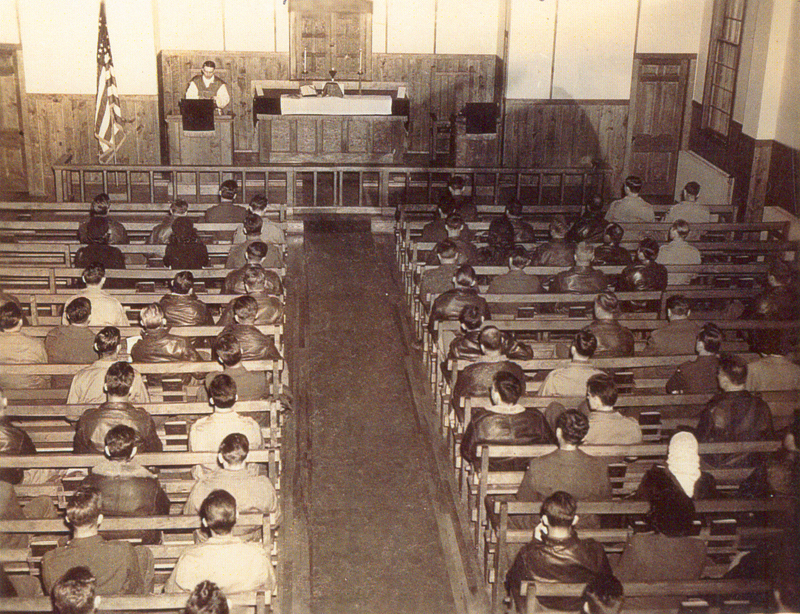
Sometimes picking up a magazine at a doctor’s office can change history, if not only one soldier’s life.
In 2003, William Hansen, a Korean War veteran suffering from PTSD, flipped through a copy of Columbia magazine, published by the Knights of Columbus, at his local VA — and read a story about a man he knew well: Father Emil Kapaun.
The U.S. Army chaplain and Medal of Honor recipient who served in World War II and the Korean War died in a POW camp in Korea on May 23, 1951. The Catholic Church declared him “Venerable” In 2025.
As the 2023 documentary The Magazine and the Miracle: Finding Father Kapaun opens, viewers hear the priest’s voice — quoting Jesus about his peace that can be found “even in suffering, in want or even in time of war” — overlaid with war images.
The program will re-air on EWTN on Memorial Day.
The Magazine and the Miracle explains more of what happened in that VA office in 2003: The doctor advises Hansen to contact Father John Hotze, the co-postulator of Father Kapaun’s cause for canonization.
That decision ultimately led to a Department of Defense discovery almost 20 years later: the location and return of Father Kapaun’s remains to his home state of Kansas.
Father Timothy Hickey, former editor of Columbia, recalls Hansen’s revelatory moment in The Magazine and the Miracle. “It reminded him, ‘Well, this is the priest that I knew. This is the priest who helped me.’”
Journalists Travis Heying and Roy Wenzl both recall working on this “memorable” and “incredible” story for The Wichita Eagle in the 15-minute short film.
The reporters, who also worked on their own film, are joined by others who know well Father Kapaun’s life and legacy.
“Father Kapaun had a unique reputation amongst chaplains. He was known as a tough guy,” says Rob Knapp, president of Kapaun Mt. Carmel Catholic High School in Wichita, Kansas.
Col. Ray Michael Dowd Jr., a former POW with Father Kapaun, recalls, “Father would go to the sound of the guns.” The testimony of Dowd, who died in 2025, is particularly moving.
“He would pray with them or he would administer the last rites to them and hold their hands as they’re dying,” adds then-Father Gary Studniewski, former U.S. Army chaplain and now an auxiliary bishop of Washington.
As Harriet Bina, director of the Father Kapaun Museum, located in Father Kapaun’s family home (next to his parish church) in Pilsen, Kansas, explains, “Whatever they were going through, he went through, too. They had utter respect for him as a soldier but also as a priest.”
Father Studniewski describes the Catholic chaplain as “someone who would go miles and miles and miles to the soldiers in the most remote villages and outposts to ensure that they received the sacraments.”
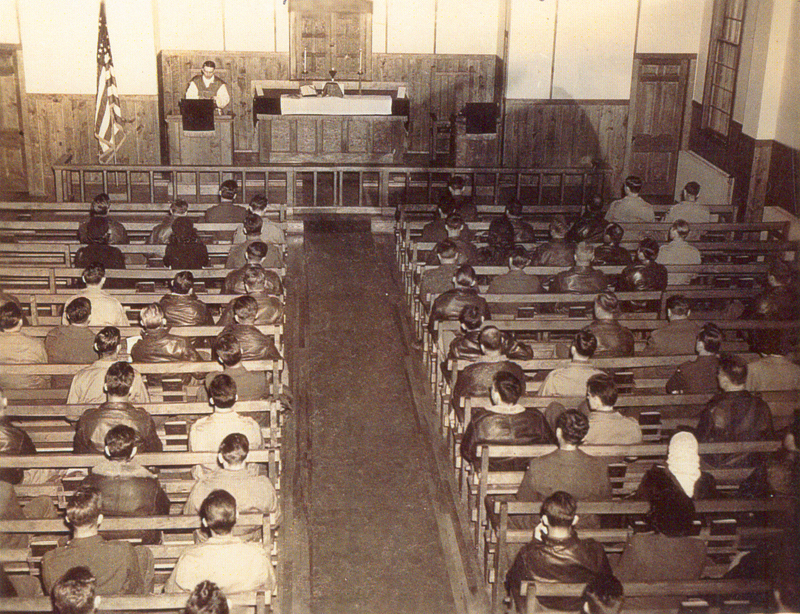
As the film moves to Father Kapaun’s deployment to Japan in 1950 just before the Korean conflict began, the narrative really takes off. The chaplain’s unit is among the first units sent to the Korean Peninsula — and war came on fast.
“He would run straight toward the enemy lines, grab these guys — with bullets kicking up dust around his feet — and he would drag them back and bring them to safety,” Wenzl says.
Bina recalls how Father Kapaun told people why he ran toward the gunfire: “‘Someone is wounded; someone is dying — they need me.’”
Father Kapaun’s unit was ambushed on Nov. 1, 1950, by thousands of Chinese forces. His men urge him to leave, but as Scott Carter, coordinator of the cause, relates, Father Kapaun said, “No, my place is here with the wounded.”
In one heroic decision, chaplain Kapaun literally stops the communist contingent and appeals for the unit’s surrender, saving “20 or so guys because of him” at that pivotal juncture, according to Wenzl.
As the unit was being led off, Lt. Col. William Latham Jr., a Korean War historian, recounts, a Chinese soldier was poised to shoot a wounded American, Herbert Miller.
But Father Kapaun was not about to let that happen.
“Kapaun crosses the road, shoves the Chinese soldier out of the way and picks up Sgt. Miller,” Latham relates.
As Bina says of the Chinese soldier’s shocked response to Kapaun’s brave intervention, “He couldn’t believe this man was not afraid to die.”
It was for saving Miller that Father Kapaun received the Medal of Honor posthumously in 2013.
Father Kapaun and hundreds of others were taken prisoner as a bitter winter descended. As the men freeze and starve, their chaplain gives them hope and “taught them to keep their faith in their God and their country,” Dowd says, citing the chaplain’s prayers, including the Rosary.
The indefatigable chaplain searched for food to share, always putting his flock first. Eventually, he falls ill — and is taken by his captors to die.
Dowd recalls “tears running down my face” as Father Kapaun said, “Mike, don’t cry. I’m going where I always wanted to go. And when I get there, I’ll be saying a prayer for all of you.”
That was the last time he saw him alive.
It had been assumed Father Kapaun was buried in a mass grave — until Hansen gave his 2003 testimony.
Hansen told Father Hotze that he buried the priest — after being told by their captors to carry off the body with other POWs. The group buried their chaplain as best they could, covering him with rocks and saying a prayer. This recollection by Hansen, who died in 2006, proved pivotal to the Department of Defense (DoD), which determined Father Kapaun’s remains were sent to Hawaii and buried with other unknowns at the National Memorial Cemetery of the Pacific in Honolulu.
Phil O’Brien, the DoD staffer who searched for Father Kapaun’s remains, recalls in the film, “Hansen told a credible story.”
Forensic analysis proved that story — paving the way for Father Kapaun’s funeral Mass in September 2021 in Wichita, a moment of profound closure for the Kapaun family; nephew Ray Kapaun recalls receiving the call from the Army about the identification.
And a providential magazine article started it all.
WATCH ON EWTN
MONDAY, May 25, 11 a.m. ET
The Magazine and the Miracle: Finding Father Kapaun
TV-PG, due to themes of war