<p><!-- BEGIN THEIA POST SLIDER --></p>
<p> <br />
</p>
<div>
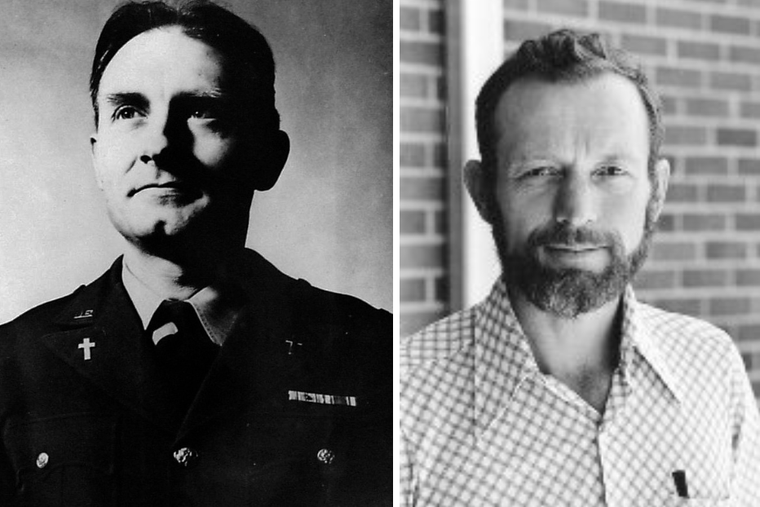
<p>The Great Plains of the United States are sparsely populated, and in most areas that population is sparsely Catholic. While there may not be many Catholics in Oklahoma, Kansas, Nebraska and elsewhere in the middle of the country, two particularly remarkable priests came from this region to serve their flocks and give their lives in far-flung lands. </p>
<p>Father Stanley Rother was martyred in Guatemala in 1981, the first American-born priest to be beatified and the first American to be recognized as a martyr; Father Emil Kapaun was a chaplain in the United States Army and was a prisoner of war during the Korean War, ultimately losing his life serving his fellow soldiers. </p>
<h3><b>Venerable Emil Kapaun</b> </h3>
<p>There are many stories of heroic and holy Catholic chaplains in the United States military. There’s Father William Corby, a priest of the Congregation of Holy Cross who served in the Union Army during the Civil War and famously gave <a href="https://www.ncregister.com/blog/when-fr-corby-gave-general-absolution-to-530-men-at-gettysburg" target="_blank">general absolution to the troops before the Battle of Gettysburg</a>; there’s Father Joseph O’Callahan, a Jesuit priest and math professor who was the first Catholic chaplain to receive the Medal of Honor, due to his heroic behavior in World War II; the “Grunt Padre,” Father Vincent Capodanno, a Maryknoll priest who served as a chaplain during the Vietnam War (also a Medal of Honor recipient); and <a href="https://www.ncregister.com/features/faith-under-fire-remembering-heroic-catholic-chaplains" target="_blank">many more</a>. By no means least among their ranks is <a href="https://www.ncregister.com/cna/pope-francis-declares-korean-war-army-chaplain-emil-kapaun-venerable" target="_blank">now-Venerable</a> Emil Kapaun. </p>
<p>Father Kapaun was born in Pilsen, Kansas, on April 20, 1916, which happened to be Holy Thursday. He was thus born during the Triduum, the Church’s commemoration of the Paschal mystery. Father Kapaun’s own life would ultimately be marked by a profoundly Christlike self-sacrifice in order to save the men under his pastoral care. </p>
<p>Growing up on a farm, Kapaun learned about repairing farm implements, a skill that would serve him well throughout life. He was ordained a priest in 1940, and from 1943 to 1944, he served as an auxiliary chaplain at an air base in Kansas; he then officially joined the U.S. Army Chaplain Corps in 1944 and was sent overseas to Burma and India. After a two-year hiatus, he rejoined the Chaplain Corps in 1948. He was mobilized to serve in the Korean War in 1950 and served in Japan and Korea. </p>
<p>On Nov. 2, 1950, during the Battle of Unsan, Father Kapaun repeatedly faced enemy fire in order to rescue wounded men, a brave act that would posthumously earn him the <a href="https://www.ncregister.com/blog/watch-this-video-in-honor-of-father-emil-kapaun-a-true-hero" target="_blank">Medal of Honor</a>. He was captured and placed in a POW camp, where he continued to minister to the troops. His health was failing due to the harsh conditions and treatment there, but he continued to put his own life on the line to treat the wounded, sneak out extra food for the sick, build fires (which was against the rules), and fashioned a system for doing laundry and purifying drinking water — including for coffee. His spiritual ministry continued, for Catholic and non-Catholic prisoners, right up until he died in the camp on May 23, 1951. Many of those who survived their internment made it their life’s work to spread word about Father Kapaun’s heroism, holiness and fortitude, sacrificing himself for the sake of his flock. </p>
<h3><b>Blessed Stanley Rother</b> </h3>
<p>About 40 miles northwest of Oklahoma City lies Okarche (Oh-KAR-chee), and on a farm not far from town, Stanley Rother was born on March 27, 1935. He was baptized on March 29 at Holy Trinity Church. He grew up working on the farm and was a natural at all the farm chores and responsibilities. During high school at Holy Trinity, he began to think he may be called to the priesthood. After finishing high school, he entered Assumption Seminary in San Antonio, Texas, to study for the priesthood for what was then called the Diocese of Oklahoma City-Tulsa. </p>
<p>Seminarian Rother struggled in his studies, particularly in Latin, and after nearly six years he was asked to resign. Eventually he would resume and complete his studies at Mount St. Mary’s Seminary in Emmitsburg, Maryland, and was ordained a priest on May 25, 1963. He spent five years serving various assignments as an associate pastor throughout Oklahoma. Father Rother felt called to missionary work, so he sought and received permission to join the diocese’s mission in Santiago Atitlan, Guatemala. He learned the language of the Tz’utujil tribe he served, celebrating Mass in their language and helping to translate Scripture for them. The farming skills he developed growing up also came in quite handy, as he helped the locals to improve their own farming techniques and build an irrigation system. </p>
<p>Guatemala was torn by civil war at this time, and the Catholic Church was right in the crosshairs. There were even “death lists,” a register of those who were specifically targeted for assassination, and eventually Father Rother’s name showed up on these lists. Because of this threat to his life, he returned to Oklahoma, but very quickly insisted to his bishop that he be allowed to go back to Guatemala. “<a href="https://www.ncregister.com/interview/father-stanley-rother-the-shepherd-cannot-run-at-the-first-sign-of-danger" target="_blank">The shepherd cannot run</a>,” he told his bishop. </p>
<p>Just a few short months later, on July 28, 1981, Father Rother was murdered in the rectory in the middle of the night. </p>
<p>On Dec. 1, 2016, Father Rother was officially recognized as a martyr by Pope Francis, and he was beatified on Sept. 23, 2017. The beatification Mass was held in Oklahoma City, which makes him and Blessed Miriam Teresa Demjanovich the only people to be beatified on American soil. He is the first priest and first martyr born in the United States to be beatified. </p>
<h3><b>What Can We Learn From Them?</b> </h3>
<p>If there’s one character trait common between Fathers Kapaun and Rother, it is their selflessness, which manifested itself in a willingness to sacrifice themselves for the sake of their respective flocks; and not only a sacrifice to save the lives of their flocks, but, even more importantly, to save their <i>souls</i>. </p>
<p>Father Kapaun’s unrelenting and untiring work was a profound witness of Christian service and had a tremendous effect on all the men that he served in the POW camp. He faced the real threat of torture and death at every turn, but tended to his flock. They were hungry, and he gave them to eat; thirsty, and he gave them drink; sick and in prison, and he took care of them. </p>
<p>The tenacity of Fathers Rother and Kapaun was certainly at least partially a result of the difficulty of life in the southern Plains. Tornadoes, constant battering winds, bitter winters, scorching summers — you’ve got to be tough to survive and thrive in that environment, and it fostered a strength and a dedication that served them well in their future vocations. As priests, serving flocks far flung from their family farm homesteads, they offered their very lives in the face of torture and death, truly acting <i>in persona Christi</i>. </p>
<p>Blessed Stanley Rother and Venerable Emil Kapaun, coming from humble circumstances and facing tremendously difficult situations with holiness, are true exemplars of how we should strive to do God’s will in all things. </p>
</p></div>
<p><br />
<br /><a href="https://www.ncregister.com/blog/farm-boys-to-priests-sainthood">Source link </a></p>
<p><!-- END THEIA POST SLIDER --></p>

How 2 Great Plains Farm Boys Became Holy Priests on the Road to Sainthood| National Catholic Register