

FILM REVIEW: Meet 16-year-old Helmuth Hübener who comes to question not only the German propaganda being pushed out from Berlin, but his own loyalty to Adolf Hitler.
Truth & Treason, released in theaters Oct. 17, is just the kind of movie for a high-school or middle-school student studying World War II, Nazism and the Holocaust.
Centered around a trio of German teenage friends, primarily 16-year-old Helmuth Hübener, along with its PG-13 rating, this Angel-produced drama seems intended for that age demographic anyhow.
The director is Matt Whitaker, who has made a career in the milieu of medium-budget World War II fare, both feature narratives and documentaries. Indeed, Whitaker previously explored the story of Hübener in a 2002 PBS documentary, Truth & Conviction.
The new feature version, which runs just over two hours, largely adheres to the central elements of the true story, but takes some creative license for dramatic purposes and character development.
Unlike the more well-known stories of resistance figures like Sophie Scholl, Dietrich Bonhoeffer or Desmond Doss, Hübener is not exactly a household name. He was born in 1925, eight years before Hitler’s ascent to power, in Hamburg, the location where the film takes place during 1941-1942, when the outcome of World War II was still in doubt.

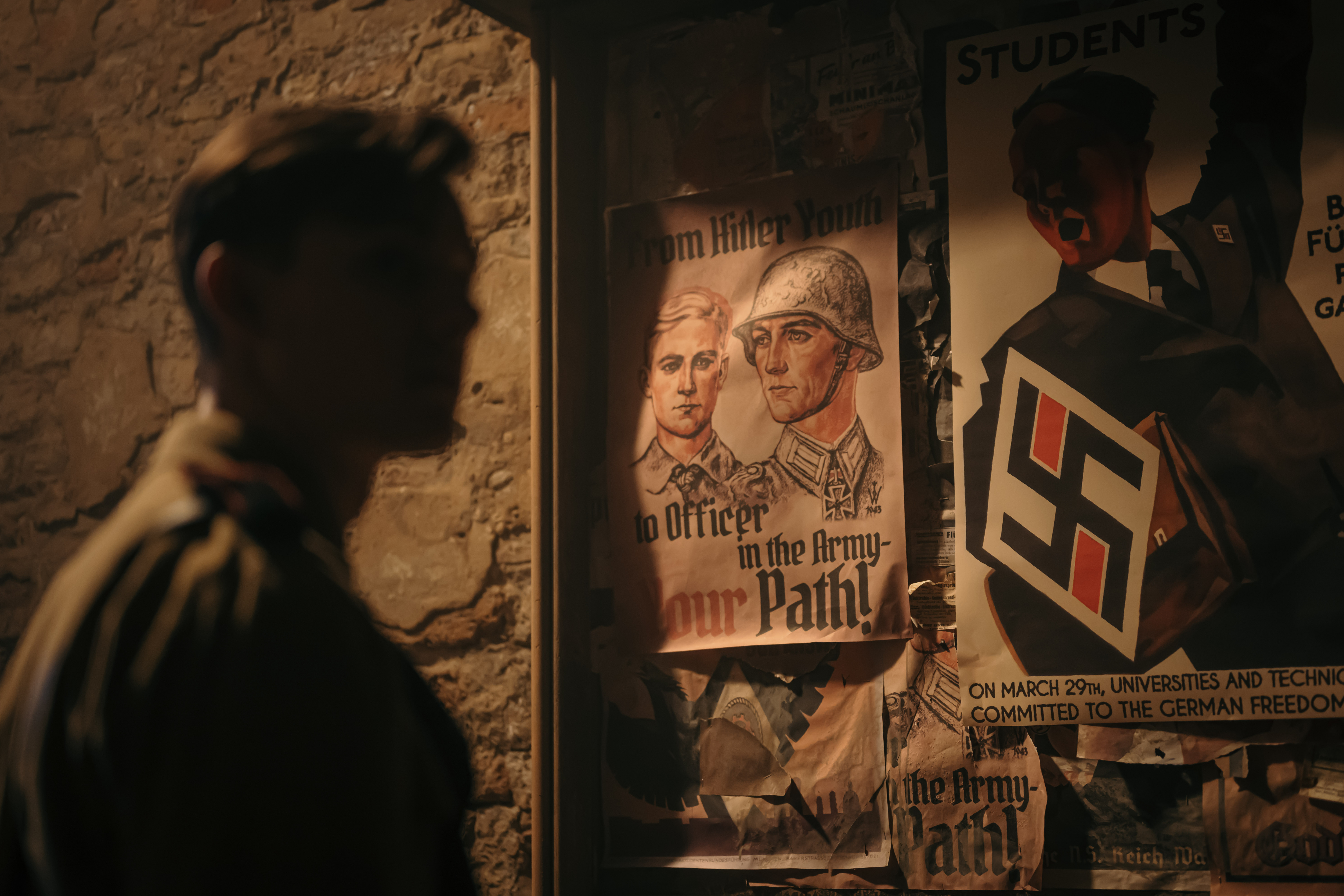
Truth & Treason tells how young Hübener, a boy scout and intern at Hamburg City Hall, comes to question not only the German propaganda being pushed out from Berlin, but his own loyalty to Adolf Hitler. The key to this change is an illegal radio procured from the French black market. With it, Hübener digests news coming from all over the world, such as the BBC, that directly contradicts “news” out of Germany.
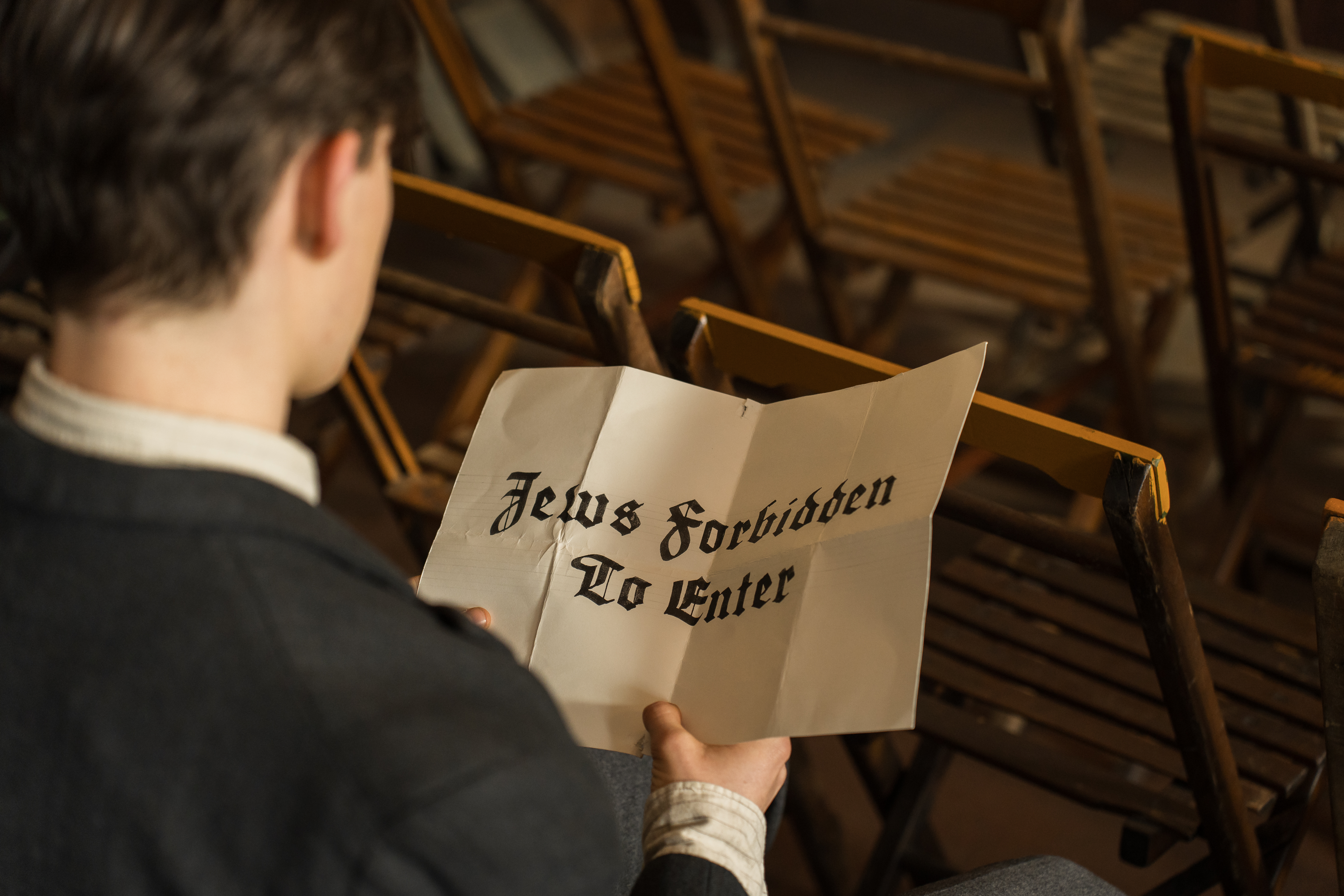
He also notices disturbing changes in his church, part of the Church of Jesus Christ of Latter-day Saints — namely, the sign placed on the door one Sunday: “Jews Forbidden to Enter.” Hübener finds this especially heinous, due in large part to the Jewish faith of his close friend Solomon Schwartz.
Viewers see Hübener lead a de facto social-media campaign, 1940s-style: with pocket-sized red library index cards he typed up, bypassing traditional media, to distribute news and anti-Hitler commentary he wrote and delivered grassroots around the city. Eventually drawing the attention of the SS, Hübener becomes a wanted man … or young man, more accurately, a key distinction that will ultimately have great bearing on Hübener’s fate.
Rupert Evans, best known for his main role in The Man in the High Castle, plays the Gestapo officer who relentlessly hunts down Hübener and refuses to let up until that fate is sealed. Ewan Horrocks, who got his start in the last season of The Last Kingdom, plays Hübener.
Writer-director Whitaker, who also wrote the screenplay with Ethan Vincent and is one of the film’s producers, had been trying to make the film as a feature for 20 years. After the success of The Chosen, Whitaker pitched the project to Angel. The filmmakers are now partnering with Angel on producing a four-part limited series on Hübener.
Truth & Treason is a competently produced period drama that checks all the boxes: handsome cinematography and production design, commendable acting, skilled editing and sound design. And for its initial weekend in theaters, Truth & Treason pulled in a healthy $2.7 million in box-office returns.
After a solid first hour, the film falls into a somewhat perfunctory rhythm, slowed by a contrived love story. And while perfectly accomplished and appropriate, Truth & Treason is not quite a home run. Perhaps it’s because modern audiences have grown accustomed to the expected look and tone of such movies — artsy on a budget. While the story itself is unique, we have seen the style repeatedly, from The Book Thief to The Zookeeper’s Wife to Resistance and any number of streaming knockoffs depicting wartime Germany.

Further, the film is in English, primarily with British accents. Readers may think I am splitting hairs here, because the idea is for films to reach the broadest audience possible, and the rule of thumb is that subtitles are box-office death knells. However, such World War II era-films have become so commonplace that the great stories that are being told are in danger of being overlooked due to the recycled motifs that we have come to expect from these movies. An American-produced war drama in German might be the refreshing breath of fresh air needed to reenergize this genre.
Finally, a call to Catholic filmmakers: There is an abundance of unsung heroes in the mold of Hübener waiting to be discovered. One in need of rediscovery is the story of Jesuit priest Alfred Delp, whose resistance to his native government reflects Hübener’s rebellion by the use of words. As the war was winding down and the Nazi cause was lost, Delp was imprisoned and tortured for his outspoken criticisms against the Nazi party; he was executed in February 1945. Father Delp’s sermons and reflections were smuggled out of his Berlin cell where they were read at St. Georg in Munich.
“Whoever doesn’t have the courage to make history is doomed to become its object,” Father Delp once said. “We have to take action.”
Viewer Caveat
Truth & Treason is rated PG-13 for strong violent content, bloody images, thematic elements and smoking.