


While scrolling through Instagram after daily Mass with a group of fellow students from the Catholic student center at Yale, I stumbled upon a post with the headline, “Yale’s most popular history course this past semester was on the Catholic Intellectual Tradition.”
“Hey! I was in that class and I think my section leader wrote that article!” I exclaimed to my friends, referring to the Aug. 27 piece in Slate by Sergio Infante that had prompted the social-media post and a widespread internet reaction. While many of the comments on the article expressed shock by the “rise of Catholicism” on a liberal, secular campus like Yale, my group of “Daily Mass Warriors,” as we call ourselves, was largely unfazed.
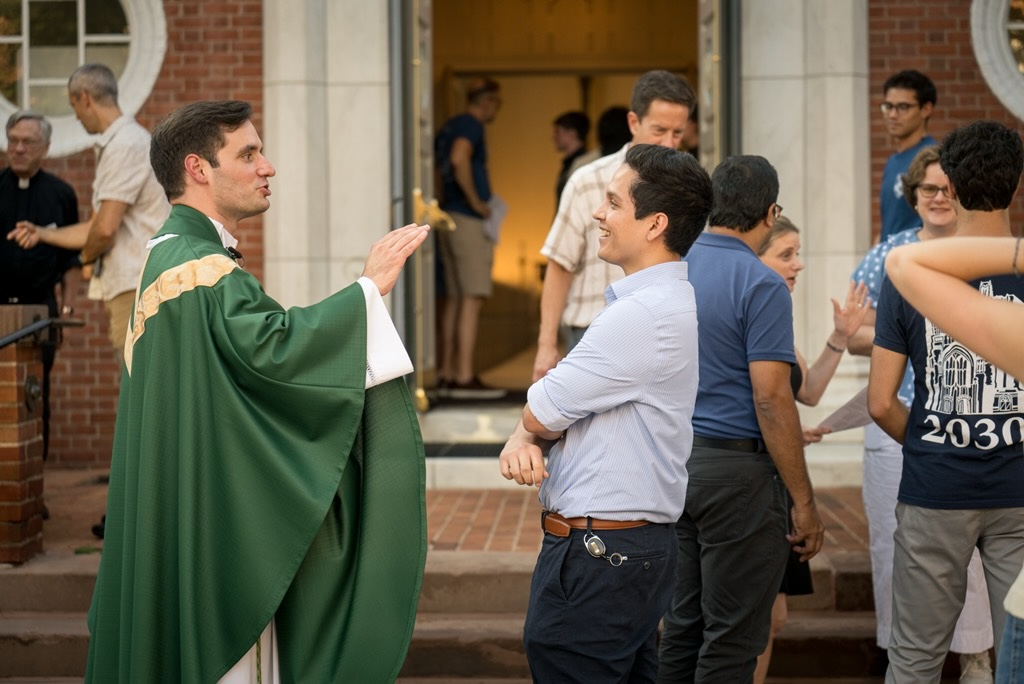
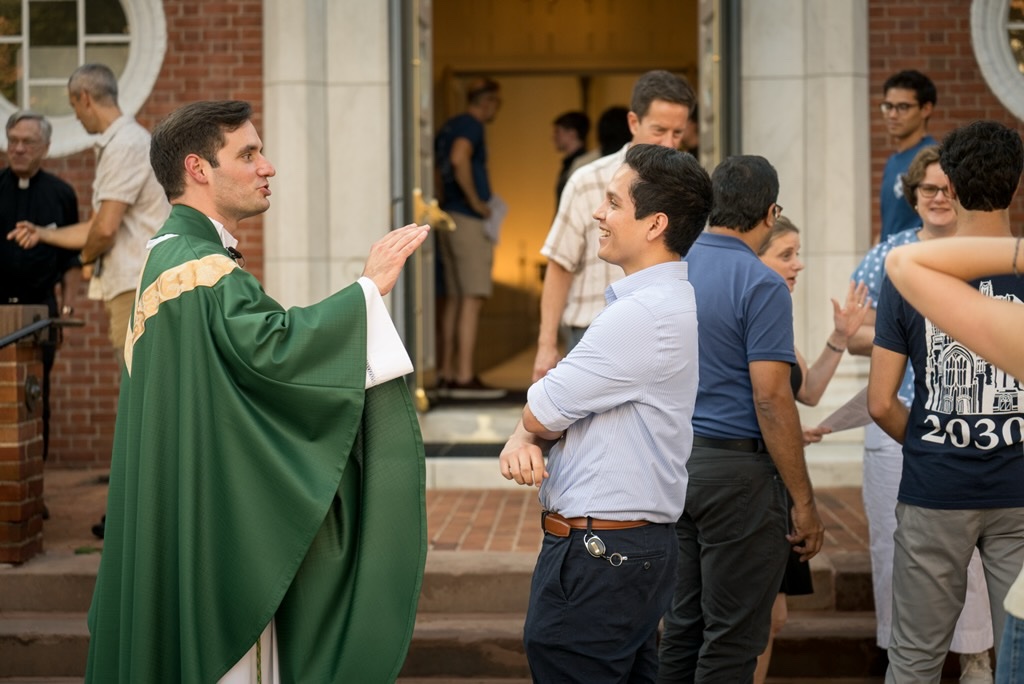
Throughout my past two years as a Yale undergrad, I have witnessed a growing presence of Catholic faith and philosophy on my Ivy League campus. This past Easter vigil, the St. Thomas More Catholic Chapel & Center saw nearly 40 members of the Yale community enter the Church. In October, Choose Life at Yale saw more than 200 participants attend our annual pro-life conference, “Vita et Veritas,” including a full lecture hall for a Yale Political Union debate featuring pro-life activist Lila Rose. Our chapter of the Thomistic Institute regularly sees lectures and seminars reach capacity and require waiting lists for students eager to engage with Catholic philosophy.
The Slate article highlights many of the reasons the “Catholic Intellectual Tradition” course is appealing to Yale students, but clearly Catholicism’s appeal goes far beyond the classroom.
Of course, Yale isn’t alone among the Ivies in this regard. At the Catholic chaplaincy at Harvard, for instance, a record number of converts became Catholic this past year. More broadly, college chaplaincies across the country have reported a surge in Catholic conversions among their student bodies.
While many within the Church point to the vibrant community and contemplative nature associated with Catholicism as the cause of Gen Z’s renewed interest in the faith, my experience at Yale points to yet another factor: Catholicism’s rich intellectual tradition and impressive historical continuity.
This is a large reason, I believe, for the popularity of the “Catholic Intellectual Tradition” course, taught by celebrated history-of-religion scholar Carlos Eire. Rather than an attempt at teaching apologetics or preaching conversion, the course is an outlet for students intrigued with the theology, philosophy and tradition of the 2,000-year-old Church.
Arguably the most revealing indication of this is that the vast majority of the students enrolled this last semester were non-Catholics. Some small-group discussions felt like the setup to “a Catholic, a Jew and a Muslim walk into a bar,” but instead of ordering a drink, we were discussing Pope Leo XIII’s Rerum Novarum and its implications for modern economic systems.
The course structure was unlike any I have taken at Yale, with classroom debates rooted in magisterial teachings, catechetical texts and articles by Church historians rather than popular culture or the latest political hot take. When “hot-button issues” arose, such as women’s role in the Church or the Church and slavery, students were encouraged to look at the Church’s role in our historical texts instead of talking points that arise on social media. Perhaps counterintuitively, it’s exactly this type of conversation that Yale students find relevant today: one that allows them to encounter a tradition shaped by 2,000 years of wrestling with the issues they seek to resolve and the questions they seek to answer.
While Infante suggested in his article that courses on Catholicism should be developed around contemporary academic concepts shaped by current cultural debates, like queer history, these kinds of courses already have their place within Yale’s curriculum. From my experience, students are far more interested in engaging with courses on classical theology and philosophy, which, despite having some of the greatest demand, are scarcely offered.
For many students, curiosity in Catholicism’s intellectual heritage is only the beginning. Many of my peers walked into the class seeking answers to their own questions about faith or philosophy, only to discover that the solutions hinted at in the Catholic intellectual tradition often require further exploration beyond the classroom.

At Yale, our Catholic community is doing its best to accompany those students in their quest for answers.
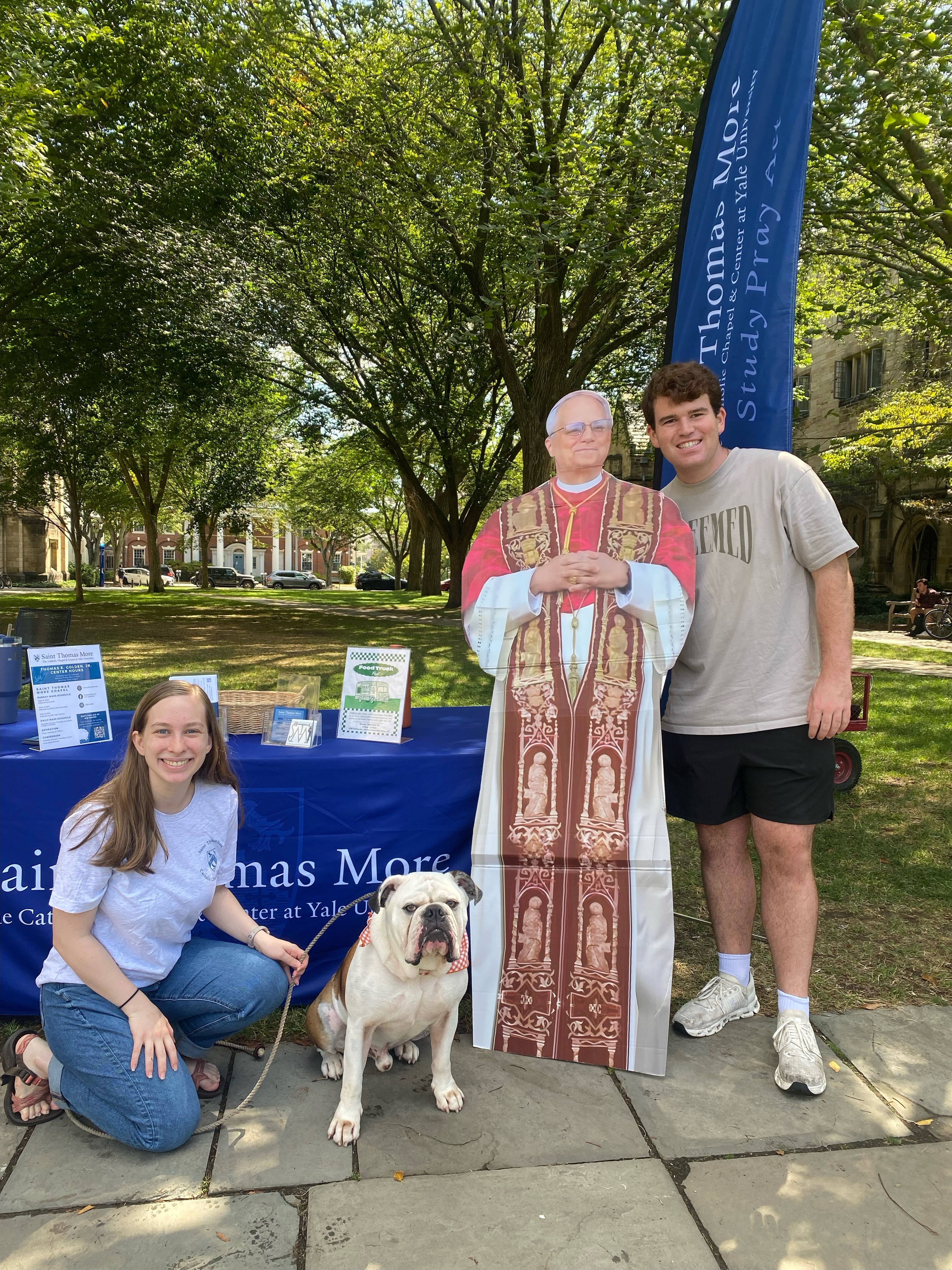
Every week, our chaplaincy sets up a table on Yale’s main quad where students are able to come up, grab a snack or a rosary, and pick the brains of Jesuit Father Gregory Waldrop or Franciscan Sister of the Eucharist Mary Rose Irvine on the pressing issues of today. This provides an increasingly “Catholic-curious” student body with an outlet to the Church. It’s not unusual to see a student we meet on the quad wander into the chapel a few days later.

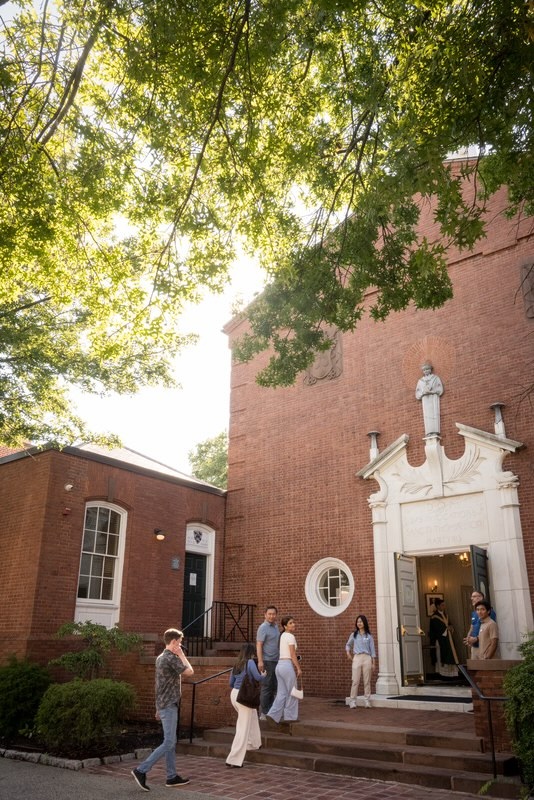
Once connected to the center, student interest in Catholicism can go deeper. I witnessed this myself last spring, after a fellow student in my “Catholic Intellectual Tradition” discussion section expressed interest in joining me for a Sunday lecture at St. Thomas More. Now, that same student is planning to attend OCIA classes offered by the Catholic center once they begin in October.
Of course, our Catholic center also helps form students who are already Catholic. For instance, on a rainy Thursday last September, Sam, a freshman who had attended a few Sunday Masses, stopped by our table on the quad with the sole intent of grabbing a snack before class. An hour-long conversation later, he started attending weekly adoration, joined us at the SEEK conference in Columbus, Ohio, and is now helping lead our campus ministry for athletes and undergraduate men.
Similarly, lecture series such as “Learn to Discern” and a St. John Henry Newman minicourse have packed houses, with students and faculty eager to interact with the greatest Catholic theologians and discover more about their own purpose.
Ultimately, the St. Thomas More Catholic Center serves as an environment where students can engage with the Catholic faith in a way that makes sense with where they’re at in their own faith life. Non-Catholics can wrestle with Catholic ideas and gain exposure to Catholic practices, while those who are already part of the Church can go further in their faith.
When intellectual formation happens alongside a sacramental life, we find Catholicism contains more than just the answers to life’s big questions. It offers an encounter with Christ himself. Alongside our newest members of the faith, recent Yale graduates have found themselves following the promptings of their Catholic faith by starting families at a counterculturally young age, pursuing careers within Catholic spaces, and even entering seminary, as a 2025 graduate has just done.
The “moment” Catholicism is having on Ivy League campuses is far from over. A small reading seminar being offered this fall on the Church Fathers saw triple the number of registrations for the spots allowed, and classes in Catholicism from “Christian Mysticism” to “Saints and Relics” to “Faith and Poetry” are continuing to see their enrollments soar as incoming students arrive. Far removed from the “godless” Yale that William F. Buckley famously critiqued, today’s students are searching for answers that the greatest Catholic minds have wrestled with for centuries.
I believe this is what makes the renewed interest in Catholicism by Gen Z, particularly at academic institutions, so striking. Students enroll in a course or attend a lecture searching to understand an intellectual tradition, learn about a school of philosophy, or answer a burning question. But Catholicism does not force students to choose between faith and reason. Instead, it insists that truth is something to be studied and, most importantly, encountered.
In the miniseries on Newman taught by Damon McGraw, one of our assistant chaplains, the Christian encounter was described with the phrase cor ad cor loquitur, or “heart speaks to heart.” At Yale, some students have this encounter in the classroom. For others, it is in the homily at Mass, a conversation in the quad, or a lecture that raises more questions than answers. Wherever that encounter first takes place, the ultimate hope is the same: that a small mustard seed of intellectual curiosity might grow into a life transformed by truth — and in that truth, Christ.