


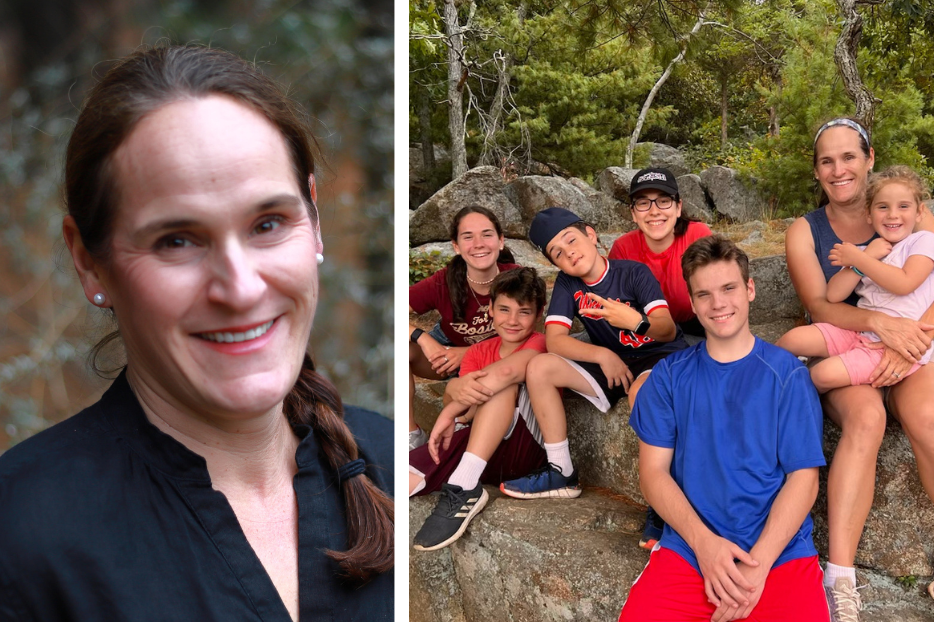
The centerpiece of the event led by Catholic scholar Erika Bachiochi will be the public signing of a ‘Declaration of Interdependence,’ which directly addresses modern ethical challenges surrounding childbearing, bodily integrity and family life.
As the nation continues to celebrate its 250th anniversary, a growing movement of scholars, journalists and advocates will be gathering in upstate New York to present a radical alternative to modern progressive feminism — one rooted in natural law, human dignity and mutual interdependence.
Next month, Rochester will play host to “A Better Way Forward for Women,” a national conference, to be held Sept. 17-19, aimed at reclaiming the philosophical roots of the early women’s rights movement.
The choice of Rochester is deeply symbolic: As the historic epicenter of the 19th-century abolitionist and women’s rights movements — and the home of pioneers like Susan B. Anthony — the city provides an intentional backdrop for organizers seeking to pivot away from what they view as the destructive dead-ends of contemporary gender theory and abortion on demand.
At the center of the effort is Erika Bachiochi, legal theorist, Catholic scholar and author of The Rights of Women: Reclaiming a Lost Vision. Bachiochi, who serves as a professor of practice at Arizona State University’s School for Civic and Economic Thought and Leadership, sees the conference as a vital moment of renewal.
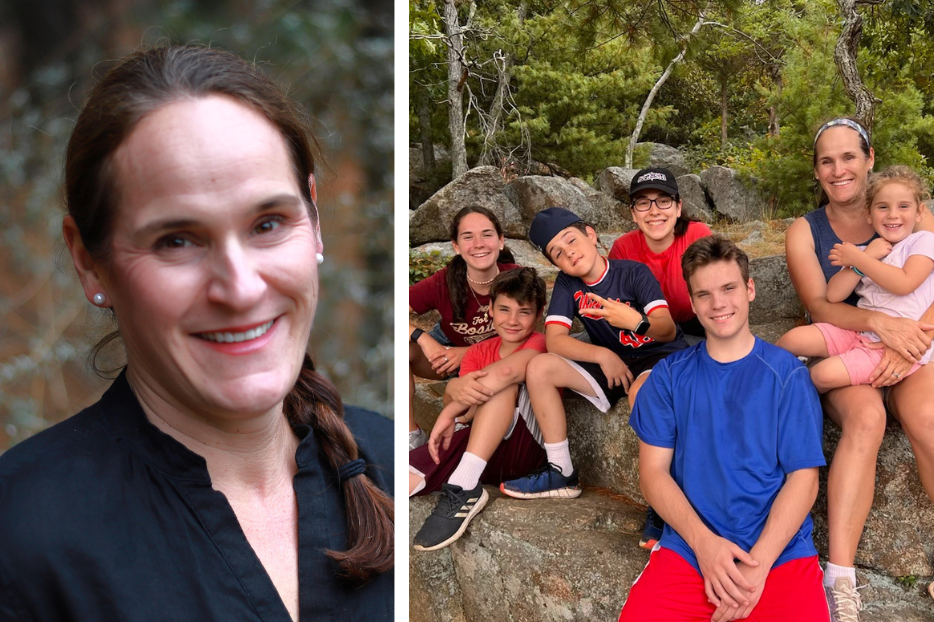
“I am always a person of hope and always trying to look forward to build anew, especially with the work of the Holy Spirit being present at all times and all places,” Bachiochi told the Register. “We are commemorating that movement in the hopes of reclaiming the women’s movement as a whole that, as we all know, has gone dreadfully astray in many important ways.”
The urgency of this reclamation, Bachiochi noted, stems from the political and cultural deadlocks currently leaving women without a true advocate.
“It has become abundantly clear that neither the pro-abortion left nor the increasingly misogynistic online right speaks to the needs, desires, capacities and obligations of modern women,” Bachiochi emphasized.
“It’s high time for a new women’s movement to provide a positive, alternative vision of women’s flourishing — one that Catholics like me have a duty to share with those both near (and far!) from the Church and her teaching.”
The conference emerges in part from the momentum of Fairer Disputations, an online journal co-founded by Bachiochi that brings together an eclectic coalition of thinkers — including British radical feminists, Catholic theologians and gender-critical scholars — who share a common skepticism toward modern progressive orthodoxies.
A central focus of the Rochester gathering is a pushback against hyper-individualism and “radical autonomy,” replacing it with a vision centered on the reality of human interdependence.
“There’s an interdependence at the core, and rights and responsibilities are always interdependent,” Bachiochi explained. “We have this idea on both left and right now that really radical autonomy was there from the very start — when human law is always understood to be grounded in eternal truths.”
The centerpiece of the event will be the public signing of a “Declaration of Interdependence,” which directly addresses modern ethical challenges surrounding childbearing, bodily integrity and family life.
“It is unjust for children to be poisoned or dismembered as they develop in the safety of their mother’s wombs, to be chemically or surgically castrated in their formative years, or for adults to place their own desires ahead of the needs of children,” Bachiochi said, quoting from the declaration’s principles. “And it is unjust for women to bear all responsibility for pregnancy and childbearing, or for society to champion those who are unencumbered by responsibilities as the standard-bearers of equality.”
Featuring an impressive lineup of prominent female writers and intellectuals — including Mary Harrington, Louise Perry, Angela Franks, Abigail Favale and Leah Libresco Sargeant — the panels will tackle issues ranging from women’s holistic healthcare to the cultural pressures facing Gen Z women.
Ultimately, Bachiochi hopes the conference serves as a launching pad for a lasting cultural shift.
“I think women have always been those who have offered great solutions in times of real crisis,” Bachiochi said. “It’s trying to really frame a positive vision … to see a phoenix rising from the ashes.”